


How to Start Reading E.E. “Doc” Smith
Edward Elmer Smith, universally known as E.E. “Doc” Smith, earned his title as the “Father of Space Opera” by scaling up science fiction to a galactic level. His stories feature massive starships, universe-spanning conflicts, and mind-boggling technology. If you want to experience the birth of modern space opera, you have two primary entry points: the ground-breaking Skylark series or his magnum opus, the Lensman series.
For the Core Space Opera Experience: Start with Lensman
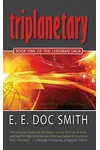
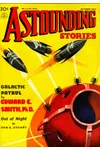
The Lensman series is Smith’s most famous work. It follows the Galactic Patrol and their psychic Lensmen in a cosmic war against the malevolent Eddorians. While the timeline begins chronologically with the prequel novel Triplanetary, we highly recommend starting with the third book in chronological order, Galactic Patrol. Starting here introduces the universe, the Lens, and the core stakes in the way Smith originally intended, avoiding the retroactive continuity adjustments and spoilers present in the prequels.
For Historic Pulp Adventure: Start with Skylark
If you prefer to see the very beginning of interstellar travel in science fiction, start with The Skylark of Space (1928). It is the story of scientist Richard Seaton discovering a metal (arenak) that enables faster-than-light travel, sparking a fierce rivalry with the brilliant but ruthless Marc DuQuesne. It is best read in straight publication order.
The Lensman Saga: Two Ways to Read
The Lensman series has a complex publishing history. Several of the books were originally serialized in pulp magazines like Astounding Stories before being heavily revised and expanded for book publication in the late 1940s and 1950s. This created a discrepancy between the order in which the core stories were conceived and their chronological timeline.
The Recommended Reading Order (Publication / Entry Order)
This order focuses on the main narrative arc first, allowing you to discover the mysteries of the Arisians and Eddorians alongside the characters before going back to the prequels:
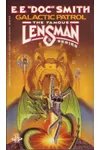
- Galactic Patrol (1937) – The true beginning of the main story arc following Kim Kinnison.
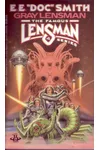
- Gray Lensman (1939) – Kinnison takes the fight directly to the Boskone empire.
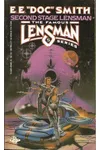
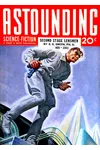
- Second Stage Lensmen (1941) – The conflict escalates with the introduction of advanced Lensmen.
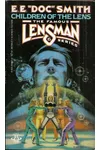
- Children of the Lens (1947) – The epic conclusion of the main Kinnison storyline.
- Triplanetary (1948) – Originally a standalone 1934 story, Smith expanded it to serve as a prequel depicting the ancient history of the Arisian-Eddorian war.
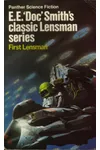
- First Lensman (1950) – A direct prequel written specifically to bridge the gap between Triplanetary and Galactic Patrol.
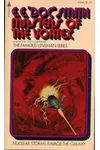
- Masters of the Vortex (1960) – Also published as The Vortex Blaster, this is a side novel set in the same universe but following a different protagonist, Storm Cloud. It can be read at any point after the main series.
The Chronological Order
For readers who want to experience the universe's history from the very beginning, follow this order. Note that the early books contain background details that spoil some of the mystery in the later main sequence:
- Triplanetary (1948 book version)
- First Lensman (1950)
- Galactic Patrol (1937)
- Gray Lensman (1939)
- Second Stage Lensmen (1941)
- Children of the Lens (1947)
- Masters of the Vortex (1960)
The Skylark Series Reading Order
The Skylark series represents the absolute foundation of the space opera subgenre. Unlike Lensman, the reading order is straightforward and should be read in order of publication:
- The Skylark of Space (1928) – Co-authored with Lee Hawkins Garby, this novel introduces Richard Seaton, his FTL technology, and his lifelong nemesis Marc DuQuesne.
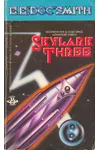
- Skylark Three (1930) – The adventure expands beyond the solar system to encompass alien civilizations and massive fleet battles.
- Skylark of Valeron (1934) – Seaton and his companions are cast into a multi-dimensional universe and must build a giant artificial brain to find their way home.
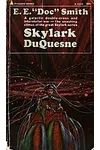
- Skylark Duquesne (1965) – Written decades later and published shortly before Smith's death, this final installment resolves the rivalry between Seaton and DuQuesne.
Posthumous Continuations and Spin-Offs
Because E.E. “Doc” Smith was a highly popular author, publishers hired other writers to expand his short stories, outlines, and notes into full series after his death in 1965. Understanding the true authorship of these books is key to managing expectations.
The Subspace Duology
This short series was based directly on Smith's work and drafts. Subspace Encounter was prepared for publication by Lloyd Arthur Eshbach after Smith's death.
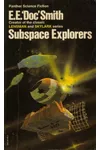
- Subspace Explorers (1965) – The first novel, published around the time of Smith's death.
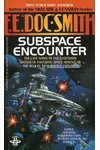
- Subspace Encounter (1983) – A sequel constructed by Lloyd Arthur Eshbach from Smith's unfinished manuscripts.
The Family d'Alembert Series
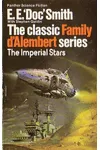
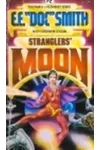
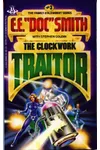
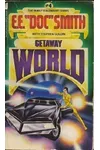
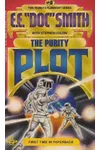
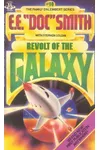
While E.E. “Doc” Smith's name is prominently displayed on the covers, this series was almost entirely written by Stephen Goldin. It is based on a 1964 novella written by Smith titled The Imperial Stars. Goldin expanded the novella into the first book and wrote the subsequent nine sequels.
- The Imperial Stars (1976)
- Stranglers' Moon (1976)
- The Clockwork Traitor (1977)
- Getaway World (1977)
- The Purity Plot (1978)
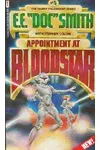
- Appointment at Bloodstar (1978)
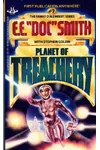
- Planet of Treachery (1981)
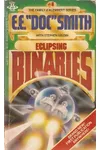
- Eclipsing Binaries (1983)
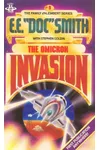
- The Omicron Invasion (1984)
- Revolt of the Galaxy (1985)
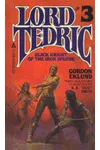
The Lord Tedric Series
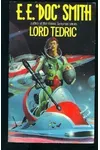
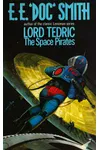
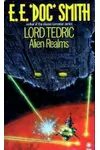
This series is based on a 1954 novelette by Smith. The actual writing of the novels was done by Gordon Eklund, who was commissioned to continue the concept.
- Lord Tedric (1978)
- The Space Pirates (1979)
- Alien Realms (1980)
- Black Knight of the Iron Sphere (1981)
Co-Authored and Standalone Novels
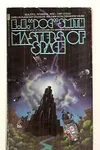
Beyond his major series, Smith wrote several standalone novels. The most notable co-authored work is Masters of Space (1961/1976), which was originally written by E. Everett Evans. After Evans died in 1958, Smith completed and revised the manuscript, which was eventually published in book format.
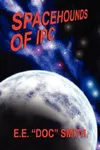
- Spacehounds of IPC (1931) – A highly regarded early hard science fiction adventure.
- Masters of Space (1961) – Co-authored with E. Everett Evans.
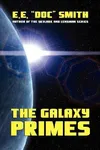
- The Galaxy Primes (1965) – An adventure focused on psionic powers and space exploration.
What to Know Before You Start
Modern readers should keep in mind that E.E. “Doc” Smith was writing during the pulp era of science fiction. His books are celebrated for their unmatched sense of scale, imaginative technology, and fast-paced narratives. However, the prose style reflects its era, featuring melodrama, stylized dialogue, and simple moral binaries. Approaching his work as historical milestones of the genre will help you enjoy the unbridled optimism and boundless imagination that inspired generations of creators.