

The Recommended Reading Path
David A. Kyle is best remembered in the science fiction community for his authorized sequels to E.E. "Doc" Smith's legendary Lensman series. Because Kyle's novels expand directly upon the characters and events of Smith's universe, you should not read them as a standalone entry point. Instead, the recommended starting path integrates Kyle's work directly into the main sequence of the Lensman series.
To get the most out of Kyle's books, follow this reading order:
- Triplanetary (by E.E. "Doc" Smith) – The historical prelude to the series.
- First Lensman (by E.E. "Doc" Smith) – The formation of the Galactic Patrol.
- Galactic Patrol (by E.E. "Doc" Smith) – The introduction of Kim Kinnison.
- Gray Lensman (by E.E. "Doc" Smith) – Kinnison's promotion and the escalation of the cosmic war.
- Second Stage Lensmen (by E.E. "Doc" Smith) – Introduces the non-human Second Stage Lensmen (Worsel, Tregonsee, and Nadreck) who serve as the protagonists of Kyle's books.
- The Second Stage Lensman Trilogy (by David A. Kyle) – Read these three books next:
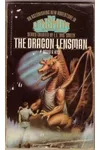
- The Dragon Lensman (1980)
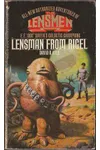
- Lensman from Rigel (1982)
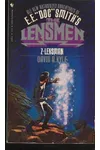
- Z-Lensman (1983)
- Children of the Lens (by E.E. "Doc" Smith) – The final volume of the core sequence, wrapping up the grand Eddorian conflict.
The Second Stage Lensman Trilogy: Publication vs. Chronological Order
David A. Kyle wrote his three novels in a specific sequence that mirrors their internal chronological focus. Each book centers on a different alien ally who achieved the rank of Second Stage Lensman in Smith's original universe. The publication order is identical to the recommended reading order for this subseries:
1. The Dragon Lensman (1980)
This first book spotlights Worsel, the winged, dragon-like Velantian who uses formidable telepathic abilities. In this story, Worsel uncovers a dark plot involving self-aware machines that threaten the Galactic Patrol. It is an action-oriented space adventure that fits seamlessly with the established lore.
2. Lensman from Rigel (1982)
The second novel shifts focus to Tregonsee, the blocky, multi-eyed, and highly logical Rigellian. Tregonsee is known for his calm temperament and tactical brilliance. Here, he investigates a mysterious conspiracy utilizing hyperspatial tubes, showcasing a slower-paced, more analytical style of space investigation.
3. Z-Lensman (1983)
The trilogy concludes with Nadreck the Palainian, an alien who lives in a cold, gaseous environment and thinks in dimensions beyond human comprehension. The plot involves machine malfunctions across the cosmos, which Nadreck investigates alongside Galactic Patrol officer Benson Cloudd and the android-bodied Lalla Kallatra, eventually discovering lingering Eddorian forces.
Chronological Caveats and Universe Placement
In the timeline of the broader Lensman universe, David A. Kyle's novels take place in the interim between the end of E.E. "Doc" Smith's Second Stage Lensmen (Book 5) and the start of Children of the Lens (Book 6). While Smith's original books leap forward in time to focus on Kim Kinnison's children, Kyle's books fill in the gaps, exploring the critical activities of the alien Lensmen during those intermediate years.
Because the events of The Dragon Lensman, Lensman from Rigel, and Z-Lensman run somewhat parallel to each other and focus on different corners of the galaxy, the exact order in which you read the three is less critical than their placement between Books 5 and 6 of the main series. However, reading them in publication order remains the most satisfying path, as Kyle introduces overarching thematic elements that build toward the climax in Z-Lensman.
What to Know Before You Start
Before diving into David A. Kyle's novels, readers should understand a few key aspects of their production and tone:
- Authorized Continuations: Kyle's novels were formally authorized by the estate of E.E. "Doc" Smith. Kyle was a lifelong fan and a personal friend of Smith, meaning his stories treat the source material with immense respect.
- Shift in Focus: Smith's original books focused heavily on human protagonists (primarily Kim Kinnison). Kyle intentionally shifted the spotlight to the alien members of the Galactic Patrol, expanding their biology, cultures, and mindsets.
- Retro-Sci-Fi Tone: Writing in the early 1980s, Kyle intentionally adopted the linguistic style, fast-paced action, and grand scale of 1930s and 1940s space opera. It is a nostalgic tribute that captures the voice of the Golden Age of science fiction.
Non-Fiction and Anthropological Works
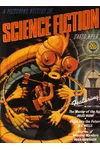
In addition to his fictional expansion of the Lensman universe, David A. Kyle was an influential historian of the science fiction genre. Readers interested in the history of speculative fiction should look for his illustrated non-fiction volumes, particularly A Pictorial History of Science Fiction (1976), which provides a rich visual account of the genre's evolution from its pulp origins through the golden age.