


The Recommended Reading Path for The Long War
If you want to experience the Greco-Persian Wars in all their muddy, bloody, and glorious detail, the recommended way to read Christian Cameron's Long War series is simple: follow the publication order. Because the series tracks the linear life of protagonist Arimnestos of Plataea, the publication order is also the chronological order. There are no prequels or confusing timeline jumps, making it easy to dive straight in.
You should absolutely start with the first novel, Killer of Men. Reading the books out of order will spoil major character developments, shifts in alliances, and the outcomes of some of ancient history's most famous clashes. Starting anywhere else means missing the foundational transformation of Arimnestos from a peaceful farm boy into a hardened veteran of the ancient world. Each book builds on the emotional scars and political realities established in the previous installments, creating a single, cohesive epic.
The Long War Reading Order Breakdown
Here is the complete chronological and publication order for the seven novels in the series, detailing the historical events and character milestones in each:
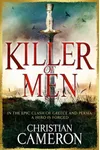
- Killer of Men (2010): The story begins in the late 6th century BCE. We meet Arimnestos as a boy on a Plataean farm, learning the rhythms of agricultural life. Following a brutal family betrayal by his own brother, he is sold into slavery in the wealthy Persian-influenced city of Ephesus. Working in a bronze smithy and later under a wise master, Arimnestos learns to read, write, and fight. As the Ionian Revolt (499–493 BCE) erupts against the Persian Empire, he finds his freedom and rises as a skilled warrior, earning his bloody nickname and setting the stage for his legendary reputation.
- Marathon (2011): Also published as Marathon: Freedom or Death, this installment focuses on the events leading up to and including the famous Battle of Marathon in 490 BCE. Arimnestos returns to his homeland, only to find himself caught in the complex web of Greek city-state politics. When the Persian King Darius sends a massive invasion force to punish Athens and Eretria, Arimnestos stands in the bronze-clad Plataean phalanx alongside the Athenians. The book is celebrated for its incredibly realistic, grueling depiction of the hoplite charge across the plain of Marathon.
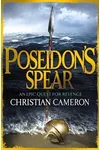
- Poseidon's Spear (2012): A shift in pace and setting, this book finds Arimnestos exiled from Plataea and taking to the sea. He becomes a mercenary, pirate, and explorer, sailing the western Mediterranean. This nautical adventure showcases ancient ship life, trade, and naval warfare, expanding the series' scope beyond the Greek mainland. Arimnestos travels as far as Italy, Sicily, and Spain, encountering Carthaginians, Etruscans, and Celts, while learning how to command a crew and navigate the treacherous politics of the open sea.
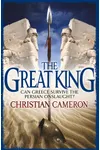
- The Great King (2013): Arimnestos is sent into the heart of the Persian Empire as a diplomat, explorer, and spy. Traveling to the royal capital of Susa, he witnesses the grandeur, sophistication, and terrifying power of the Great King Xerxes' court. This book provides crucial depth to the Persian perspective, showing them as complex people rather than cartoonish villains. Arimnestos interacts with high-ranking Persian nobles, including the general Mardonius, and gains a deep appreciation for their culture, making the upcoming war all the more tragic.
- Salamis (2015): As Xerxes launches his massive second invasion of Greece in 480 BCE, the conflict moves to the sea. Arimnestos is at the center of the critical naval battle of Salamis. The book is renowned for its intense, claustrophobic depictions of ancient trireme combat, showing the coordinated efforts of rowers, steersmen, and marines. We feel the suffocating heat, the splinters of shattered wood, and the panic of drowning in heavy bronze armor as the allied Greek fleet attempts to outmaneuver the larger Persian armada.
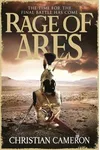
- Rage of Ares (2016): This novel covers the climax of the Persian Wars on land, building up to the decisive Battle of Plataea in 479 BCE. Arimnestos returns to his hometown of Plataea, which has been destroyed by the Persians. He must help unite the notoriously fractious Greek allies—including the suspicious Spartans and the ambitious Athenians—to face the final, massive Persian force under Mardonius. The battle is a brutal, chaotic meat grinder, and Arimnestos is forced to face enemies who were once his friends in a struggle that decides the future of Greece.
- Treason of Sparta (2023): The seventh book was released after a seven-year hiatus. Set in the immediate aftermath of the Persian Wars (478 BCE), it details the cold-war style tensions between Athens and Sparta over the division of spoils and the protection of the liberated Ionian Greek cities. Arimnestos returns to the sea to patrol the Persian-held coasts, only to find himself caught in Sparta's internal corruption, Pausanias' vaulting ambition, and the early seeds of the conflict that would eventually tear Greece apart.
Publication Order vs. Chronological Order (and that 7-Year Gap)
Because the story follows a single man's life from youth to old age, the chronological timeline matches the publication order exactly. However, there is one important detail that readers should keep in mind: the seven-year gap between books six and seven.
Between 2010 and 2016, Christian Cameron published one book in the series almost every year, ending with Rage of Ares. For many years, both fans and libraries assumed the series was a finished six-book arc, as the Battle of Plataea was the final major land battle of the Greco-Persian Wars. However, in 2023, Cameron surprised readers by releasing Treason of Sparta, which continues Arimnestos' story into the political intrigue and localized skirmishes that followed the grand war. If you see older guides listing the series as completed at six books, rest assured there is a seventh volume to enjoy that bridges the gap between the Persian Wars and the rise of the Delian League.
What to Know Before You Start: Tone and Historical Authenticity
Before you pick up Killer of Men, it helps to understand the unique style and framing Christian Cameron uses:
- The Framing Device: The entire series is told in the first person. An elderly Arimnestos is recounting his life story to his daughter and guests at her wedding. This framing gives the novels an intimate, conversational, and reflective tone. The narrator often looks back on his youthful decisions with regret, wisdom, or self-deprecation, reminding the reader that he is a flawed man who has committed terrible acts in the name of survival and honor.
- Extreme Historical Realism: Christian Cameron is not just an author; he is a trained historian and an active historical reenactor who participates in heavy-combat reconstructions. This background shines through in his writing. You will get incredibly detailed, visceral explanations of how hoplite armor fits, the weight of a shield, the exhaustion of standing in a phalanx, and the mechanics of trireme rowing. He avoids the clean, romanticized version of ancient warfare, focusing instead on the sweat, dirt, fear, and trauma of the battlefield.
- The Ancient Greek Worldview: The books do an excellent job of portraying how ancient peoples viewed the world. Religion, superstition, and the gods are central to the characters' lives. Arimnestos has a deeply personal relationship with Hermes the Guide and Ares the Killer of Men, viewing them not as abstract concepts but as active forces in his life. Similarly, the depiction of ancient slavery is historically grounded; it shows both its inherent brutality and the complex social realities of the era, where slaves could sometimes earn freedom or hold significant responsibilities.
- Nuanced Perspectives: The series avoids the cliché of 'virtuous, freedom-loving Greeks versus evil, tyrannical Persians.' Cameron portrays the Persian Empire as a highly civilized, advanced, and culturally rich society. Throughout his journeys, Arimnestos makes close Persian friends and respects his enemies, highlighting the tragic cost of war on both sides.
Connecting the Long War to Other Ancient Greek Series
If you finish the Long War and want more of Cameron's ancient historical fiction, you have two great options. While they are completely standalone and do not share characters or plotlines with the Long War, they take place in the same historical continuum and share the author's signature style:
The Tyrant Series: This six-book series (plus companion novellas) is set roughly a century after the Persian Wars, during the rise of Alexander the Great and the Successor Wars that followed his death. It focuses on Greek mercenary forces in the Black Sea region and offers the same level of gritty combat and historical detail.
The Commander Series: Beginning with The New Achilles, this duology moves forward to the 3rd and 2nd centuries BCE, focusing on the Greek general Philopoemen as he attempts to defend Greek independence against the rising power of Rome.