






Where to Start with Ben Bova
With a career spanning over six decades and a bibliography of more than 120 books, Hugo Award-winning author Ben Bova left behind an incredible legacy of hard science fiction. While he wrote several standalone projects, short story collections, and distinct trilogies, his crowning achievement is the Grand Tour: a massive, interconnected sequence detailing humanity's colonization and exploration of the solar system. For most readers, figuring out how to approach Bova's work means figuring out how to tackle this universe.
Depending on your reading preferences, there are three primary ways to explore Ben Bova's books:
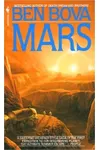
- The "Mars First" Entry Point (Recommended): Start with the novel Mars (1992). This is widely considered the peak of Bova's style, blending realistic science with gripping human drama, and it avoids the dated near-future technology present in the earliest chronological prequels.
- The Chronological Order: Follow the internal timeline of humanity's expansion, starting with Powersat and moving outward planet-by-planet. This is best for completionists who want to watch the technology and politics of the solar system unfold linearly.
- The Publication Order: Experience Bova's evolution as a writer by reading the books as they were written, starting with his early standalone novels or his first Grand Tour-linked book, Privateers (1985).
Option 1: The Grand Tour Chronological Order
If you want to experience the progression of space exploration as it happens in the story's timeline, reading chronologically is your best bet. Because Bova wrote these books out of order over several decades, there are occasionally minor inconsistencies or retcons, but the overarching universe holds together remarkably well.
Here is the chronological order for the core Grand Tour books based on Bova's own timeline notes:
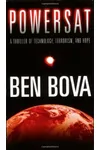
- Powersat (2005) - Sets the stage with the struggle to build the first solar power satellite.
- Privateers (1985) - A Cold War-infused tale of space piracy and resource control.
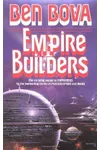
- Empire Builders (1993) - High-stakes corporate battles to save Earth's environment using space resources.
- Mars (1992) - The historic first manned mission to the Red Planet.
- Moonrise (1996) - The foundation and political struggles of the first permanent Moonbase.
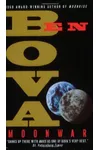
- Moonwar (1997) - The colony fights for its independence from Earth's governing bodies.
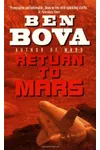
- Return to Mars (1999) - A second expedition to Mars dealing with personal rivalries and a mysterious discovery.
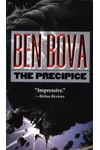
- The Precipice (2001) - The opening chapter of the Asteroid Wars subseries.
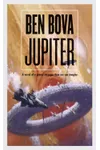
- Jupiter (2000) - An expedition into the crushing atmosphere of the giant planet to find signs of life.
- The Rock Rats (2002) - Book two of the Asteroid Wars; independent miners clash with a ruthless corporate monopoly.
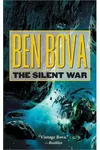
- The Silent War (2004) - Book three of the Asteroid Wars; the corporate conflict escalates into open warfare.
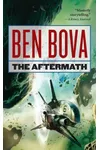
- Aftermath (2007) - The conclusion to the Asteroid Wars, dealing with the human cost of the conflict.
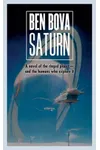
- Saturn (2003) - A colony ship carrying dissidents and scientists travels to Saturn, plagued by ideological struggles.
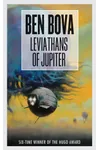
- Leviathans of Jupiter (2011) - Characters return to Jupiter to attempt communication with the native creatures.
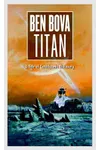
- Titan (2006) - Exploration of Saturn's largest moon, focusing on biological discoveries.
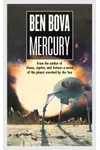
- Mercury (2005) - Explores the extreme heat and energy potential of the planet closest to the Sun.
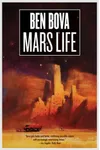
- Mars Life (2008) - The discovery of intelligent, fossilized life on Mars leads to a battle against religious extremists on Earth.
- Venus (2000) - A rescue mission and scientific expedition into the hellish acid atmosphere of Venus.
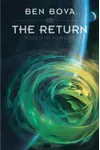
- The Return (2009) - Keith Stoner returns to Earth after decades in space. Note that this book also serves as the climax to the separate Voyagers series.
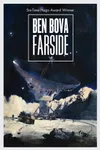
- Farside (2013) - Building a massive astronomical observatory on the far side of the Moon.
- New Earth (2013) - Humanity's first interstellar expedition travels to an Earth-like planet in the Sirius system.
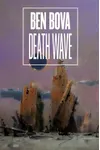
- Death Wave (2015) - The beginning of the Star Quest trilogy; an alien message warns of a lethal wave of radiation sweeping the galaxy.
- Apes and Angels (2016) - Humanity tries to protect a primitive alien civilization from the incoming radiation wave.
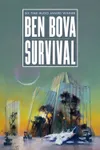
- Survival (2017) - The final entry in the Star Quest trilogy; explorers discover a machine civilization in the path of the wave.
- Earth (2019) - The aftermath of the wave and its direct impact on our home world.
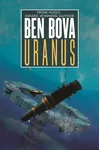
- Uranus (2020) - Exploration and corporate greed collide in the upper atmosphere of the ice giant.
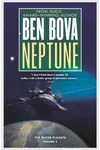
- Neptune (2021) - The final novel published posthumously, concluding the Outer Planets arc.
Option 2: The Publication Order Path
For readers who prefer to see the author's writing style grow and change, following the publication order is a great alternative. It prevents you from reading prequels written in the 2000s before the books they were meant to precede. The publication order for the Grand Tour novels is as follows:
- Privateers (1985)
- Mars (1992)
- Empire Builders (1993)
- Moonrise (1996)
- Moonwar (1997)
- Return to Mars (1999)
- Venus (2000)
- Jupiter (2000)
- The Precipice (2001)
- The Rock Rats (2002)
- Saturn (2003)
- The Silent War (2004)
- Mercury (2005)
- Powersat (2005)
- Titan (2006)
- Aftermath (2007)
- Mars Life (2008)
- The Return (2009)
- Leviathans of Jupiter (2011)
- Farside (2013)
- New Earth (2013)
- Death Wave (2015)
- Earth (2019)
- Uranus (2020)
- Neptune (2021)
Major Subseries and Sagas
Because the Grand Tour is so massive, it can be helpful to break it down into smaller, self-contained story arcs. If you do not want to read all 25+ books, you can comfortably read these subseries on their own:
The Moonbase Saga
Focusing on the colonization of the Moon and the scientific, corporate, and political battles that result from it. Read these two in order:
- Moonrise (1996)
- Moonwar (1997)
The Asteroid Wars
A four-part corporate thriller series set in the Asteroid Belt, detailing the brutal conflict over resources between rival industrial empires. They should be read in this order:
- The Precipice (2001)
- The Rock Rats (2002)
- The Silent War (2004)
- Aftermath (2007)
The Star Quest Trilogy
An late-era trilogy within the Grand Tour that shifts focus from solar system exploration to humanity's first interstellar missions and the threat of a galactic catastrophe. Read them in this sequence:
- Death Wave (2015)
- Apes and Angels (2016)
- Survival (2017)
The Outer Planets
Bova's final completed arc, focusing on the cold outer edges of the solar system. These two books are directly connected:
- Uranus (2020)
- Neptune (2021)
Other Key Ben Bova Series
Outside of the Grand Tour, Ben Bova wrote several other popular sci-fi series. Here is how to navigate them:
The Voyagers Series
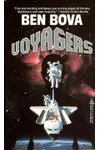
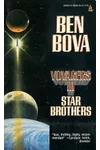
This series follows Keith Stoner, an astronaut who discovers an alien spacecraft heading toward the solar system, leading to a long, life-altering contact. The publication order matches the chronological order:
- Voyagers (1981)
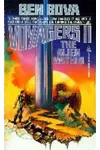
- The Alien Within (1986)
- Star Brothers (1990)
- The Return (2009)
The Orion Series
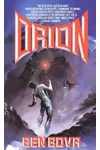
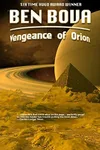
A unique mix of science fiction, fantasy, and historical mythology, this series follows John O'Ryan, an immortal warrior created by a god-like race to battle throughout time. Read them in publication order:
- Orion (1984)
- Vengeance of Orion (1988)
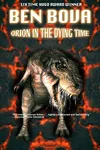
- Orion in the Dying Time (1990)
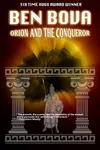
- Orion and the Conqueror (1994)
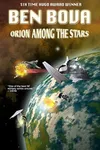
- Orion among the Stars (1995)
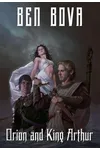
- Orion and King Arthur (2011)
The Exiles Series
A classic dystopian generation-ship trilogy about scientists exiled from a fearful Earth who must construct a new future in the stars. Read them in this order:
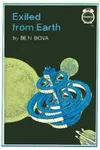
- Exiled from Earth (1971)
- Flight of Exiles (1972)
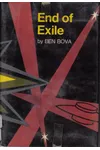
- End of Exile (1975)
The Watchmen / The Others Series
Bova's earliest space opera series exploring interstellar conflict and humanity's place in a wider, dangerous galaxy:
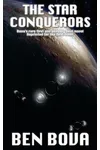
- The Star Conquerors (1959)
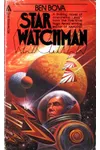
- Star Watchman (1964)
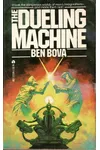
- The Dueling Machine (1969)
The Jake Ross Series
Unlike his outer space adventures, this series is a modern political thriller sequence following Dr. Jake Ross, a science advisor navigating Washington political battles over energy policy:
- Power Play (2012)
- Power Surge (2015)
- Power Failure (2018)
- Power Challenges (2021)
What to Know Before You Start
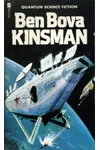
One of the most common questions readers have is whether the Kinsman books (Kinsman and Millennium) belong to the Grand Tour. While Chet Kinsman is a major figure in Bova's early space fiction, and the novels deal with similar themes, they were written in the 1970s and set at the end of the 20th century. Because real-world history outpaced these books, Bova did not officially integrate them into the core Grand Tour line, though they can be read as a spiritual "alternate history" prelude.
Additionally, the roguish space entrepreneur Sam Gunn appears across several short story collections (like Sam Gunn Unlimited and Sam Gunn Forever). These stories are set in the Grand Tour universe and add flavor, but they are not mandatory reading to understand the main planetary novels. If you love Bova's dry humor and corporate space politics, the Sam Gunn books are a perfect side trip.