


The Recommended Reading Order
David Gemmell’s Sipstrassi series (often referred to as the Stones of Power cycle) is a unique collection of seven fantasy novels. Unlike traditional linear series, the Sipstrassi books span vastly different genres, historical eras, and settings—from ancient Greece to Arthurian Britain and a post-apocalyptic future resembling a dark fantasy western. They are bound together by the presence of the Sipstrassi, mystical gold-tinged stones of power originating from Atlantis that can heal wounds, create matter, and fulfill desires, but which carry a corrupting price.
Because the series is divided into three distinct eras, the consensus among readers is that reading by subseries is the most rewarding path. Alternatively, you can read them in publication order to see how Gemmell's universe evolved, or chronological order to follow the historical timeline of the stones. Below, we break down each option to help you decide where to start.
Option 1: Reading by Subseries (Recommended)
This is the best approach for most readers. Each subseries has its own unique tone, setting, and cast of characters. You can read these subseries in any order, though starting with either the Arthurian duology or the Jon Shannow trilogy is highly recommended.
The Arthurian Novels
Set in a mystical version of post-Roman Britain, this duology reimagines the origins of King Arthur, Merlin, and Uther Pendragon. It serves as an excellent introduction to how the Sipstrassi stones influence human history.
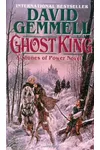
- Ghost King (1988)
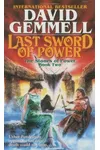
- Last Sword of Power (1988)
The Greek Series (Parmenion)
This duology blends historical fiction with dark magic, focusing on the life of Parmenion, a legendary Spartan general, and his association with Philip of Macedon and Alexander the Great. In this setting, the philosopher Aristotle possesses secret knowledge of the Sipstrassi stones.
- Lion of Macedon (1990)
- Dark Prince (1991)
The Jon Shannow Trilogy (The Jerusalem Man)
Set long after a global cataclysm has reshaped the Earth, this post-apocalyptic trilogy follows Jon Shannow, a weary, bible-quoting gunslinger searching for the lost city of Jerusalem in a lawless wasteland. Here, the corrupted remnants of the Sipstrassi stones are used as weapons and tools of dark sorcery.
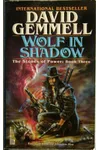
- Wolf in Shadow / The Jerusalem Man (1987)
- The Last Guardian (1989)
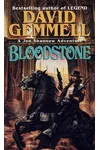
- Bloodstone (1994)
Option 2: Publication Order
If you want to experience the series exactly as David Gemmell's original readers did, follow the release dates. This path bounces between the post-apocalyptic future, Arthurian legend, and ancient Greece, showcasing the author's expanding vision of the Stones of Power mythology.
- Wolf in Shadow (1987) – Jon Shannow Book 1
- Ghost King (1988) – Arthurian Book 1
- Last Sword of Power (1988) – Arthurian Book 2
- The Last Guardian (1989) – Jon Shannow Book 2
- Lion of Macedon (1990) – Greek Book 1
- Dark Prince (1991) – Greek Book 2
- Bloodstone (1994) – Jon Shannow Book 3
Chronological Order vs. Publication Order
If you prefer to follow the timeline of the Sipstrassi stones themselves, the chronological order is as follows:
- The Greek Series: Lion of Macedon and Dark Prince (Set in the 4th century BC).
- The Arthurian Novels: Ghost King and Last Sword of Power (Set in the 5th century AD).
- The Jon Shannow Trilogy: Wolf in Shadow, The Last Guardian, and Bloodstone (Set in a distant post-apocalyptic future).
Why chronological order is not recommended for first-time readers: The Greek novels were written later in Gemmell's career, and their connections to the Arthurian novels are intended as retrospective links. For instance, the character Aristotle in the Greek novels is connected to the wizard Meadhlyn (Merlin) in the Arthurian books. Experiencing this connection in publication order makes the revelation much more satisfying.
What to Know Before You Start
Gemmell's signature style shines throughout the Stones of Power cycle. Readers should prepare for gritty, action-packed heroic fantasy filled with flawed protagonists seeking redemption, fast-paced battle scenes, and deeply emotional character arcs. While the Drenai Saga remains Gemmell's most famous work, the Sipstrassi series is highly regarded for its genre-blending elements, particularly the sci-fi and western details found in the Jon Shannow trilogy.
For collectors, there is also Wolf in Shadow: The Graphic Novel, published in 1994, which adapts Shannow's first adventure into a visual format.