
The Recommended Reading Order
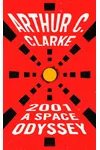
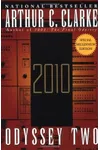
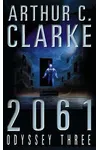
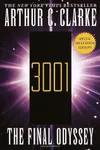
For the best experience, readers should follow the series in its original publication order. Since the narrative moves forward in time, the publication order perfectly matches the chronological progression of the story. Reading the core tetralogy in this order allows you to follow the development of the monoliths and humanity's evolution naturally:
- 2001: A Space Odyssey (1968)
- 2010: Odyssey Two (1982)
- 2061: Odyssey Three (1987)
- 3001: The Final Odyssey (1997)
The Foundational Precursors & Companion Pieces
While the four novels make up the main storyline, Arthur C. Clarke did not write them in a vacuum. If you want to see how these ideas evolved, there are key early stories and companion books that provide rich context:
- "The Sentinel" (originally written in 1948, published in 1951): Often called the spark for the series. This short story follows a lunar explorer who discovers a crystal pyramidal beacon left behind by an alien civilization. When the explorers breach its shield, they deactivate its signal, alerting the creators that humanity has reached the stars.
- "Encounter in the Dawn" (1953): Another crucial short story that influenced the beginning of 2001. It depicts an advanced alien expedition visiting Earth during its prehistoric era and nudging early hominids toward tool use.
- The Lost Worlds of 2001 (1972): A fascinating behind-the-scenes companion book. It contains early draft chapters, discarded concepts, and Clarke's personal notes on how the screenplay and novel diverged, including the inclusion of the two short stories listed above.
Continuity Caveats: Parallel Universes and Changing Planets
One of the most important things for new readers to understand is that the Space Odyssey series is not a perfectly seamless, single-timeline continuity. Instead, Arthur C. Clarke famously described the novels and films as taking place in parallel universes, or as variations on a theme. Inconsistencies between books are common because the sequels often align more with Stanley Kubrick's film adaptation than with Clarke's preceding novels.
The Jupiter vs. Saturn Divergence
The most famous continuity split involves the destination of the spaceship Discovery One. In the original 1968 novel 2001: A Space Odyssey, the mission travels to Saturn, where the monolith is situated on the moon Japetus. However, in the 1968 film adaptation, director Stanley Kubrick and his special effects crew found it too difficult to render a convincing version of Saturn's rings with the technology of the time. They changed the destination to Jupiter.
When Clarke wrote the sequel 2010: Odyssey Two in 1982, he recognized that the film had become the dominant version in public memory. He chose to align the sequel with the movie rather than his first book, shifting the setting back to Jupiter and its moon Io. This change persisted through the rest of the series, meaning 2010, 2061, and 3001 all treat Jupiter as the setting for the original encounter.
Other Noteworthy Shifts
In addition to the planet change, character details shift slightly between books. For example, the character of Heywood Floyd has a different family dynamic and age progression in 2061 than would be strictly logical based on the timeline of 2010. Rather than trying to force the books into a single rigid chronology, it is best to enjoy each book as a slightly modified reset built on the same core ideas.
What to Know Before You Start
If you are jumping in for the first time, keep in mind that the tone changes as the series progresses. The original 2001 is highly philosophical, mysterious, and grand in scope, whereas 2010 feels more like a traditional Cold War-era space race adventure with a heavier focus on human characters and international cooperation. 2061 shifts toward exploration and geology, and 3001 offers a speculative, far-future look at humanity's long-term fate under the shadow of the monoliths. Each novel acts as a standalone story to some degree, but they are far more satisfying when read in sequence.