










Where Should You Start Reading Arthur C. Clarke?
Arthur C. Clarke is one of the "Big Three" of classic science fiction, alongside Isaac Asimov and Robert A. Heinlein. With a career spanning over six decades, he wrote dozens of novels, short story collections, and non-fiction books. If you are new to his work, you have three excellent starting points depending on what type of story you enjoy:
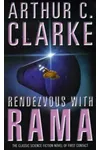
- For hard science and exploration: Start with Rendezvous with Rama (1973). It is a thrilling, mystery-driven story about humanity exploring a massive, silent alien vessel that enters our solar system. It works perfectly as a standalone novel.
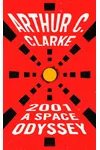
- For philosophical and evolutionary themes: Start with 2001: A Space Odyssey (1968). Developed concurrently with Stanley Kubrick’s iconic film, this book explores human evolution, artificial intelligence, and our place in the cosmos.
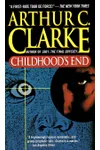
- For mind-bending conceptual sci-fi: Start with Childhood's End (1953). This standalone novel details the peaceful invasion of Earth by the mysterious Overlords, leading to a profound evolution of the human race.
The Space Odyssey Series
While the first book was written alongside the development of the famous movie, Clarke expanded the universe into a four-book series. The narrative links are loose but chronological, and they should be read in publication order. Be aware that Clarke adjusted details in later books to reflect updated scientific discoveries (such as the nature of Jupiter's moons), meaning the continuity is not perfectly seamless.
- 2001: A Space Odyssey (1968) – The essential starting point where a mysterious monolith triggers human evolution and sends an expedition to Saturn (changed to Jupiter in the film).
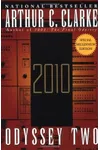
- 2010: Odyssey Two (1982) – A joint Soviet-American mission heads back to the derelict Discovery to reactivate HAL 9000 and investigate the monolith.
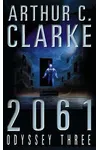
- 2061: Odyssey Three (1987) – Set during a return of Halley's Comet, a crew is forced to crash-land on the forbidden, monolith-dominated moon of Europa.
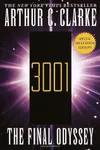
- 3001: The Final Odyssey (1997) – The series concludes a millennium later as astronaut Frank Poole is recovered and revived in a vastly changed human society.
The Rama Series and Spin-offs
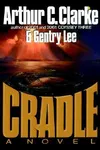
The Rama series is famous for its sense of cosmic awe, but it undergoes a major shift after the first book. While Clarke wrote the original novel entirely by himself, the subsequent books were co-authored with Gentry Lee. These sequels shift focus away from purely scientific exploration toward character drama, politics, and social dynamics. Some fans love the expanded lore, while others prefer the isolation of the first book.
The Core Rama Saga
- Rendezvous with Rama (1973) – Clarke’s solo masterpiece focusing on the physical exploration of the cylindrical spacecraft Rama.
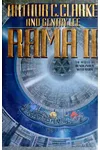
- Rama II (1989) – Co-authored with Gentry Lee. A second Raman vessel arrives seventy years later, carrying a new crew with conflicting agendas.
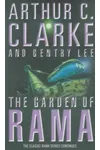
- The Garden of Rama (1991) – Co-authored with Gentry Lee. A small group of humans must live aboard the spacecraft as it journeys back into deep space.
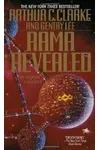
- Rama Revealed (1993) – Co-authored with Gentry Lee. The climax of the saga, revealing the ultimate purpose and creators of the Raman vessels.
Gentry Lee's Extended Rama Universe
Following the completion of the main saga, Gentry Lee wrote three solo spin-off novels set within the same universe. While Clarke was not directly involved in writing these, they expand on the setting and share thematic elements:
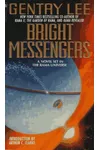
- Bright Messengers (1995) – Explores events adjacent to the Rama narrative, focusing on human colonies and alien encounters.
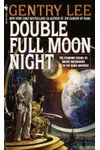
- Double Full Moon Night (1999) – Follows characters stranded on a wild, alien world.
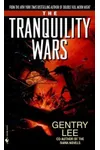
- The Tranquility Wars (2000) – A military-themed expansion of the solar civilization established in the later Rama books.
A Time Odyssey Series (with Stephen Baxter)
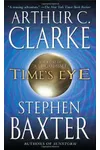
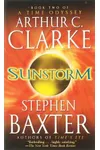
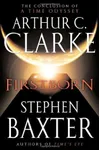
Co-authored with British sci-fi author Stephen Baxter, this trilogy is a "parallel" sequence to the Space Odyssey series. It features alien entities known as the Firstborn who manipulate time and space, creating a patchwork Earth made of different historical eras.
The Standalone Masterpieces
Many of Clarke's best ideas are contained in his standalone novels. If you want to sample his work outside of the major series, these are highly recommended:
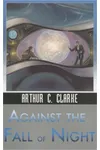
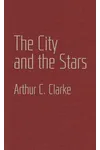
- Against the Fall of Night (1953) vs. The City and the Stars (1956) – Clarke's debut novella was Against the Fall of Night (originally serialized in 1948). He later rewrote and expanded it into The City and the Stars, which features much deeper world-building and character development. Most readers recommend reading The City and the Stars as the definitive version.
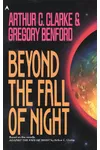
- Beyond the Fall of Night (1990) – An authorized sequel to the original 1953 novella Against the Fall of Night, written by Gregory Benford. Note that this is not connected to The City and the Stars.
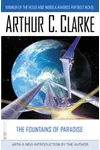
- The Fountains of Paradise (1979) – A Hugo and Nebula Award-winning novel detailing the construction of the first space elevator on a fictional island based on Sri Lanka.
- The Songs of Distant Earth (1986) – A poetic look at a peaceful colony world visited by a generation ship carrying the last survivors of a destroyed Earth.
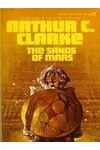
- The Sands of Mars (1951) – One of Clarke's early novels, offering a detailed, realistic depiction of the colonization and terraforming of Mars.