

Where to Start Your Voyage
With hundreds of novels spanning decades, the most common question for any prospective reader is where to begin. Because the vast majority of Star Trek: The Original Series (TOS) books are written as episodic, standalone adventures, you do not need to read them in a strict sequence. Instead, you can choose a starting point based on the type of story you enjoy most. Three novels stand out as the absolute best gateways for new readers:
- Spock’s World by Diane Duane (1988): Widely considered a masterpiece of Star Trek fiction, this novel explores Vulcan history, culture, and Spock’s complex relationship with his father, Sarek, alongside a tense political crisis that threatens Vulcan's secession from the Federation.
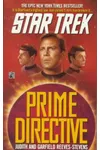
- Prime Directive by Judith and Garfield Reeves-Stevens (1990): A cinematic, high-stakes mystery that begins with the USS Enterprise crew in disgrace after an apparent violation of the Federation's most sacred rule. It is a fantastic showcase of the core cast's loyalty and resourcefulness.
- The Entropy Effect by Vonda N. McIntyre (1981): As the first original novel in the Pocket Books era, this time-travel story is famous for its excellent characterizations and for officially giving Sulu his first name, Hikaru.
Bantam vs. Pocket Books: The Publishing Eras
The publishing history of Star Trek books is divided into two major eras, each with its own style and approach to continuity:
The Bantam Books Era (1967–1981)
Bantam Books held the initial license for Star Trek fiction during the original television show's run and immediate aftermath. This era is characterized by James Blish's episode novelizations, which converted the TV episodes into short prose stories, and a handful of early original novels. These books are highly episodic, nostalgic, and generally stand completely apart from any modern continuity.
The Pocket Books Era (1979–Present)
Pocket Books took over the license in 1979, beginning a massive expansion of the Star Trek literary universe. Early Pocket Books novels were numbered and largely standalone. However, as the line grew, authors began building deeper connections between books, leading to the creation of distinct subseries, multi-book events, and character-focused trilogies.
Reading Orders: Chronological vs. Publication Order
Because the television show operated on an episodic format, the books followed suit. There is no official chronological reading order established by the publishers. However, fans generally approach the series in one of two ways:
- Publication Order: Reading the books in the order they were released allows you to experience the evolution of Star Trek fiction, tracking how writers gradually expanded the lore and introduced elements that later became fan favorites.
- Chronological (In-Universe) Order: Fans on community resources like Memory Beta have constructed complex in-universe timelines placing novels during the five-year mission, the gap years between the series and the films, or the movie era itself. While fun, this order is not necessary for comprehension, as most books explain their own context.
Key Subseries and Story Arcs
While standalone novels are the norm, several excellent subseries and collections offer extended narratives. If you want a more structured reading experience, focus on these key arcs:
The Rihannsu Series
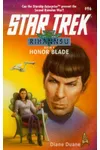
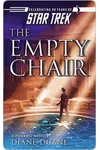
Written primarily by Diane Duane, this five-book saga starting with My Enemy, My Ally (1984) and running through The Empty Chair (2006) is a deep dive into Romulan society, language, and culture. It remains one of the most celebrated and cohesive subseries in the entire franchise, offering a unique perspective on the Federation's classic adversaries.
The Eugenics Wars
Greg Cox's trilogy (starting with The Eugenics Wars, Vol. 1 in 2001 and concluding with To Reign in Hell in 2005) explores the secret history of Earth during the late 20th century and the rise of the genetically engineered tyrant, Khan Noonien Singh. It is a brilliant blend of real-world history and Star Trek lore.
The Lost Years Saga
Starting with The Lost Years by J.M. Dillard (1989), this subseries bridges the gap between the end of the Enterprise's five-year mission and the events of Star Trek: The Motion Picture, showing where the characters went when they went their separate ways.
My Brother's Keeper
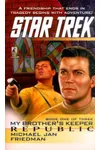
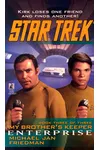
A three-part series by Michael Jan Friedman published in 1999 (Republic, Enterprise, and Constitution) that focuses on the early career of James T. Kirk and his tragic friendship with Gary Mitchell before the events of the television pilot.
The Crucible Trilogy
Released to celebrate the 40th anniversary of the franchise, this trilogy by David R. George III (featuring McCoy: The Provenance of Shadows, Spock: The Fire and the Rose, and Kirk: The Star to Every Wandering) offers deep, psychological character studies of the Enterprise's primary trio across different points in their lives.
Multi-Series Crossovers and Event Books
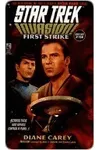
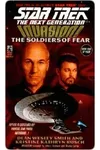
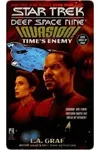
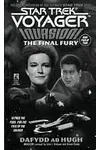
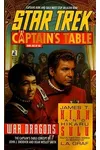
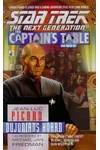
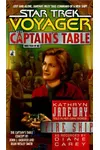
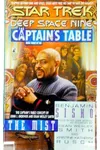
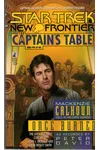
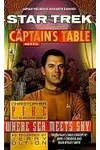
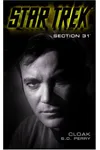
Pocket Books frequently published crossover events that spanned multiple Star Trek eras, including TOS. Notable events include Invasion! (1996), The Captain's Table (1998), Gateways (2001), and Section 31 (which includes the TOS novel Cloak). These can be read as thematic collections rather than strict narratives.
Practical Advice for New Readers
Do not feel pressured to collect every single novel. The beauty of Star Trek: The Original Series books is their accessibility. You can pick up a copy of The Final Reflection by John M. Ford to read about Klingons, jump to Uhura's Song by Janet Kagan for a colorful adventure on an alien world, and then read the Crucible trilogy for deep character drama without missing a beat. Start with the fan-favorites, explore the subseries that catch your interest, and boldly go at your own pace.