
The Recommended Reading Path
For the best experience, readers should follow the publication order of the novels. The core saga of Titus Crow is a continuous narrative that shifts in tone, style, and even its primary cast as it progresses. Starting with the first novel is essential because it sets up the occult foundation, the rules of the universe, and the central conflict between humanity and the Great Old Ones.
While there is a collection of short stories, The Compleat Crow, containing prequel and side adventures, it is highly recommended to read the first two novels before diving into these shorter pieces. The novels provide the necessary grand scale and context that makes the standalone investigations feel much more significant.
The Core Novels in Detail
1. The Burrowers Beneath (1974)
The saga begins on Earth with a relatively grounded, atmospheric horror setup. Occult investigator Titus Crow and his companion Henri-Laurent de Marigny are recruited by the Wilmarth Foundation to investigate bizarre seismic activity. They discover the Chthonians, telepathic, worm-like cosmic horrors tunneling beneath the Earth's crust under the command of Shudde M'ell. Rather than succumbing to madness, Crow and his allies use science, lore, and magic to fight back, launching an all-out psychic war.
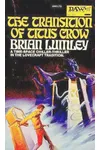
2. The Transition of Titus Crow (1975)
The second book drastically shifts the series from terrestrial horror to cosmic science-fantasy. When their home is destroyed, Titus Crow escapes using the Clock of Dreams—a mysterious, coffin-shaped vessel capable of traveling through time and space. The narrative follows Crow as he is flung across the cosmos, gets physically rebuilt with cyborg-like enhancements, and discovers Elysia, the home of the benevolent Elder Gods (including Kthanid, the good brother of Cthulhu).
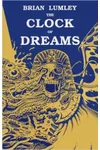
3. The Clock of Dreams (1978)
This installment dives deep into the Dreamlands, drawing heavy inspiration from H.P. Lovecraft's dream cycle. With Titus Crow missing in the depths of space, de Marigny takes the lead. Utilizing the Clock of Dreams, de Marigny journeys into these surreal, nightmarish dimensions to find his lost friend and rescue Crow's love, Tiania, from the grasp of cosmic entities.
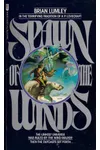
4. Spawn of the Winds (1978)
A major point of confusion for new readers is that Titus Crow himself is completely absent from the fourth and fifth books. Instead, Spawn of the Winds focuses on Hank Silberhutte, a psychic Texan who works with the Wilmarth Foundation. Silberhutte seeks vengeance against Ithaqua, the Wind-Walker, a cold-dwelling deity who destroyed his brother. His quest takes him to the freezing, remote world of Borea, where he forms an alliance with Ithaqua's half-human daughter, Armandra.
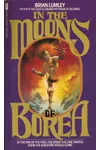
5. In the Moons of Borea (1979)
Continuing directly from the previous book, this entry features both Hank Silberhutte and Henri-Laurent de Marigny on the parallel world of Borea. They engage in high-stakes psychic warfare against the forces of Ithaqua. The setting is pure pulp fantasy, filled with strange creatures, local tribes, and otherworldly landscapes, showing how the war against the Great Old Ones spans multiple dimensions.
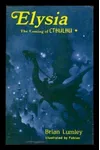
6. Elysia: The Coming of Cthulhu (1989)
The final book brings the entire cast back together. The Great Old Ones have broken free from their ancient prisons and are marching toward Elysia, the sanctuary of the Elder Gods, to destroy their captors once and for all. Titus Crow returns to lead the defense alongside de Marigny, Silberhutte, and the forces of Elysia in an apocalyptic battle to decide the fate of the cosmos.
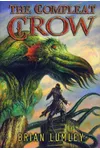
The Role of Short Stories: The Compleat Crow
First published in 1987, The Compleat Crow collects 11 short stories and novellas that Lumley wrote detailing Titus Crow's early career before the events of the novels. Stories like "Lord of the Worms" and "The Caller of the Black" showcase Crow as a classic occult detective, solving localized paranormal cases. While these can technically be read first as a chronological prequel, they are best enjoyed after the second or third novel, when you already have an appreciation for Crow's character and his ultimate cosmic destiny.
What to Know Before You Start
The most important thing to understand before diving into Titus Crow is how much it differs from traditional Lovecraftian horror. Lovecraft's stories are defined by cosmic pessimism—humanity is insignificant, and encountering the Great Old Ones leads inevitably to madness and despair. Lumley flips this entirely. His stories are pulp adventures where humans are brave, proactive, and capable of fighting back with high-tech machinery, psychic abilities, and magic.
Furthermore, Lumley introduces the concept of the Elder Gods as active, benevolent protectors who assist humanity. This change in mythology, along with the sudden jump from gothic investigator horror to space-and-time-traveling sci-fi, makes the series a unique, high-energy hybrid that appeals greatly to fans of adventure fiction.