


The Recommended Reading Order
To fully appreciate the evolution of the characters and the changing landscape of Belle Époque Paris, you should read the Victor Legris mysteries in their original publication order. Because the narrative progresses chronologically year-by-year, the publication order matches the internal timeline of the books perfectly. The series begins in 1889 with the opening of the Eiffel Tower and closes in 1900 with the dawn of a new century at the Paris Exposition Universelle.
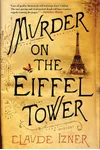
- Murder on the Eiffel Tower (2003 / French: Mystère rue des Saints-Pères)
Set in May 1889 during the Exposition Universelle. Victor Legris investigates a series of mysterious deaths on the newly constructed Eiffel Tower, starting with a woman who seemingly dies of a bee sting.
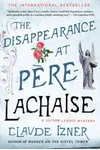
- The Père-Lachaise Mystery (2003 / French: La Disparue du Père-Lachaise)
Set in 1890. Victor probes the eerie disappearance of his former lover, which leads him deep into the gothic paths of Paris's most famous cemetery.
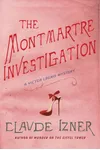
- The Montmartre Investigation (2003 / French: Le Carrefour des Écrasés)
Set in November 1891. Victor navigates the bohemian, artistic underworld of Montmartre to solve a series of hit-and-run deaths that hide a darker conspiracy.
- The Marais Assassin (2004 / French: Le Secret des Enfants-Rouges)
Set in April 1892. Following the arrest of the anarchist Ravachol, Victor investigates murders linked to the historic Marché des Enfants-Rouges in the Marais district.
- The Predator of Batignolles (2005 / French: Le Léopard des Batignolles)
Set in 1893. Victor is drawn into the quiet Batignolles neighborhood to investigate the gruesome murders of local paint merchants and artists.
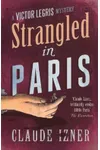
- Strangled in Paris (2006 / French: Le Talisman de la Villette)
Set in 1894. A masked woman is found murdered in the slaughterhouse district of La Villette, pulling Victor into a web of spiritualist scams and family secrets.
- Rendez-vous passage d'Enfer (2008 – French Only)
Set in 1895. The mystery unfolds in the 14th arrondissement around the Passage d'Enfer, focusing on the late-century obsession with spiritualism and occultism.
- La Momie de la Butte-aux-Cailles (2009 – French Only)
Set in 1896. Victor explores the Butte-aux-Cailles neighborhood, interacting with the local scrap collectors and investigating a bizarre death linked to an Egyptian mummy.
- Le Petit Homme de l'Opéra (2010 – French Only)
Set in 1897. Taking place in the aftermath of the tragic Bazar de la Charité fire, the plot centers on the Opéra Garnier and the dark secrets of its patrons.
- Les Souliers bruns du quai Voltaire (2011 – French Only)
Set in 1898. The mystery is framed by the political turmoil of the Dreyfus Affair and the publication of Émile Zola's famous letter, 'J'accuse...!'.
- Minuit, impasse du Cadran (2012 – French Only)
Set in October 1899. Amidst widespread end-of-the-world hysteria driven by rumors of a collision with a comet, Victor must solve a murder in Montmartre.
- Le Dragon du Trocadéro (2014 – French Only)
Set in 1900. The series concludes where it began—during a grand Parisian world fair. Victor investigates a murder by arrow during the 1900 Exposition Universelle.
Publication Order vs. Chronological Order
Fortunately for readers, there is no conflict between the publication order and the chronological timeline. The authors, sisters Liliane Korb and Laurence Lefèvre writing under the pseudonym Claude Izner, designed the series to progress chronologically. Each book advances the timeline by roughly one year. This structure creates a historical panorama of Paris from 1889 to 1900, wrapping up a transitional decade in French history.
The English Translation Gap
English-speaking readers should note a major caveat: only the first six novels in the series have been translated into English. Books 7 through 12 are currently available exclusively in French. For bilingual readers or those willing to read with a translation aid, continuing past Strangled in Paris is highly rewarding, as the final six books cover major historical events like the Dreyfus Affair and the grand 1900 Exposition Universelle.
Meet the Sleuths and the Setting
The series stars Victor Legris, an amateur photographer and bookseller who runs 'L'Elzévir' bookstore on the Rue des Saints-Pères. Victor's profession is a direct reflection of the authors' lives; Liliane Korb and Laurence Lefèvre were both long-time Parisian booksellers. This insider knowledge infuses the series with a deep love for rare manuscripts, literary history, and the daily rhythms of shopkeepers in Paris.
Supporting Victor is his loyal assistant, Joseph 'Jojo' Pignot, who grows from a young helper into a capable investigator in his own right, and Kenji Mori, Victor's Japanese business partner and adoptive father. Kenji’s mysterious past and exotic background provide a regular source of intrigue. The books are famous for treating the city of Paris itself as a character, with each novel highlighting the specific architecture, social class, and historical flavor of a different neighborhood.
What to Know Before You Start
While the murder mysteries in each volume are self-contained and resolved by the final page, the personal lives of Victor, his love interest Iris, and his adoptive father Kenji Mori develop continuously. Reading the books out of order will spoil major relationship dynamics and plot twists regarding Victor's family background. It is highly recommended that you start with Murder on the Eiffel Tower and progress sequentially. The books strike a unique balance between the cozy atmosphere of a bookstore and the grittier, darker realities of late 19th-century urban life.