

Where to Start Reading Wild Cards
Navigating a shared universe with dozens of books and over forty contributing authors can feel daunting, but the Wild Cards series is surprisingly structured. Because the series is edited by George R. R. Martin and Melinda M. Snodgrass, it maintains a unified timeline and tone. If you are diving in for the first time, you have two primary, widely agreed-upon starting points:
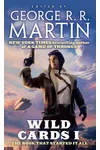
- The Absolute Best Start: Wild Cards (Vol. 1, 1987) – This is where it all begins. The debut anthology sets up the premise of the alien Xenox virus (the "Wild Card virus") released over New York City in 1946. It introduces core concepts like Aces (those who gain superhuman abilities) and Jokers (those who are tragically mutated). Reading from the start lets you experience the historical progression and build a deep relationship with the legacy characters.
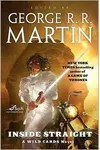
- The Modern Reboot Start: Inside Straight (Vol. 18, 2008) – If you want a modern entry point without reading decades of backlist, this book kicks off the "Committee Triad." It introduces a new generation of Aces competing in a superhero reality TV show, making it an excellent jumping-on point for contemporary readers.
Understanding the "Mosaic Novel" Format
Unlike typical superhero comics or anthologies, Wild Cards is famous for pioneering the mosaic novel format. Rather than being a collection of completely isolated short stories, a mosaic novel features separate stories written by different authors that overlap, intersect, and share characters, ultimately weaving together to form a single, cohesive novel-length narrative. This collective approach—managed by the "Wild Cards Trust"—creates a rich tapestry of perspectives, ranging from gritty street-level noir to cosmic sci-fi, all set against a detailed alternate history where historical events are altered by the presence of superhumans.
Who's Who: Key Characters that Define the Universe
Because Wild Cards features a revolving door of characters across its massive timeline, a few key figures stand out as the glue holding the universe together. Knowing these names will help you track continuity across different eras:
- Dr. Tachyon (Tiglasilis): An alien telepath from the planet Takis who originally created the Wild Card virus as a bioweapon for his people. Stricken with guilt, he travels to Earth to stop its release, failing but dedicating his life to treating and advocating for the infected Aces and Jokers.
- Croyd Crenson (The Sleeper): One of the most unique Aces in the series. Every time Croyd goes to sleep, he enters a cocoon-like state and wakes up weeks later with a completely different set of physical features and superpowers. Sometimes he is an Ace, sometimes a mutated Joker, and sometimes a mix of both, making his appearances unpredictable and exciting.
- The Great and Powerful Turtle (Thomas Tudbury): A powerful telekinetic who uses his abilities to levitate a heavily armored Volkswagen Beetle, acting as a reclusive, shell-bound superhero. He represents the classic, comic-book-inspired side of the early universe.
- Fidel Castro: In one of the series' most famous alternate history twists, the Cuban leader never becomes a communist revolutionary. Instead, he is scouted by the Brooklyn Dodgers and becomes a legendary Major League Baseball superstar.
The Arcs, Triads, and Subseries
To make the massive list of books manageable, the series is naturally divided into thematic cycles, often referred to as triads or quartets. Reading within these blocks is highly recommended, as they share ongoing storylines and character development:
The Bantam Era (Vols. 1–12)
This is the classic run that established the universe's history from 1946 through the early 1990s:
- The Original Triad (Vols. 1–3): Comprising Wild Cards, Aces High, and Jokers Wild. This introductory arc covers the arrival of the virus, an alien invasion, and the struggle of the mutated Jokers in their ghetto, Jokertown.
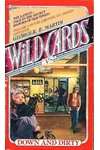
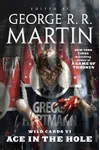
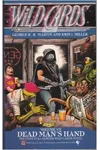
- The Puppetman Quartet (Vols. 4–7): Comprising Aces Abroad, Down and Dirty, Ace in the Hole, and the solo novel Dead Man's Hand. This arc moves the narrative to a global scale, focusing on political conspiracies and a presidential campaign.
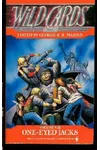
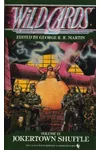
- The Rox Triad (Vols. 8–9 & 11): Comprising One-Eyed Jacks, Jokertown Shuffle, and Dealer's Choice. It focuses on gang warfare and the dark underbelly of Jokertown.
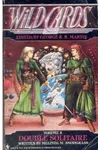
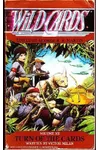
- Bantam Solo Novels (Vols. 10 & 12): Double Solitaire (focusing on the Sleeper) and Turn of the Cards (focusing on a cosmic game of cards).
The Card Sharks Mosaic (Vols. 13–15)
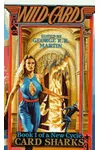
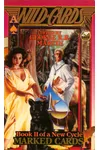
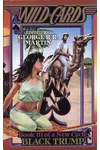
Published by Baen Books in the mid-1990s, this triad introduces a new generation of characters and a darker tone. It consists of Card Sharks, Marked Cards, and Black Trump (recently retitled Showdown in modern reprints). It is best read in sequence, immediately following the Bantam era.
The Standalone Tor Transition (Vols. 16–17)
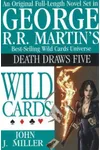
Following a hiatus, the series returned with Deuces Down (2002), a collection of stories filling in historical gaps, and Death Draws Five (2006), a solo novel by John J. Miller. These books act as bridges before the major modern relaunch.
The Committee Triad (Vols. 18–20)
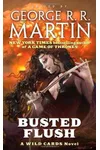
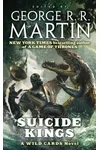
This relaunch by Tor Books starts with Inside Straight, followed by Busted Flush and Suicide Kings. It centers on the "Committee," an international superhero task force sponsored by the United Nations, and deals with contemporary themes like media saturation and global politics.
The Mean Streets Triad (Vols. 21–23)
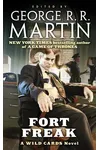
Set in a post-Hurricane Sandy New York, this cycle includes Fort Freak, Lowball, and High Stakes. It shifts the focus back to gritty police procedurals, street-level vigilantes, and the residents of Jokertown.
The USA Triad (Vols. 24–26)
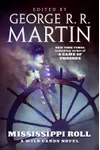
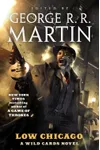
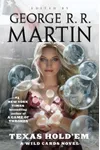
This cycle includes Mississippi Roll, Low Chicago, and Texas Hold'em. It moves the action away from New York City, taking characters on regional adventures across the American South and Midwest, exploring local Ace and Joker culture.
The British Arc (Vols. 27–28)
Comprising Knaves Over Queens and Three Kings, this arc explores how the Wild Card virus impacted the United Kingdom and the British royal family from 1946 to the modern day.
Modern Anthologies and Tor.com Standalones
In recent years, the series has blended traditional print anthologies with digital-first standalone stories published on Tor.com (now Reactor). Many of these individual digital stories—such as "Ghost Girl Takes Manhattan," "The Elephant in the Room," "Nuestra Señora de la Esperanza," and "Ripple Effects"—were later compiled into physical anthologies like Full House (2022) and Pairing Up (2023).
Publication Order vs. Chronological Order
While the overall narrative of the main books progresses chronologically, reading the series in absolute chronological order is not recommended. Many books are anthologies containing historical stories that jump back and forth in time to fill in the backstory of specific characters. For instance, the standalone stories published on Tor.com are set in various eras throughout the 20th and 21st centuries. Reading by publication order is the safest and most enjoyable path, as it preserves the reveal of mysteries, the evolution of the writing style, and the gradual expansion of the world's alternate history.
Spin-offs and Graphic Novels
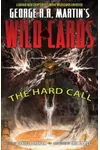
For readers who enjoy visual storytelling, the Wild Cards universe has also expanded into comics. George R. R. Martin's Wild Cards and The Hard Call are graphic novels that offer excellent visual entries into the world, adapting key concepts and introducing original stories that complement the main books without being strictly required to understand the prose novels.