
The Recommended Reading Paths
Jeff Shaara’s World War II books can be read in two primary ways: chronological order, which follows the historical timeline of the war, or publication order, which reflects when the books were written. While the core tetralogy was written between 2006 and 2011, Shaara returned to the era in 2020 and 2021 with two novels focusing on the early Pacific Theater. Understanding how these groups interconnect helps readers choose the best path forward.
Option 1: The Chronological Timeline Order
For readers who want to experience the events of World War II as they unfolded historically—moving from the surprise attack on Pearl Harbor, through the battlefields of Europe, and finally to the end of the conflict in the Pacific—this chronological path integrates the later-written Pacific novels with the core tetralogy:
- To Wake the Giant (2020) – Set in 1941, focusing on the events leading up to and during the attack on Pearl Harbor.
- The Eagle's Claw (2021) – Set in 1942, centering on the pivotal naval clash at the Battle of Midway.
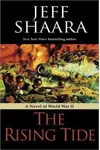
- The Rising Tide (2006) – Covering late 1942 to 1943, exploring the Allied campaigns in North Africa and Sicily.
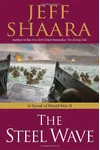
- The Steel Wave (2008) – Set in 1944, focusing on the massive D-Day invasion of Normandy and the liberation of France.
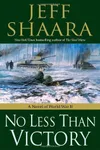
- No Less Than Victory (2009) – Set in late 1944 to early 1945, detailing the Battle of the Bulge and the final push into Germany.
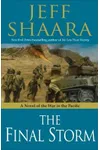
- The Final Storm (2011) – Set in 1945, focusing on the Battle of Okinawa and the deployment of the atomic bomb, concluding the war.
Option 2: The Core WWII Tetralogy Order (Publication Order)
If you prefer to read the books in the order they were conceived and written, you should focus on the original 1939–1945 tetralogy. This path follows the evolution of Shaara's writing style and the main character arcs he established for the European Theater before shifting focus to the Pacific:
- The Rising Tide (2006)
- The Steel Wave (2008)
- No Less Than Victory (2009)
- The Final Storm (2011)
Detailed Breakdown of the Books
To Wake the Giant (2020)
This novel explores the tense months leading up to December 7, 1941. Unlike standard war novels, it dives deep into the political and military climate in Washington, D.C., and Tokyo. The story is told through the eyes of real-life figures like Secretary of State Cordell Hull and Admiral Husband Kimmel, alongside fictional characters like young recruit Tommy Biggs. It details the vulnerabilities, intelligence failures, and tragic decisions that culminated in the devastating surprise attack on Pearl Harbor, drawing the United States into the war.
The Eagle's Claw (2021)
Serving as a direct historical sequel to the Pearl Harbor novel, this book covers the critical summer of 1942. The plot centers on the Battle of Midway, widely regarded as the turning point of the Pacific War. The narrative shifts between high-ranking strategists like Admiral Chester Nimitz and Admiral Isoroku Yamamoto, and codebreakers like Commander Joe Rochefort who successfully cracked the Japanese naval codes. Through these perspectives, Shaara captures the high-stakes intelligence game and the chaotic carrier battles that reshaped naval history.
The Rising Tide (2006)
The first book of the core tetralogy covers the Allied campaigns in North Africa and the subsequent invasion of Sicily (1942–1943). The strategic challenges are viewed through the eyes of Dwight D. Eisenhower, George Patton, and Axis Commander Erwin Rommel. To ground the narrative, Shaara introduces key fictional protagonists: Jack Logan, a young tank gunner experiencing the harsh realities of desert tank warfare, and Jesse Adams, a daring paratrooper of the 82nd Airborne Division drop-landing in Sicily.
The Steel Wave (2008)
Focusing on 1944, this novel depicts the monumental planning and execution of the D-Day invasion. Eisenhower faces the immense pressure of launching the amphibious assault, while Rommel struggles to fortify the Atlantic Wall despite interference from Adolf Hitler. On the front lines, we follow paratrooper Sergeant Jesse Adams drop-landing behind enemy lines and Private Tom Thorne navigating the horrific, blood-soaked beaches of Normandy during the initial waves of the infantry assault.
No Less Than Victory (2009)
This book covers the final, brutal winter of the European campaign (1944–1945). The story centers on the Battle of the Bulge in the frozen Ardennes Forest and the subsequent Allied drive across the Rhine into Germany. Prominent viewpoints include Patton, Eisenhower, and German commanders Gerd von Rundstedt and Albert Speer. The fictional soldiers face extreme cold, dwindling supplies, and the psychological weight of the war’s end, culminating in the historic and emotional liberation of the Ohrdruf concentration camp.
The Final Storm (2011)
The core series concludes by shifting its lens back to the Pacific Theater in 1945. The narrative captures the grueling, fanatical defense of Okinawa, detailed through the eyes of General Simon Bolivar Buckner, Jr. and Japanese General Mitsuru Ushijima. Fictional Marine Clay Adams (brother of Jesse Adams from the European novels) provides the boots-on-the-ground experience of the infantry. The book also covers the political pressure on President Harry S. Truman and the crew of the Enola Gay, led by Paul Tibbets, during the dropping of the atomic bombs.
What to Know Before You Start
Jeff Shaara’s writing follows the tradition of his father, Michael Shaara (author of The Killer Angels). Instead of writing dry historical analyses, he utilizes a multi-perspective style, shifting between high-level generals who make the plans and low-level soldiers who execute them. While the historical figures and battle outcomes are accurate and heavily researched, the thoughts, personal dialogues, and minor soldiers are often fictionalized or composite characters designed to represent the collective experiences of veterans. This approach creates an emotional immediacy that helps readers feel the stakes of each conflict.
Practical Reading Advice
While all of these books can technically be read as standalones—as each covers a self-contained campaign with maps and historical summaries—reading them in order offers a much better experience. The core tetralogy features character continuity, specifically tracking the wartime journey of the Adams family. The experiences of paratrooper Jesse Adams in Europe set the stage, which is then mirrored by his brother Clay Adams' grueling fight as a Marine in the Pacific. For the most rewarding journey, start with The Rising Tide if you want to follow the core European-to-Pacific arc, or start with To Wake the Giant if you prefer a complete chronological timeline of American involvement in the war.