
































Where to Start Reading A. Bertram Chandler
For readers diving into the work of A. Bertram Chandler, the undisputed crown jewel of his bibliography is the John Grimes Saga. Because Chandler wrote these stories over several decades, often hopping back and forth across his protagonist's timeline, choosing a starting point can be tricky. Fortunately, there is a clear consensus among fans and publishers alike on the best path forward.
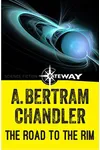
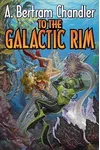
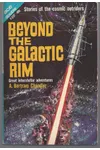
The absolute best starting point is The Road to the Rim (1967), which introduces John Grimes as a green, naive ensign in the Federation Survey Service. This book serves as the perfect entry point, establishing the nautical-in-space theme and setting the stage for Grimes' long career. If you are reading the modern collections, you should start with the first Baen Omnibus, titled To the Galactic Rim, which compiles this novel along with several other early-career adventures.
The John Grimes Saga: Chronological Career Path
Rather than following the original publication dates—which would have you jumping wildly between Grimes as a seasoned commodore and a young officer—the most satisfying way to read the saga is in chronological order of John Grimes' career. This progression follows his evolution from a disciplined military officer to an independent tramp captain and eventually a high-ranking leader on the galactic fringe. The chronological timeline is divided into distinct career phases:
1. The Survey Service Cycle (Young Officer)
This cycle covers Grimes' early years in the Federation Survey Service. Here, he learns the ropes of space navigation, handles shipboard political intrigue, and begins his long relationship with the mysterious Rim Worlds.
- The Road to the Rim (1967)
- To Prime the Pump (1971)
- The Hard Way Up (1972) - Short story collection detailing early service missions
- The Broken Cycle (1975)
2. The First Command Cycle
Grimes receives his first official command and begins encountering the strange, isolated societies of the outer galaxy. This phase ends with the pivotal mutiny that alters his life forever.
- False Fatherland (also published as Spartan Planet) (1968)
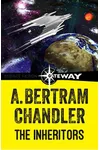
- The Inheritors (1972)
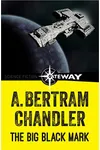
- The Big Black Mark (1975) - The crucial turning point where Grimes breaks from the Federation
- The Far Traveler (1977)
3. The Galactic Courier Cycle (Tramp Captain)
After leaving the Survey Service, Grimes operates as a civilian mail runner and tramp captain, taking on odd jobs, dealing with pirates, and securing his independence.
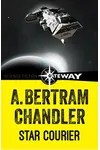
- Star Courier (1977)
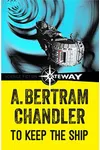
- To Keep the Ship (1978)
- Matilda's Stepchildren (1979)
- Star Loot (1980)
4. The Rim Commodore Cycle
Grimes settles in the Rim Worlds, eventually rising to the rank of Commodore. He defends the independent Rim planet-states from outside threats, corporate conspiracies, and wild anomalies.
- The Anarch Lords (1981)
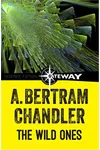
- The Wild Ones (1984)
- The Last Amazon (1984)
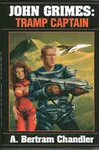
- Tramp Captain (1990) - Published posthumously
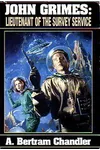
- Lieutenant of the Survey Service (2000)
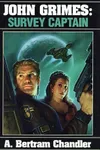
- Survey Captain (2002)
- Rim Runner (2004)
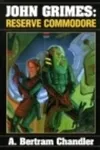
- Reserve Commodore (2004)
The Modern Baen Omnibus Collections
In the 2010s, Baen Books republished the John Grimes saga in six comprehensive omnibus volumes. For contemporary readers, tracking down these paperbacks is the easiest and most practical way to experience the entire sequence in chronological order:
- To the Galactic Rim (2011) – Contains The Road to the Rim, To Prime the Pump, The Hard Way Up, and The Broken Cycle.
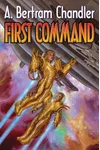
- First Command (2011) – Contains False Fatherland, The Inheritors, The Big Black Mark, and The Far Traveler.
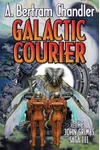
- Galactic Courier (2011) – Contains Star Courier, To Keep the Ship, Matilda's Stepchildren, and Star Loot.
- Ride the Star Winds (2012) – Contains The Anarch Lords, The Last Amazon, The Wild Ones, and the early Rim-focused novel Catch the Star Winds (1969).
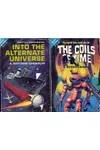
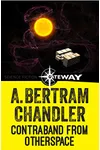
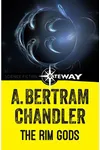
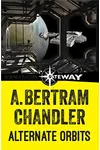
- Upon a Sea of Stars (2014) – Contains the alternate universe adventures Into the Alternate Universe, Contraband from Otherspace, The Rim Gods, and Alternate Orbits (also published as The Commodore at Sea).
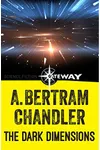
- Gateway to Never (not listed in all databases, but collects later novels) – Historically contains Gateway to Never, The Dark Dimensions, and The Way Back.
The Rim Worlds & Derek Calver Adventures
Before John Grimes became the undisputed focus of Chandler's universe, the author introduced the Rim Worlds through other characters. The most significant of these is Derek Calver, a former officer who travels to the edge of the galaxy to become a Rim Runner. These stories are essential for understanding the geography and political climate of the Rim Worlds before Grimes arrives.
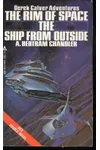
- The Rim of Space (1961) – Calver's introduction to the Lorn Lady and life on the Rim
- The Ship from Outside (1963) – A direct sequel involving the salvage of an alien vessel
The Empress Irene Series
Outside of the Rim Worlds and John Grimes continuities, Chandler wrote a short-lived space opera trilogy focusing on the adventures of Empress Irene. This series is much more traditional space opera and can be read entirely on its own.
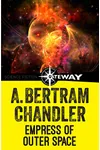
- Empress of Outer Space (1965)
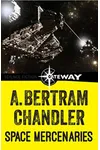
- Space Mercenaries (1965)
- Nebula Alert (1969)
Standalone Novels of Note
If you want to sample Chandler's writing style outside of his massive series, several standalones are highly regarded:
- Kelly Country (1985) – An alternate history masterpiece where Australian outlaw Ned Kelly leads a successful rebellion, turning Australia into a republic.
- The Hamelin Plague (1963) – A dystopian sci-fi tale of mutant rats and societal collapse.
- Bring Back Yesterday (1961) – A fast-paced adventure involving time travel and corporate sabotage.
What to Know Before You Start
Naval Realism: Chandler served for decades in the British merchant marine and the Australian Navy. Consequently, his spaceships operate under strict naval discipline, officers use nautical terminology, and the ships themselves (such as the windjammer-inspired 'Gaussjammers') reflect maritime architecture. This gives his work a unique, grounded texture often called 'Age of Sail in Space.'
Alternate Dimensions and Timelines: Chandler loved the concept of parallel universes. Several books in the John Grimes saga (collected in Upon a Sea of Stars) involve Grimes crossing over into alternate realities, meeting characters from alternate timelines, and navigating strange dimensions. This means you shouldn't expect a perfectly linear, realistic hard sci-fi continuity—expect cosmic weirdness alongside the naval grit.