
Where to Start Reading A.B. Yehoshua
For readers new to A.B. Yehoshua’s richly layered narratives, starting with his most accessible works is highly recommended. While he is often referred to as the 'Israeli Faulkner' due to his stream-of-consciousness style and multiple narrators, some of his novels are easier to step into than others.
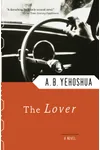
The Best Starting Point: The Lover (1977) is his first full-length novel and the absolute best place to start. It introduces readers to his trademark style of using multiple first-person narrators to view the same events from different perspectives. Set in the wake of the 1973 Yom Kippur War, it follows a husband’s search for his wife’s missing lover, serving as both an intimate domestic drama and a sharp critique of Israeli society. It is highly readable, emotionally gripping, and immediately establishes his literary style.
The Modern Masterpiece Option: If you want to dive straight into what critics consider his structural masterpiece, pick up Mr. Mani (1989). Spanning over two centuries, this novel is told entirely through five distinct, one-sided conversations in reverse-chronological order. While it is more challenging and requires active reader participation, its unique format and profound exploration of Jewish identity make it unforgettable.
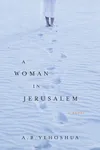
The Short and Focused Option: For a shorter, highly focused entry point, A Woman in Jerusalem (2004) is excellent. It won the Los Angeles Times Book Prize and centers on a human resources manager tasked with identifying a foreign worker killed in a suicide bombing, exploring themes of shared humanity, bureaucracy, and modern urban isolation.
The "Love and War" Trilogy
Although A.B. Yehoshua wrote standalone novels throughout his career, three of his earliest and most celebrated works are commonly grouped together by readers as the Love and War trilogy. These books do not share characters or ongoing storylines, meaning they can be read as standalone works in any order. However, reading them in publication order reveals his evolving style and thematic focus on family structures navigating personal crises during times of social upheaval.
- The Lover (1977): Explores domestic alienation and societal shifts following the Yom Kippur War through six different narrators, including an Arab teenager and a young girl.
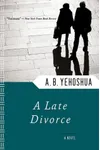
- A Late Divorce (1982): Set during the tense week of Passover, this novel uses nine different perspectives to chronicle the painful dissolution of a marriage and the division of a family.
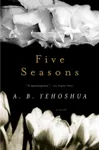
- Five Seasons (1987): A gentler, deeply moving novel that follows a middle-aged husband named Molcho as he processes grief and attempts to rebuild his life during the five seasons following his wife's death.
Chronological Ordering and Historical Settings
Because Yehoshua's novels are standalone stories, there is no narrative timeline to follow. However, he frequently played with time and historical settings, making a chronological reading by historical setting an interesting alternative path for seasoned readers:
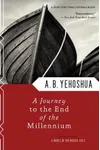
- A Journey to the End of the Millennium (1996): Set in the year 999 CE, this is historically his earliest novel. It follows a Sephardic Jewish merchant from Tangier who travels to Paris, highlighting the cultural clash between Sephardic and Ashkenazi Jewish traditions at the turn of the first millennium.
- Mr. Mani (1989): A reverse-chronological saga. The story starts in 1982 and steps backward through five generations of the Mani family, ending in 1848 Jerusalem. It provides a fascinating, retrospective look at history.
- Modern Standalones: The rest of his novels are set roughly in the periods they were written, reflecting the political, social, and cultural realities of late-20th and early-21st-century Israel.
The Complete A.B. Yehoshua Reading Lists
The Love and War Trilogy
- The Lover (1977) – A multi-perspective domestic drama set after the Yom Kippur War.
- A Late Divorce (1982) – A family saga told through nine points of view during Passover.
- Five Seasons (1987) – A touching study of grief, renewal, and domestic life.
Standalone Novels
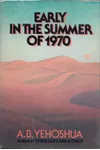
- Early in the Summer of 1970 (1970) – A powerful novella dealing with the psychological fallout of war and parental grief.
- Three Days and a Child (1971) – A collection of early novellas highlighting personal isolation.
- The Liberated Bride (1983) – An academic’s exploration of family secrets and Hebrew-Arabic relations.
- Mr. Mani (1989) – A reverse-chronological multigenerational dialogue on Jewish identity.
- Open Heart (1994) – A young doctor's journey to India that transforms into an obsessive romance.
- A Journey to the End of the Millennium (1996) – A rich historical novel set at the end of the tenth century.
- A Woman in Jerusalem (2004) – A poignant quest to restore dignity to a forgotten victim of a bombing.
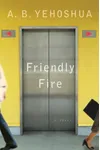
- Friendly Fire (2007) – A quiet, atmospheric look at family grief set over Hanukkah.
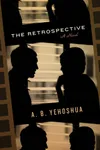
- The Retrospective (2011) – An aging film director looks back at his life and art during a retrospective in Spain.
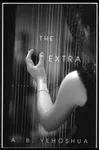
- The Extra (2014) – A harpist moves into her late father's apartment as an extra in Jerusalem's daily life.
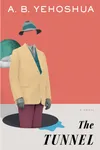
- The Tunnel (2018) – A retired road engineer facing early dementia works on a secret desert tunnel project.
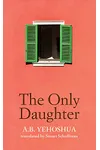
- The Only Daughter (2022) – A coming-of-age story of a young girl navigating interfaith family complexities in Italy.
Graphic Novels & Children’s Adaptations
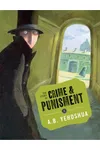
- The Story of Crime and Punishment (2011) – A simplified, illustrated retelling of Dostoevsky’s masterpiece adapted for younger readers.
Collections & Short Fiction
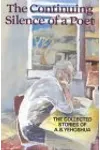
- The Continuing Silence of a Poet (1971) – A defining anthology of his early short stories and novellas.
Non-Fiction & Essays
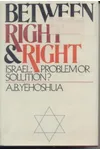
- Between Right and Right (1980) – Essays outlining his thoughts on Zionism, Jewish identity, and the Arab-Israeli conflict.
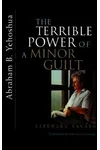
- The Terrible Power of a Minor Guilt (2000) – Literary essays analyzing the moral questions raised in classic works.
Anthologies & Contributions
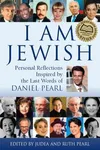
- I Am Jewish (2004) – An anthology of personal essays on Jewish identity featuring Yehoshua’s contributions.
What to Know Before You Start
The 'Israeli Faulkner' Label: Yehoshua is celebrated for his complex character psychology and stream-of-consciousness narrative style. Don't expect a single, reliable narrator in most of his works; instead, he uses polyphony—multiple, competing voices—to build a multi-dimensional picture of reality.
Sephardic vs. Ashkenazi Themes: Coming from a fifth-generation Jerusalem Sephardic family, Yehoshua frequently wove the distinct cultural, linguistic, and historical experiences of Sephardic Jews into his stories, notably in Mr. Mani and A Journey to the End of the Millennium, contrasting them with Ashkenazi norms.
Arab-Israeli Relations: Yehoshua was one of the first major Israeli writers to include complex, fully realized Arab characters in his fiction (most famously in The Lover and The Liberated Bride), highlighting his career-long preoccupation with the possibilities and difficulties of co-existence.