










































Where to Start Reading Adam Hall
If you are looking to dive into the works of Adam Hall (the famous pen name of Trevor Dudley-Smith, who also wrote extensively as Elleston Trevor), your absolute best starting point is The Berlin Memorandum (originally published in 1965, and frequently retitled The Quiller Memorandum). This award-winning novel introduces Quiller, a lone-wolf spy operating in Cold War Berlin, and sets the template for Hall's gritty, stream-of-consciousness espionage style.
For readers who want to experience his other writing styles, his classic survival novel The Flight of the Phoenix (1964, published under the name Elleston Trevor) is a masterpiece of tension and human endurance. If you prefer classic detective puzzles, start with Knight Sinister (1951, written under the Simon Rattray pseudonym), which introduces chess-themed sleuth Hugo Bishop.
The Quiller Spy Series: Chronological and Publication Order
The 19-novel Quiller series is Adam Hall's crown jewel. Fortunately for readers, the publication order and chronological order of the Quiller novels are identical. Each book follows Quiller's progression through the shifting political landscapes of the Cold War and its aftermath, meaning you can read them in the order they were written without worrying about confusing timelines.
Quiller is the antithesis of James Bond. Working for "The Bureau"—a deniable department of British intelligence that officially does not exist—he is sent on suicide missions where he is given no backup and no gun. He relies entirely on his wits, psychological stamina, and real-life author Elleston Trevor's own passion: Shotokan karate. The books are famous for their intense, first-person narrative style, where Quiller refers to his own body with clinical detachment as "the organism."
The Quiller Series in Reading Order
- The Berlin Memorandum / The Quiller Memorandum (1965) – Quiller is sent to Berlin to infiltrate a dangerous neo-Nazi organization.
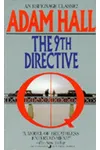
- The 9th Directive (1966) – Set in Bangkok, Quiller must prevent the assassination of a British royal visitor.
- The Striker Portfolio (1968) – Quiller investigates a series of mysterious fatal crashes involving German jet fighters.
- The Warsaw Document (1971) – Set in Poland during negotiations between East and West, Quiller navigates a web of underground rebellion.
- The Tango Briefing (1973) – A race against time in the Sahara Desert to locate a crashed plane containing deadly cargo.
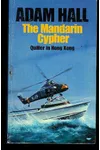
- The Mandarin Cypher (1975) – Quiller operates in Hong Kong to track down a defecting scientist.
- Kobra Manifesto (1976) – Quiller is tasked with stopping an international terrorist group plotting a high-profile hijacking.
- The Sinkiang Executive (1978) – Quiller is blackmailed into a suicide mission over Soviet airspace flying a spy plane.
- The Scorpion Signal (1980) – Quiller returns to Moscow on an unsanctioned rescue mission to retrieve a captured colleague.
- Peking Target (1981) – Set in China, Quiller must protect a high-ranking politician amidst shifting diplomatic alliances.
- Northlight / Quiller (1985) – Quiller is deployed to the icy landscapes of Norway to uncover a NATO defense leak.
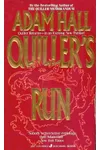
- Quiller's Run (1988) – A high-stakes chase in the jungles of Southeast Asia.
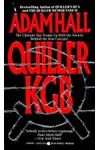
- Quiller KGB (1989) – As the Soviet Union begins to crumble, Quiller must protect a reformist politician from hardliners.
- Quiller Barracuda (1990) – Quiller is sent to Miami to investigate mind-control experiments linked to a political conspiracy.
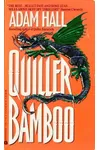
- Quiller Bamboo (1991) – Quiller must rescue a key political figure along the tense border between China and Tibet.
- Quiller Solitaire (1992) – Quiller confronts a rogue assassin operating within his own agency's networks.
- Quiller Meridian (1993) – Quiller tracks a dangerous satellite-hijacking plot spanning Romania and the Russian borderlands.
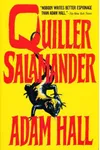
- Quiller Salamander (1994) – Sent to Cambodia, Quiller investigates a hidden cache of chemical weapons amidst political instability.
- Quiller Balalaika (1996) – The final novel, published posthumously, sees Quiller in post-Soviet Siberia investigating a series of murders linked to a powerful criminal syndicate.
The Hugo Bishop Chess Mysteries
Before achieving international fame with Quiller, Trevor Dudley-Smith wrote a series of clever mystery novels under the pseudonym Simon Rattray. These books feature Hugo Bishop, an eccentric London gentleman and amateur detective who treats murder investigations like a game of chess. Supported by his secretary Vera Gorringe, Bishop literally uses a chessboard to map out the movements and motives of his suspects. The series is best read in publication order:
- Knight Sinister (1951)
- Queen in Danger (1952)
- Bishop in Check (1953)
- Pawn in Jeopardy / Dead Silence (1954)
- Rook's Gambit / Dead Circuit (1955)
- Dead Sequence, etc. (1957)
Children's Series: Wumpus and Woodlander Books
In stark contrast to his dark spy thrillers, Elleston Trevor also wrote beloved children's fiction featuring woodland animals, capturing a cozy, classic British storytelling style. These are divided into two main series:
The Wumpus Books
This series follows the gentle adventures of Wumpus, a friendly koala, and his animal companion Flip Flap the penguin. They are best read in order:
- Wumpus (1945)
- More About Wumpus (1947)
- Where's Wumpus? (1948)
The Woodlander Books
Known also as the Deep Wood or Happy Glade sequence, these books follow the charming interactions of badgers, moles, and other forest critters. Readers can enjoy them in the following order:
- Deep Wood (1945)
- Badger's Beech (1948)
- Badger's Moon (1949)
- Sweethallow Valley (1951)
- Mole's Castle (1951)
- Badger's Wood (1958)
- Green Glade (1959)
Standalone Masterpieces: The Elleston Trevor Novels
Under the name Elleston Trevor, the author wrote dozens of standalone adventure, military, and survival novels. The most famous of these is The Flight of the Phoenix (1964), the gripping story of a cargo plane crash in the Sahara Desert where the survivors must rebuild the wrecked aircraft to escape. Other notable standalones include Squadron Airborne (1955), which vividly depicts a Spitfire airfield during the Battle of Britain, and The Big Pick-Up (1955), a classic account of the Dunkirk evacuation. Because they are standalone novels, they can be read in any order depending on your interest in military history, aviation, or survival suspense.
What to Know Before You Start
Because the author wrote under several pen names, finding his books can sometimes be confusing. The Quiller novels were published under the pseudonym Adam Hall in both the UK and US. However, his children's books and historical war novels were published under Elleston Trevor, while his Hugo Bishop mysteries were originally published under Simon Rattray (though later editions sometimes credited them to Elleston Trevor). Be aware that several books have alternative titles; for example, his first Quiller novel is known as both The Berlin Memorandum and The Quiller Memorandum, depending on the edition.