
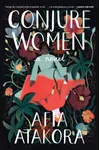
The Recommended Afia Atakora Reading Order
For readers diving into the work of Afia Atakora, the path is straightforward but emotionally and structurally rich. With one award-winning debut novel in print and a highly anticipated follow-up on the horizon, the recommended reading order is to read her books in publication order. This allows you to experience her development as a historical storyteller, transitioning from the reconstruction-era American South to the vibrant, jazz-soaked streets of 1920s Harlem.
1. Conjure Women (2020)
Your journey must begin with Atakora's celebrated debut, Conjure Women. Set in the American South before, during, and after the Civil War, the novel is a brilliant work of Southern Gothic historical fiction. It centers on three primary characters: Miss May Belle, a wise healer and midwife; her daughter Rue, who reluctantly inherits her mother's role and conjure secrets; and Varina, the daughter of the plantation owner. When a child with unique, seemingly accursed physical traits is born in the post-war settlement, it sparks fear, superstition, and a reckoning with long-buried secrets. Reading this first establishes Atakora’s signature style: lush, poetic prose, deeply researched historical backgrounds, and morally complex characters who must navigate the blurred lines of survival, agency, and community.
2. Strivers (Forthcoming, February 2027)
Once you have finished her debut, the next step is her upcoming second novel, Strivers, scheduled for release in February 2027. Moving away from the Civil War era, this novel shifts the setting to 1926 Harlem, New York, during the peak of the Harlem Renaissance. The story centers on Nadine Singleton, a former Black debutante who has reinvented herself as a bootlegger running an underground speakeasy called 'Singleton's'. When a skeleton is discovered walled up in the historic Mulberry Estate, Nadine is forced to look back at the events of 1926, which were set in motion when her secret lover was found dead on her club's doorstep. This book promises the same intricate mystery and rich historical immersion as her debut, but with a faster-paced, noir-infused focus on Manhattan's Black elite and the dangerous trade of prohibition-era bootlegging.
Understanding the Timelines of Conjure Women
While Conjure Women is a standalone novel, navigating its structure requires some guidance. The novel does not follow a linear path. Instead, it is divided into three distinct, explicitly labeled eras that alternate throughout the book. Understanding these timelines is crucial to fully appreciating the story's depth:
- Slaverytime: Set in the antebellum South (ranging roughly from 1854 to 1861), this timeline explores the daily realities, hidden relationships, and power dynamics of the plantation. It focuses on Miss May Belle's role as the community's primary healer and midwife, and depicts Rue's childhood as she learns the secrets of roots, plants, and childbirth under her mother's strict eye.
- Wartime: Serving as the narrative bridge, this era shows the chaotic transition as the Civil War tears through the region. It highlights how the characters adapt to the changing power structures and the physical dangers of the conflict, setting the stage for the secrets that will haunt their future.
- Freedomtime: Set during the Reconstruction era (beginning around 1867), this timeline follows Rue as an adult healer in a relatively isolated settlement of formerly enslaved people. Here, Rue must establish her own authority while dealing with suspicious disease outbreaks, shifting alliances, and the arrival of a charismatic traveling preacher.
Chronological Order vs. Publication Order
Because Conjure Women relies heavily on a non-linear format, some readers wonder if they should attempt to read the chapters chronologically. However, the consensus among literary critics and readers alike is that publication order (reading the book as written) is the only way to experience it. The alternating timelines are carefully calibrated to reveal mysteries, context, and character motivations in a specific sequence. Reading chronologically would ruin the suspense and diminish the emotional impact of the secrets Rue and her mother carry. For the broader bibliography, reading Conjure Women before Strivers is also recommended, as it allows readers to transition chronologically through American history—from the mid-19th century to the early 20th century—while tracing Atakora's thematic focus on Black women's resilience and transformation.
What to Know Before You Start
Before reading Afia Atakora's work, it helps to understand her research process and inspirations, which directly shape her storytelling. Atakora heavily drew from primary historical resources, including the Works Progress Administration (WPA) slave narratives and historical diaries, to ensure the voices in Conjure Women felt authentic rather than romanticized. Her Ghanaian heritage and familiarity with West African oral folklore also influence the mythological and spiritual undercurrents in her writing. Readers should prepare themselves for heavy, complex themes; Atakora does not shy away from the brutality of slavery and its lingering generational trauma, yet her focus remains firmly on the quiet resilience, agency, and complex humanity of her characters rather than simple victimization.