
The Recommended Reading Order for Afua Hirsch
Afua Hirsch is a renowned British-Ghanaian author, journalist, and broadcaster whose writing dissects the complex histories of colonial empire, modern racial identity, and bodily autonomy. Because her bibliography consists primarily of non-fiction books, essays, and children's literature rather than a continuous narrative series, there is no single timeline you must follow. However, reading her books in a thematic progression allows you to build a foundational understanding of her ideas before moving into her more specialized and personal projects.
Here is our recommended reading path to get the most out of Afua Hirsch's works:
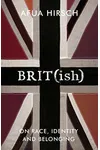
- Start with the Cornerstone: Brit(ish): On Race, Identity and Belonging (2018). This book is the perfect entry point. It blends Hirsch's personal memoir of growing up mixed-race in Britain with a rigorous historical critique of the British Empire's legacy. It establishes her core themes of structural identity and historical amnesia.
- Move to Visual History: Look Again: Empire (2021). Once you understand the conceptual framework of British identity from her debut, this short, impactful book applies those concepts to the physical world, specifically examining how the British Empire's legacy is represented—and often hidden—in classic British art.
- Explore the Personal and Bodily: Decolonising My Body (2023). In this work, Hirsch shifts the focus from external institutions (law, history, and art museums) inward to the physical self. Having established how empire shapes minds and cultures in her previous books, she explores how it dictates global beauty standards and how we can reclaim bodily rituals.
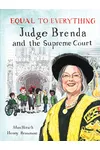
- Introduce Younger Readers: Equal to Everything: Judge Brenda and the Supreme Court (2019). As a change of pace, this children's book co-authored by Hirsch tells the inspiring story of Brenda Hale, the UK Supreme Court's first female President. It is an excellent read-aloud book for families to discuss justice and institutional change.
Publication Order of Non-Fiction Books
If you prefer to read authors in the exact order in which they developed and published their ideas, you can follow her chronological publication timeline. Each of her major books reflects a specific moment in her career, evolving from legal and journalistic reporting on state identity to deeply personal essays on physical decolonization.
- Brit(ish): On Race, Identity and Belonging (2018): Published by Jonathan Cape, this debut won the Royal Society of Literature Jerwood Prize. It tackles the everyday reality of racism in modern Britain and dissects how the nation continues to struggle with its multicultural identity due to a refusal to honestly teach colonial history.
- Equal to Everything: Judge Brenda and the Supreme Court (2019): Published by Legal Action Group, this illustrated children's book charts the life of Lady Hale, showing young readers how a girl from a small Yorkshire village rose to lead the UK's highest court. It translates complex legal ideas into an inspiring narrative about equal rights.
- Look Again: Empire (2021): Published by Tate Publishing as part of their "Look Again" series, this book acts as a curated tour through British art history. Hirsch examines Tate's national collection to show how the wealth, figures, and ideologies of the British Empire are woven directly into the fabric of classical paintings.
- Decolonising My Body: A Radical Exploration of Rituals and Beauty (2023): Published by Wildfire, this book is a hybrid of memoir and global research. Hirsch documents her personal journey—and those of other women across the diaspora—as she unlearns Western beauty standards. She looks at how rituals like hair braiding, tattooing, body modification, and skin treatments have been colonized, proposing a path toward reclaiming body positivity through heritage.
Contributions to Anthologies and Collaborative Works
In addition to her full-length books, Afua Hirsch has contributed vital chapters to several major feminist and historical anthologies. These essays offer shorter, focused arguments that expand on the themes found in her primary books.
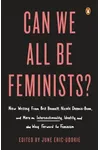
- Can We All Be Feminists? (2018): Edited by June Eric-Udorie and published by Virago, this collection features seventeen essays on intersectional feminism. Hirsch's contribution focuses on how race, immigration status, and class complicate the mainstream feminist narrative, arguing that true gender equality cannot be achieved without addressing colonial legacies.
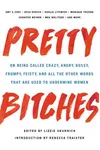
- Pretty Bitches: On Being Called Crazy, Angry, Bossy, Frumpy, Feisty, and All the Other Words That Are Used to Undermine Women (2020): Edited by Lizzie Skurnick and published by Spiegl & Grau, this anthology features essays from prominent women writers dissecting double standards in language. Hirsch writes about the specific linguistic traps used to minimize the voices of Black and mixed-race women in public discourse.
- We Need to Talk About the British Empire (2020): Released as an Audible Original audio series, this project was hosted and curated by Hirsch. Across six episodes, she interviews historians, activists, and cultural figures like Benjamin Zephaniah to dismantle sanitized myths about the British Empire, transforming these dialogues into an essential audio companion to her book Brit(ish).
What to Know Before You Start
Before diving into Afua Hirsch's catalog, it is helpful to understand the unique intersection of professional experiences that shape her writing voice. Hirsch studied Philosophy, Politics, and Economics (PPE) at Oxford University before training as a barrister, working on high-profile human rights cases. She later transitioned into journalism, serving as the West Africa correspondent for The Guardian and as a social affairs editor for Sky News.
This background means her writing combines three distinct styles: the emotional vulnerability and storytelling of memoir, the rigorous fact-finding and immediate relevance of investigative journalism, and the precise, evidence-based argument construction of a barrister. Whether she is writing about the history of the transatlantic slave trade or modern beauty standards, her books are heavily researched and direct, avoiding academic jargon in favor of clear, urgent conversations with the reader.
Broadcasting and Documentary Tie-ins
For readers who appreciate multi-media storytelling, Hirsch's books share direct thematic links with her television documentaries. Watching these series alongside her books can enrich your reading experience:
- Enslaved (2020): This documentary series, which Hirsch co-hosted with Samuel L. Jackson, traces the history of the transatlantic slave trade through underwater archaeology. It serves as an excellent visual companion to the historical sections of Brit(ish).
- Africa Rising (2023): In this BBC series, Hirsch travels across the African continent to profile young, contemporary artists, designers, and musicians. It provides a vibrant, celebratory counterpart to the themes of cultural reclamation and decolonization explored in Decolonising My Body.