
Where Should You Start Reading A.G. Riddle?
If you are new to A.G. Riddle's fast-paced, high-concept techno-thrillers, you have a few excellent entry points depending on what type of science fiction you enjoy most:
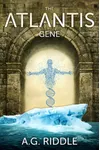
- The Classic Route (The Origin Mystery): Start with The Atlantis Gene. As Riddle's breakout debut, this novel sets the template for his signature style: a blend of cutting-edge genetics, ancient history, global conspiracies, and relentless action. Commitment: Three books.
- The Hard Sci-Fi Survival Route (The Long Winter): Start with Winter World. If you prefer space exploration, post-apocalyptic survival, and hard scientific concepts mixed with first-contact themes, this series is the perfect starting line. Commitment: Three books.
- The Standalone Sample Route: Start with Lost in Time or Departure. If you want a complete, self-contained story without committing to an entire trilogy, these standalone books showcase Riddle's mastery of time loops, survival scenarios, and puzzle-box plots.
The Origin Mystery Trilogy
This is the trilogy that launched A.G. Riddle into self-publishing superstardom. It follows geneticist Kate Warner and agent David Vale as they discover a conspiracy surrounding the true origins of human evolution and a looming extinction-level threat. The books must be read in strict publication order, as they form a continuous narrative:
- The Atlantis Gene (2013)
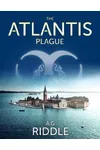
- The Atlantis Plague (2013)
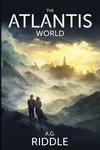
- The Atlantis World (2014)
The Extinction Files Duology
A pulse-pounding medical techno-thriller that focuses on a global pandemic, a mysterious organization known as the Imago Coalition, and a secret hidden deep within human DNA. This duology is highly praised for its realistic depiction of scientific research and epidemiological threats. Read these in order:
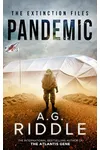
- Pandemic (2017)
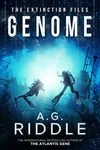
- Genome (2017)
The Long Winter Trilogy
In this gripping saga, the earth enters a sudden, unexplained ice age caused by an alien artifact draining solar radiation. A team of scientists is sent into space to investigate, leading to a massive conflict and the founding of a new colony. Read these in order:
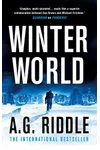
- Winter World (2019)
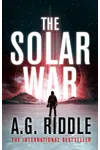
- The Solar War (2019)
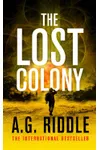
- The Lost Colony (2019)
Standalone Novels
In addition to his trilogy universes, A.G. Riddle has penned several standalone science fiction thrillers. Each of these offers a unique premise, ranging from plane crashes in alternative realities to time-travel murder mysteries:
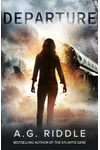
- Departure (2014): A plane crash-lands in a strange, desolate world, forcing the survivors to work together while uncovering a mind-bending conspiracy involving time travel.
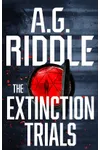
- The Extinction Trials (2021): Six strangers wake up in a high-tech facility and are forced to participate in a series of deadly trials to save humanity.
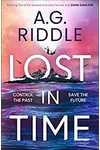
- Lost in Time (2022): A scientist is falsely accused of murder and sentenced to exile in the late Cretaceous period. His daughter must work across time to solve the mystery and bring him home.
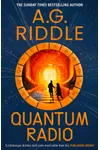
- Quantum Radio (2023): A researcher working at CERN discovers a signal coming from a parallel universe, sparking a global race to control the technology.
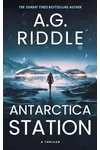
- Antarctica Station (2024): A scientific team in Antarctica discovers a mysterious object buried deep under the ice, triggering a high-stakes survival situation.
- Labyrinth (2025): A former Marine suffering from tinnitus begins seeing a recurring sequence of numbers linked to unexplained "lost time" and a massive artificial intelligence conspiracy.
Publication Order vs. Chronological Order
Because A.G. Riddle's series are entirely separate from one another and do not share characters or cross over, there is no master "universe chronological order" to follow. You can read the standalones and individual series in whatever order you please. However, within each series (such as The Origin Mystery or The Long Winter), it is essential to read the books in chronological/publication order to understand the ongoing storyline.
What to Know Before You Start
Riddle's background as a tech entrepreneur heavily influences his writing. His books are meticulously researched, focusing on real scientific theories—like quantum physics, evolutionary biology, and artificial intelligence—and expanding them into thrilling speculative fiction. If you enjoy authors like Michael Crichton, Blake Crouch, or Dan Brown, Riddle's combination of geeky science, rapid pacing, and massive global stakes will feel right at home. Keep in mind that multiple books in his bibliography have been optioned for film adaptations, including Departure and The Atlantis Gene.