




How to Read the Marcus Creasy Series
If you want to experience the best of A.J. Quinnell, your starting point is clear. The Marcus Creasy series is a cornerstone of modern vigilante fiction, introducing a flawed, deeply human protagonist whose path of vengeance redefined the action thriller. While the series is relatively short, it is highly serialized, and reading it in the correct order is essential to follow Creasy's emotional journey and psychological recovery.
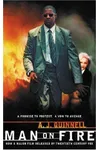
1. Man on Fire (1980)
This is where it all begins. Marcus Creasy, a burned-out ex-Foreign Legionnaire and mercenary, is hired in Italy as a bodyguard for Pinta, a young girl from a wealthy industrialist family. While Creasy initially views the job as a temporary paycheck, Pinta's warmth cracks his cold exterior, giving him a renewed sense of purpose. When she is kidnapped and subsequently killed by the mafia, Creasy launches a terrifying, meticulously planned campaign of retribution. It is a gritty, dark, and emotionally resonant masterpiece that serves as the perfect introduction to Quinnell's style.
2. The Perfect Kill (1992)
Twelve years after his debut, Quinnell returned to Creasy's story. Having built a new life, Creasy faces tragedy once again when his wife and young daughter are killed in the Lockerbie bombing. Driven by grief and a familiar need for vengeance, he targets the terrorists responsible. Rather than working entirely alone, he takes a young orphan girl under his wing, training her to become a lethal assassin to strike at the heart of the terrorist organization. This book is darker, focusing on the psychological toll of revenge and the passing on of deadly skills.
3. The Blue Ring (1993)
Following the events of the previous novel, Creasy finds himself drawn into a complex web of corruption and crime. The Blue Ring pits the legendary mercenary against a powerful and insidious syndicate. The stakes are highly personal, and Quinnell uses this entry to explore the geopolitical realities of the early 1990s, blending high-octane action with realistic espionage tradecraft.
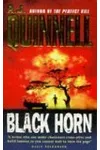
4. Black Horn (1994)
In the fourth installment, the action moves to the African continent. Creasy travels to rescue a young girl who has been abducted, leading him straight into a conflict involving local warlords, old enemies, and deep-seated grudges. Black Horn highlights Quinnell's ability to draw from his own extensive travels in Africa, crafting an atmospheric and highly authentic setting for Creasy's brand of justice.
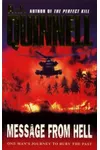
5. Message from Hell (1996)
The final chapter of the Creasy saga takes the mercenary to Southeast Asia. Lured to Vietnam and Cambodia on the pretext of rescuing an American POW held captive for twenty-six years, Creasy realizes he has walked into a deadly trap. The mastermind is Connie Crum, a ruthless high-ranking officer of the Khmer Rouge who seeks personal revenge for her father's death at Creasy's hands years ago. It is a fitting, explosive conclusion to one of the most intense series in thriller history.
The Standalone Thrillers
Aside from his famous mercenary series, A.J. Quinnell penned five standalone novels between 1981 and 1987. These books showcase his knack for geopolitical intrigue, conspiracy theories, and real-world event integration. They can be read in any order, but reading them in publication order lets you see how Quinnell's writing style evolved alongside the Cold War era.
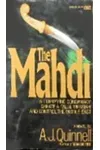
The Mahdi (1981)
Quinnell's second novel is a highly controversial and twisty political thriller. Set against the rise of Islamic fundamentalism, the story involves a secret, joint operation between the CIA, KGB, and MI6. Together, they plot to identify and manipulate a puppet "Mahdi"—the prophesied redeemer of Islam—by fabricating a high-tech "miracle" in Mecca. Their goal is to control the Arab world and protect global oil supplies, but the conspiracy quickly spirals out of control.
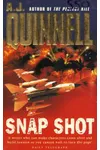
Snap Shot (1982)
Also published under the title The Snap, this thriller centers on David Munger, a legendary but reclusive war photographer who retired after his traumatic experiences in Vietnam. Munger is dragged back into the field by Israeli intelligence, who need him to photograph a top-secret Iraqi nuclear reactor to prove it is manufacturing weapons of mass destruction. Facing an imminent deadline and the deadly opposition of the PLO, Munger must secure the definitive photograph that will decide the fate of the Middle East.
Blood Ties (1985)
Shifting focus from intelligence agencies to personal drama, Blood Ties is the story of Kirsty Haywood. When she receives word that her son, Garret, has died in East Africa during a freezing winter in New York, she refuses to believe it. Driven by a mother's intuition, she leaves her life behind and travels to the African continent, facing extreme dangers and relying on the help of strangers to track down her missing son in a continent-spanning quest.
Siege of Silence (1986)
This tense hostage-rescue thriller takes place in "San Carlo," a fictional Central American nation overtaken by Cuban-backed guerrillas. When the U.S. Embassy is seized, the newly appointed U.S. Ambassador Jason Peabody is taken hostage. While a Cuban interrogator tries to break Peabody to discover a CIA plot, Washington bureaucrats contemplate silencing the ambassador to protect their secrets. The only hope lies with Colonel Silas Slocum, a massive, court-martial-bound maverick who launches an unauthorized rescue mission.
In the Name of the Father (1987)
A high-concept Cold War conspiracy novel, this thriller details a plot by the KGB under Yuri Andropov to assassinate the Pope. In response, a secret Vatican triumvirate decides to strike back by ordering a preemptive assassination of Andropov. They recruit Mirek Scibor, a disillusioned Polish secret agent, who travels across Europe disguised as a married man alongside a Catholic nun acting as his wife. It's a gripping look at Vatican intelligence and religious politics.
What to Know Before You Start
When diving into A.J. Quinnell's bibliography, keep these key points in mind:
- Start with Man on Fire: It is not only his best book but also the foundation for everything that follows in the Creasy universe. You shouldn't jump straight into the sequels without understanding Creasy's bond with Pinta.
- Cold War Realism: Most of Quinnell's standalone works were written in the 1980s. They capture the paranoia, technology, and geopolitics of the era, giving them a distinct historical charm.
- The Maltese Connection: Quinnell (Philip Nicholson) lived and wrote in Gozo, Malta, for much of his later life. His deep familiarity with the Mediterranean and North Africa heavily influences the settings of his books.
- Adaptation Differences: The famous 2004 movie Man on Fire starring Denzel Washington moved the setting from Italy to Mexico City and modernized the story, but the core themes of devotion and vengeance remain true to the original book. The 1987 film adaptation, starring Scott Glenn, kept the Italian setting but is much harder to find today.