




The Recommended Reading Order
To experience the absolute best of Albert Ashforth's writing, you should begin with his signature espionage thrillers before branching out into his standalone mystery work and scholarly non-fiction. Because his fiction is deeply informed by his decades of real-world military and contracting experience, starting with his most celebrated series offers the perfect introduction to his sharp, authentic style.
1. The Alex Klear Series
This is Ashforth's primary series and where most readers should start. It centers on Alex Klear, a veteran U.S. Army Special Investigator and intelligence contractor who is repeatedly drawn out of retirement to solve complex geopolitical crises.
- The Rendition (2012): The series opener introduces Klear as he participates in a poorly planned, government-sanctioned kidnapping (a "rendition") in the volatile pre-independence Balkans. After the mission fails catastrophically and Klear survives capture and torture, he is sent to Germany, where he becomes a scapegoat and target of the Kosovo Liberation Army. It won the Military Writers of America Bronze Medal in 2013.
- On Edge (2016): The sequel follows Klear to Kabul, Afghanistan, during the drawdown of American forces. Tasked with investigating the suspicious murder of a colleague in what appears to be a "green-on-blue" insider attack, Klear uncovers a massive financial fraud involving the Kabul Bank, putting him in conflict with both the U.S. and Afghan governments.
2. Standalone Mystery
Once you finish the Alex Klear novels, you can explore Ashforth's debut fiction release, which tackles domestic crime with a military veteran flavor.
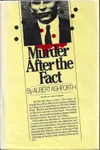
- Murder After the Fact (1984): This classic mystery novel follows Clint Ball, a former military veteran and computer engineer, who returns to his hometown for his aunt's funeral. He is quickly pulled into a web of blackmail, local secrets, and murder.
3. Non-Fiction and Biography
For readers interested in Ashforth's scholarly and academic pursuits, his very first published book represents a completely different genre.
- Thomas Henry Huxley (1969): Released as part of Twayne's English Authors Series, this is a non-fiction biographical study of the famous Victorian biologist and advocate of Darwin's theory of evolution.
Albert Ashforth Books in Publication Order
If you prefer to read Albert Ashforth's books in the order they were written and published, follow this timeline. Note the long gap between his early mystery debut and his return to thriller writing after his real-life tours in global conflict zones.
- Thomas Henry Huxley (Non-Fiction, 1969)
- Murder After the Fact (Standalone Fiction, 1984)
- The Rendition (Alex Klear Book 1, 2012)
- On Edge (Alex Klear Book 2, 2016)
Short Stories and Anthologies
Ashforth was also an active short story writer, contributing to mystery magazines and military anthologies throughout his later years. If you want to expand your reading, look for the following works:
- "One Person's Clutter" – Featured in the flash fiction anthology Kwik Krimes (2013), edited by Otto Penzler.
- "Incident in Kabul" – Published in Alfred Hitchcock Mystery Magazine (April 2013), serving as a thematic precursor to his second novel.
- "Bad for Business" – Published in Hardboiled Magazine (May 2013).
- "Going Away Party" – Published in the Military Writers Society of America anthology All Gave Some (2014).
- "Tangled Webs" – Published in Alfred Hitchcock Mystery Magazine (July/August 2015).
What to Know Before You Start
Ashforth’s thrillers are distinct because they are built on a foundation of first-hand observation. He served in the U.S. Army and subsequently worked as a contractor and instructor for NATO forces in hotspots such as Kosovo, Bosnia, and Afghanistan. This background translates directly into the procedural accuracy, atmospheric realism, and moral complexity found in his books.
While The Rendition and On Edge are standalone mysteries with self-contained plots, reading them in sequence is highly recommended. The character growth of Alex Klear, his psychological scars from his Balkan missions, and his cynical perspective on high-level intelligence agencies carry over from the first book into the second.