
















Where to Start Reading Aldous Huxley
Aldous Huxley was a remarkably versatile writer whose career spanned social satire, dystopian science fiction, mystical essays, and utopian philosophy. Because his themes and style evolved dramatically over four decades, there is no single "correct" chronological order to read his books. Instead, most readers find it rewarding to follow one of two tailored reading paths depending on their interests.
Path 1: The "Big Three" Visionary Arc (Recommended)
For most readers, the best entry point is Huxley's famous exploration of human society, technology, and consciousness. This path highlights his intellectual journey from fear of control to hope for spiritual liberation:
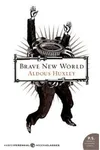
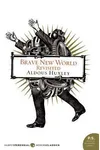
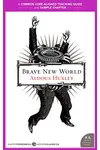
- Brave New World (1932): Start here. It is his absolute masterpiece and one of the most influential dystopian novels ever written. It introduces you to his sharp wit and predictive genius.
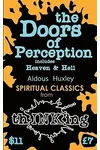
- The Doors of Perception (1954): Move next to this short, highly accessible non-fiction book detailing his experiences with mescaline. It serves as the bridge between his early skepticism and his later interest in mysticism.
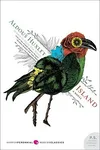
- Island (1962): Finish the arc with his final novel, which serves as the utopian counterpart to Brave New World. It offers his ultimate vision of a sane, mindful society.
Path 2: The Literary Satire & "Novel of Ideas" Path
If you prefer complex character dynamics, high-society gossip, and cerebral literary experiments, you should follow his chronological development as a fiction writer:
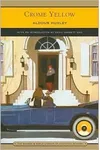
- Crome Yellow (1921): His debut novel is a light, witty satire of the British intellectual elite, highly influenced by the Bloomsbury Group.
- Point Counter Point (1928): Widely considered his early fiction masterpiece, this novel uses a musical structure to weave together a large cast of characters representing different intellectual philosophies.
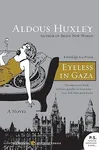
- Eyeless in Gaza (1936): A structurally complex novel that jumps back and forth in time, charting a cynical man's journey toward spiritual peace. It is one of his most mature works.
Publication Order of Standalone Novels
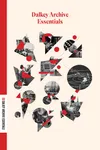
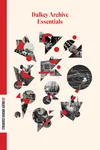
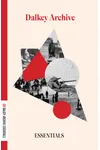
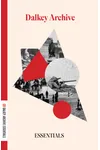
Huxley's novels are best read as standalone works, but reading them in order of publication reveals a fascinating shift from mocking drawing-room intellectualism to exploring Eastern mysticism and pacifism. Note that Point Counter Point (1928) is often republished in modern classics series such as the Dalkey Archive Essentials collection, but it belongs firmly in the sequence of his major standalone fiction.
- Crome Yellow (1921)
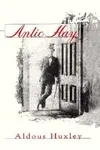
- Antic Hay (1923)
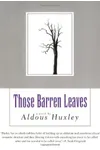
- Those Barren Leaves (1925)
- Point Counter Point (1928)
- Brave New World (1932)
- Eyeless in Gaza (1936)
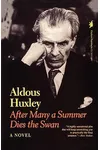
- After Many a Summer Dies the Swan (1939)
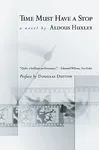
- Time Must Have a Stop (1944)
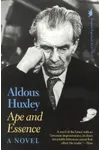
- Ape and Essence (1948)
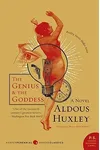
- The Genius and the Goddess (1955)
- Brave New World Revisited (1958)
- Island (1962)
Co-Authored Works: The Lost Isherwood Collaboration
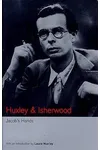
One of the most unique entries in the Huxley bibliography is Jacob's Hands. Conceived in the late 1930s and written in 1939, this piece was co-authored with fellow British expat writer Christopher Isherwood during their time working in Hollywood. Originally written as a screenplay treatment, the project was never produced. The manuscript lay forgotten in a trunk for nearly fifty years until it was rediscovered in 1997 and subsequently published as a novella. It tells the fable of a quiet ranch hand with a miraculous gift for healing who becomes corrupted and exploited by the commercialization of his gift.
The Dalkey Archive Essentials and Multi-Author Collections
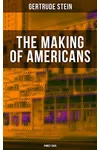
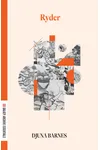
In various database listings, Huxley's works are sometimes grouped alongside a series of avant-garde and experimental books under the label "Dalkey Archive Essentials." It is important to know that this is a curated series of modern classics from Dalkey Archive Press. While it contains Huxley's landmark novel Point Counter Point, the other books in this series—such as Gertrude Stein's The Making of Americans (1925), Djuna Barnes' Ryder (1928), and Camilo José Cela's The Family of Pascual Duarte (1942)—are written by other authors and do not share a fictional universe with Huxley.
Thematic Collections and Non-Fiction
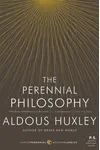
For readers who want to explore Huxley's philosophy directly, his non-fiction essays are just as critical as his novels. The Vintage Minis series offers small, themed collections of his writings on subjects like Psychedelics, Love, Eating, and Motherhood. For a deeper dive, his landmark work The Perennial Philosophy (often listed as 1938 or 1945 depending on the edition) serves as a comparative study of mysticism, while Brave New World Revisited (1958) is a fascinating piece of non-fiction where he measures how fast the world was sliding toward the nightmare he predicted in his 1932 novel.
What to Know Before You Start
Huxley's books are highly intellectual and satirical. He pioneered the "novel of ideas," where characters often represent walking viewpoints rather than traditional, emotionally-driven protagonists. If you expect standard narrative structures, his early works like Antic Hay or Those Barren Leaves may feel rambling. However, if you appreciate sharp humor, philosophical debates, and a writer who was decades ahead of his time on ecology, mindfulness, and technology, you will find his library endlessly rewarding.