










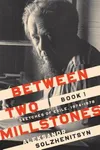


The Recommended Reading Path
Aleksandr Solzhenitsyn's work is divided between highly accessible fiction, massive historical novels, and dense multi-volume non-fiction. Jumping straight into his largest epics can overwhelm readers. To fully appreciate his evolution, thematic depth, and style, we recommend the following four-step reading path:
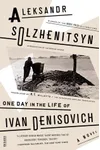
- Step 1: The Gateway Novella — One Day in the Life of Ivan Denisovich (1962)
This is the universally agreed-upon starting point. At under 200 pages, this novella tracks a single day in the life of an ordinary prisoner in a Siberian labor camp. It introduces Solzhenitsyn’s stark, survival-focused realism, his deep humanism, and his critique of Soviet tyranny without requiring a massive time commitment.
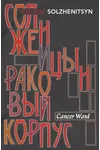
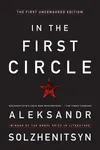
- Step 2: The Semi-Autobiographical Masterpieces — Cancer Ward (1967) and In the First Circle (1968)
After his debut novella, move on to these two companion novels. Both are based on his personal experiences during and after imprisonment. Cancer Ward uses a cancer clinic in Tashkent as an allegory for the sickness of the Soviet state under Stalin, focusing on mortality and moral choices. In the First Circle explores the lives of elite scientists imprisoned in a "sharashka" (a special prison lab) who must choose between serving a totalitarian regime or facing transfer to brutal camps. (See the edition warning below before buying.)
- Step 3: The Critical Non-Fiction — The Gulag Archipelago (1973)
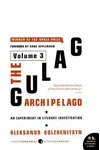
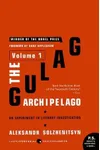
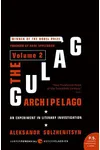
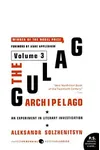
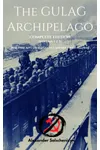
Once you are accustomed to Solzhenitsyn’s narrative voice, you are ready for his magnum opus. This massive three-volume work is an experimental mix of historical reporting, personal memoir, and philosophical commentary on the entire Soviet labor camp system. It remains one of the most politically significant books of the twentieth century.
- Step 4: The Historical Epic — The Red Wheel (Node Cycle)
Reserve this monumental project for last. Solzhenitsyn considered this cycle on the collapse of Imperial Russia and the rise of the Soviet Union to be his life's work. It is structured as a series of "nodes" (intense periods of historical time) and requires deep investment and historical patience.
The Gulag Archipelago: Complete vs. Abridged
If you decide to tackle The Gulag Archipelago, you will need to choose which edition to read. The work is structured into seven parts across three volumes:
- Volume 1 (Parts I–II): Covers the machinery of arrest, the interrogation process, and the transit camps.
- Volume 2 (Parts III–IV): Details the destructive physical labor, camp culture, and the psychological impact of confinement.
- Volume 3 (Parts V–VII): Focuses on escapes, uprisings, and the aftermath of release into internal exile.
Which edition should you read? If you want the full historical scope, read the complete three-volume set. However, for most general readers, the official single-volume abridged edition (authorized by Solzhenitsyn and edited by Edward E. Ericson Jr.) is highly recommended. It condenses the material to about one-third of its original length while retaining the crucial narratives, moral weight, and core arguments.
In the First Circle: The Edition Warning
When purchasing In the First Circle, you must pay close attention to which translation or edition you choose, as the text exists in two very different forms due to Soviet censorship history:
- The 87-Chapter Version (1968): This was the version first smuggled to the West and translated into English. Fearing it would never be published in the USSR, Solzhenitsyn voluntarily cut nine chapters and altered key plots—such as changing a diplomat's warning call to the U.S. Embassy about atomic secrets into a warning to a doctor about medical data. Solzhenitsyn later referred to this version as "ersatz."
- The 96-Chapter Version (2009 restored translation): Translated by Harry T. Willetts, this restores the original text that the author intended. It features the real plot line (warning the U.S. Embassy about nuclear espionage), deeper character profiles, and a far more critical view of Stalin. Always seek out the 96-chapter version for the definitive experience.
The Red Wheel: Chronological Node Order
The Red Wheel (Krasnoe Koleso) is a massive cycle detailing the transition of Russia from an autocracy to a revolutionary state. Solzhenitsyn did not write a standard linear narrative; instead, he selected specific "nodes" of time where history turned. The cycle should be read in chronological order by node:
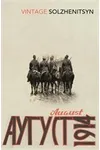
- Node I: August 1914 (1971) – Spans two books covering the disastrous Russian defeat at the Battle of Tannenberg during the opening weeks of World War I.
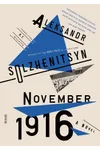
- Node II: November 1916 (1985) – Details the creeping paralysis and political stagnation in Petrograd in the months leading up to the revolution.
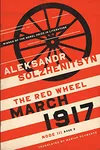
- Node III: March 1917 (2017) – Published across four books detailing the chaotic outbreak of the February Revolution and the abdication of Tsar Nicholas II.
- Node IV: April 1917 (Forthcoming/Partial) – The final node detailing the immediate aftermath of the revolution.
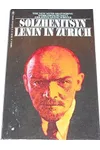
Note on Lenin in Zürich (1975): This book is not a standalone novel but rather a compilation of chapters centering on Vladimir Lenin extracted from the first three Nodes of The Red Wheel. If you find the entire epic cycle too daunting but want to understand Solzhenitsyn's historical portrayal of Lenin, this book serves as an excellent companion piece.
Short Stories, Essays, and Collections
If you prefer shorter fiction or want to explore his political and personal philosophies, look to these collections:
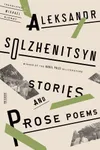
- Matryona's House and Other Stories (1963): Contains the title story "Matryona's House," which is widely considered one of the finest short stories in Russian literature. It details the life of a selfless peasant woman and serves as a quiet critique of Soviet rural collectivization.
- Apricot Jam: And Other Stories (2008): A late-career collection of "binary stories" (stories split into two distinct parts that contrast with each other) highlighting the moral degradation of the Soviet era.
- The Oak and the Calf (1975): A gripping memoir recounting his struggle to publish under intense Soviet surveillance and his ultimate exile.
What to Know Before You Start
Reading Solzhenitsyn requires a unique frame of mind and some preparation. Keep these practical tips in mind:
- Seek Out the Best Translations: Solzhenitsyn's Russian is notoriously rich, archaic, and full of prison slang. H.T. Willetts (often credited as Harry Willetts) was Solzhenitsyn's preferred translator, and his editions of One Day in the Life of Ivan Denisovich and In the First Circle are highly regarded. The University of Notre Dame Press is currently publishing the definitive translations of the later nodes of The Red Wheel.
- Familiarize Yourself with the History: Knowing the basic timelines of World War I, the 1917 Russian Revolution, and Stalin's Great Purge (1937–1938) will make his historical references and allegories much easier to follow.
- Prepare for Heavy Themes: While his books detail extreme suffering, tyranny, and cancer, they are not hopeless. Solzhenitsyn’s writing is ultimately about survival, spiritual renewal, and the persistence of individual truth against an empire of lies.