





Where to Start with Alfred Bester
Alfred Bester did not write interconnected book series; instead, his bibliography consists of standalone novels, short stories, and collections. However, because his style evolved dramatically, choosing the right entry point is crucial. To experience Bester at his height, readers should start with his two genre-defining masterpieces before exploring his more experimental later works and mainstream fiction.
1. The Core Masterpieces (Start Here)
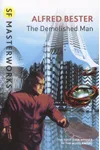
- The Demolished Man (1953): The perfect starting point. This groundbreaking psychological sci-fi novel won the inaugural Hugo Award in 1953. It depicts a high-stakes cat-and-mouse game between a murderer and telepathic police in a futuristic society.
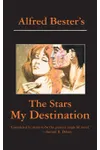
- The Stars My Destination (1956): Also published under the title Tiger! Tiger! in the UK, this is Bester's undisputed masterpiece. It is a futuristic retelling of The Count of Monte Cristo featuring Gully Foyle, an uneducated spacefarer driven by a relentless quest for vengeance in a world reshaped by teleportation.
2. The Later Sci-Fi Novels (For Dedicated Fans)
After a long hiatus writing for television and magazines, Bester returned to science fiction in the mid-1970s. These works are much more experimental, chaotic, and stylistic than his early hits.
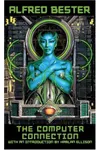
- The Computer Connection (1975): Also published as Extro, this novel follows a group of immortal geniuses and a sentient supercomputer.
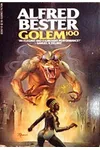
- Golem 100 (1980): A highly experimental and divisive work that blends prose, typography, and illustrations to tell a tale of demonic invocation in a dystopian future.
- The Deceivers (1981): Bester's final completed novel, focusing on a rogue protagonist navigating solar-system politics and energy manipulation.
3. Posthumous and Co-Authored Novels
- Tender Loving Rage (1991): Written around 1959 under the working title Tender Loving Rape, this mainstream psychological suspense novel went unpublished during Bester's lifetime. It was reconstructed and published posthumously with the help of his friend Charles Platt.
- Psychoshop (1998): A collaborative novel started by Bester and completed posthumously by Roger Zelazny. It is an eclectic, fantasy-leaning story set in a mysterious shop that sells personalities and spirits.
Mainstream Novels vs. Science Fiction
It is helpful for readers to know that Bester did not write exclusively within the science fiction genre. He wrote two mainstream novels set in the mid-20th-century media landscape, drawing directly from his career in radio and television:
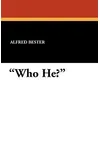
- 'Who He?' (1953): Also published as The Rat Race, this is a contemporary psychological thriller about a television writer dealing with memory blackouts and an unknown saboteur.
- Tender Loving Rage (1991): A roman-à-clef focused on the advertising and broadcasting industry of late-1950s New York.
Alfred Bester's Short Stories and Collections
Bester was a master of the short form, and his short stories are just as influential as his novels. The ideal way to read his short fiction is through his major collections:
- The Short Story Giants: Look out for classic stories like The Push of a Finger (1942), The Starcomber (1954), and the iconic Fondly Fahrenheit.
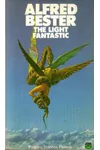
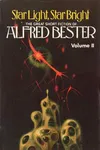
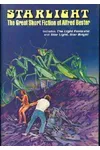
- The 1976 Collections: Bester's short stories were collected in The Light Fantastic (Volume 1) and Star Light, Star Bright (Volume 2). The omnibus edition Starlight (1976) combines both volumes and is highly recommended.
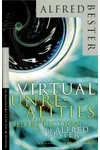
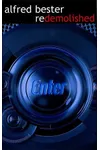
- Posthumous Collections: Virtual Unrealities (1997) and Redemolished (2000) collect a wider range of rare stories, essays, and uncompleted projects.
Adaptations and Graphic Novels
In 1979, Byron Preiss and illustrator Howard Chaykin published The Stars My Destination, Volume 1, a pioneering full-color graphic novel adaptation. Although the publisher went out of business before Volume 2 could be released, the completed adaptation was eventually published in 1992 as The Complete Alfred Bester's The Stars My Destination by Epic Comics.