
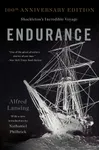
Where to Start: The Endurance Experience
For anyone looking to dive into the gripping world of polar exploration, there is one absolute starting point: Endurance: Shackleton's Incredible Voyage (1959). Alfred Lansing’s masterpiece is not just a historical account; it is widely considered one of the greatest survival narratives ever written. It chronicles the harrowing journey of Sir Ernest Shackleton and his 27-man crew during the 1914 Imperial Trans-Antarctic Expedition after their ship, the Endurance, became trapped and was ultimately crushed by pack ice.
Because Lansing’s bibliography is incredibly focused, readers do not have a massive multi-book series to navigate. Instead, the ultimate reading path expands outward from Lansing's core work to the firsthand memoirs of the crew members themselves, followed by broader polar exploration classics. Starting with Lansing's narrative provides the essential dramatic structure and historical overview needed to appreciate the raw diaries and memoirs of the men who survived the ordeal.
The Core Work: Endurance (1959)
Published in 1959, Endurance: Shackleton's Incredible Voyage remains Lansing's defining literary achievement. A Chicago-born journalist and U.S. Navy veteran, Lansing spent years researching the book. He gained unprecedented access to the diaries of the crew and conducted extensive interviews with survivors, including expedition surgeon Dr. Alexander Macklin. This meticulous research allowed Lansing to reconstruct the daily struggle against sub-zero temperatures, starvation, and isolation with a novelist's pacing and emotional depth.
Key versions and formats to consider for your reading list:
- The Standard Edition: The classic paperback is the easiest entry point for general readers.
- The Illustrated Edition: Features the stunning, restored historical photographs taken during the expedition by Frank Hurley, the crew's official photographer. Seeing the images of the ship trapped in the ice while reading Lansing's words adds a profound layer of realism.
- The Audiobook: The audiobook edition narrated by Simon Prebble is highly celebrated by fans for capturing the quiet dignity and relentless tension of the crew's survival struggle.
Step 2: Firsthand Memoirs from the Crew
Once you have finished Lansing's narrative, you can read the primary sources he referenced to construct the book. These firsthand accounts offer personal perspectives from the men who actually lived through the ice blockade:
- South (1919) by Sir Ernest Shackleton: Shackleton's official account of the expedition. Written immediately after the events, it provides the leader's perspective on the strategic decisions, the loss of the ship, and the rescue efforts. It also details the lesser-known Ross Sea party, who were stranded on the opposite side of the continent setting up supply depots.
- Shackleton's Boat Journey (originally published as parts of 'Under Great Bear' / later standalone) by Frank Worsley: Written by the captain and master navigator of the Endurance. Worsley gives a thrilling, detailed account of the legendary 800-mile open-boat journey of the James Caird from Elephant Island to South Georgia Island, navigating by sextant through hurricane-force winds.
Expanding the Horizon: The Polar Exploration Reading Path
If Lansing's writing sparks a broader interest in the Heroic Age of Antarctic Exploration, the logical next steps on your bookshelf should include these adjacent historical classics:
The British Antarctic Expedition (Scott's Last Journey)
- The Worst Journey in the World (1922) by Apsley Cherry-Garrard: A masterpiece of travel literature written by a survivor of Robert Falcon Scott's ill-fated Terra Nova Expedition (1910–1913). It provides a fascinating, haunting contrast to the leadership styles and survival outcomes of Shackleton's crew.
The Race to the South Pole
- The Last Place on Earth (originally published as 'Scott and Amundsen' in 1979) by Roland Huntford: A dual biography that examines the fierce rivalry between Roald Amundsen and Robert Falcon Scott. It offers a critical look at the logistics, technology, and human elements of polar travel.
Alfred Lansing’s Co-Authored Work
While Lansing is synonymous with polar adventure, his journalistic career also led him to collaborate on scientific topics. In 1967, Lansing co-authored Drugs with pharmacologist Walter Modell as part of the popular Time-Life Science Library. This volume traces the history of medicine, the science of pharmacology, and the social and clinical impacts of drug use. It showcases Lansing's versatility as a journalist capable of translating complex scientific concepts for the general public, though it remains a vintage collector's item today rather than a narrative adventure.