
The Recommended Reading Order for Alka Joshi's Books
Alka Joshi has captured the hearts of historical fiction fans worldwide with her vivid sensory details, rich cultural backdrops, and deeply resilient female protagonists. While her bibliography is relatively compact, her novels span decades of historical change, making a structured approach the best way to experience her storytelling. The recommended starting point is her acclaimed Jaipur Trilogy, which must be read in publication order to fully appreciate the character development and overarching narrative arcs. Her standalone work, set in a different era, offers readers a flexible detour.
The Jaipur Trilogy Reading Order
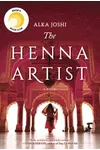
- The Henna Artist (2020)
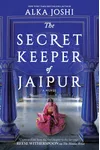
- The Secret Keeper of Jaipur (2021)
- The Royal Jewel Cinema / The Secret Keeper of Jaipur (2021)
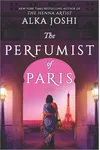
- The Perfumist of Paris (2023)
Standalone Historical Fiction
- Six Days in Bombay (2025)
The Jaipur Trilogy: A Closer Look
The Henna Artist (2020)
Alka Joshi's bestselling debut, The Henna Artist, introduces readers to Lakshmi Shastri. Having escaped an abusive arranged marriage in her rural village, Lakshmi makes her way to the bustling, newly independent 1950s city of Jaipur. There, she establishes herself as the most requested henna artist and confidante to the wealthy upper-class women of the city. Lakshmi's carefully constructed independent life is thrown into chaos when her husband tracks her down, bringing along Radha, a high-spirited younger sister Lakshmi never knew existed. The novel is celebrated for its lush descriptions of traditional medicine, bustling markets, and the intricate social structures of post-colonial India. It serves as the foundation for the entire trilogy, introducing key themes of autonomy, family secrets, and the cost of independence.
The Secret Keeper of Jaipur (2021)
Set in 1969, twelve years after the conclusion of the first book, The Secret Keeper of Jaipur shifts the primary focus to Malik, Lakshmi's young street-smart protege from the first novel. Malik is now twenty years old, educated, and embarking on an apprenticeship at the Royal Palace's Facilities Office, where he is involved in the construction of the state-of-the-art Royal Jewel Cinema. Meanwhile, Lakshmi resides in Shimla with her husband, Dr. Jay Kumar, where she manages a community healing garden. When the cinema's balcony tragically collapses on opening night, Malik finds himself uncovering a web of corporate greed and elite corruption to protect those he cares about, including Nimmi, a young tribal widow. This second installment transitions the series into a historical mystery, showing the changing landscape of India as it approaches the 1970s.
The Perfumist of Paris (2023)
The final chapter of the trilogy, The Perfumist of Paris, moves the timeline to 1974 and centers on Radha, Lakshmi's younger sister. Now thirty-two, Radha lives in Paris with her French husband, Pierre, and their two daughters. Radha has built a career as a talented junior perfumer at a prestigious fragrance house, using her childhood memories and unique sensory heritage from India to create innovative scents. However, she faces domestic tension from a husband who wishes she would focus solely on being a housewife. When a major commission sends Radha back to India, she must collaborate with the courtesans of Agra to find the perfect scent. The trip forces her to confront the son she gave up for adoption as a teenager, who is now searching for her in Paris. It is a satisfying conclusion that ties up the trilogy's multi-generational themes of motherhood, secrets, and feminine ambition.
Beyond the Jaipur Trilogy: Historical Standalones
Six Days in Bombay (2025)
Published in 2025, Six Days in Bombay is Alka Joshi's first novel outside of her signature trilogy. Set in the late 1930s, this standalone historical mystery introduces Sona Falstaff, an Anglo-Indian nurse working at Wadia Hospital in Bombay. Sona's routine life is disrupted when she treats Mira Novak, a scandalous and celebrated painter of half-Indian descent. When Mira dies under mysterious circumstances just six days after her admission, Sona becomes the prime suspect. To clear her name and fulfill Mira's final wishes, Sona takes possession of four mysterious paintings left behind and embarks on a journey across Europe—from Prague and Paris to Florence and London—to uncover the secrets of the artist's life. The book is heavily inspired by the real-life historical figure Amrita Sher-Gil, often called India's Frida Kahlo, and combines art history with a thrilling globetrotting mystery.
What to Know Before You Start
When diving into Alka Joshi's work, the most critical piece of advice is to avoid reading the Jaipur Trilogy out of order. While each book features a self-contained plot, the emotional arcs of Lakshmi, Radha, and Malik are highly dependent on the events of the preceding novels. The trilogy operates as a continuous family saga, tracking characters from 1955 to 1974. In contrast, Six Days in Bombay is set in 1938 and shares no characters or plotlines with the Jaipur Trilogy. It can be read entirely on its own, either as an introduction to Joshi's writing style or as a standalone mystery after finishing the trilogy. Readers should also look forward to sensory-rich prose, as Joshi famously uses foods, scents, and artistic traditions to bring historical India to life.