
Where to Start with Allan Folsom
Allan Folsom’s career as a novelist was brief but incredibly impactful, spanning just five books published over fifteen years. Because his bibliography is so tight, getting into his work is easy. However, depending on whether you want a single, complete story or a multi-book character arc, you have two primary entry points:
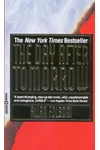
- The Standalone Route (Recommended Start): Begin with Folsom's debut, The Day After Tomorrow (1994). It remains his most famous, fast-paced work and acts as the perfect introduction to his cinematic, multi-layered conspiracy style.
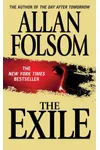
- The Series Route: Start directly with The Exile (2004). This kicks off his only connected trilogy, following a detective forced to change his identity and run for his life.
The John Barron / Nicholas Marten Trilogy in Reading Order
Allan Folsom’s only continuing series is a high-stakes conspiracy trilogy. To appreciate the character development, the shifting identities, and the overarching conspiracy, these books must be read in strict order of publication.
1. The Exile (2004)
The series begins with The Exile, where we are introduced to John Barron, a talented young LAPD detective. John is recruited into an elite, secretive police unit known as the "5-2" squad. He quickly discovers that this unit operates outside the law, using brutal, extralegal methods to execute criminals. Refusing to go along with their corruption, John becomes a target of his own colleagues. To survive, he is forced to flee Los Angeles for Europe alongside his sister, Rebecca. The novel is a breakneck chase that establishes the core conspiracy and forces the protagonist to discard his old life entirely.
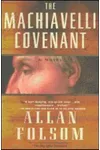
2. The Machiavelli Covenant (2006)
By the second book, the protagonist has fully adopted the alias of Nicholas Marten, living quietly in Europe. However, his peace is shattered when his former girlfriend and her family are brutally murdered. Drawn out of hiding to investigate, Marten is pulled into a dark web that spans centuries, centering on a long-lost, dangerous manuscript written by Niccolò Machiavelli. This conspiracy goes all the way to the highest levels of global power, including the President of the United States. Marten must stay ahead of professional assassins while uncovering a plot to reshape the geopolitical landscape.
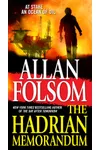
3. The Hadrian Memorandum (2009)
The trilogy concludes with The Hadrian Memorandum. Nicholas Marten is once again thrust into the crosshairs of global power players. This time, the conspiracy revolves around international oil interests, ruthless mercenary groups, and a shadow struggle for control over the White House itself. Marten has to navigate a labyrinth of betrayals, shifting alliances, and lethal threats across Europe and America to finally secure his freedom and bring the truth to light.
Allan Folsom's Standalone Thrillers
Before writing his trilogy, Folsom established his reputation with two massive, sprawling standalones. These books are completely self-contained and can be read in any order, though reading them in publication order shows Folsom’s evolution as a writer.
The Day After Tomorrow (1994)
Allan Folsom’s debut novel was a literary sensation, selling for a record-breaking $2 million pre-publication. The story weaves together three seemingly unrelated threads: Paul Osborn, an American surgeon in Paris who spots the man who murdered his father thirty years prior; William McVey, an LAPD detective investigating a series of bizarre, surgically precise decapitations where the victims' heads have been frozen; and a shadowy neo-Nazi conspiracy plotting to resurrect a dark regime. It is a massive, complex puzzle box of a book that established Folsom's signature globe-trotting pace. Note: This novel is entirely unrelated to the 2004 climate-disaster film of the same name.
Day of Confession (1998)
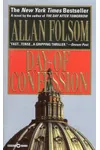
His second standalone, Day of Confession, shifts the focus to religious intrigue and corporate greed. When Harry Addison, a successful Los Angeles entertainment lawyer, receives a panicked voicemail from his estranged brother—a priest in the Vatican—he has no idea he is about to enter a nightmare. Shortly after, a bus explosion in Italy seemingly kills his brother, but Harry suspects a cover-up. Traveling to Rome, Harry is framed for the murder of an Italian police officer. While running from both the police and a cold-blooded assassin named Thomas Kind, Harry uncovers a massive conspiracy inside the Vatican involving geopolitical influence over China.
Publication Order vs. Chronological Order
Because Allan Folsom's work is straightforward, there are no complicated timeline jumps, prequels, or spin-offs. The chronological timeline matches the publication dates perfectly.
- The Day After Tomorrow (1994) — Standalone Novel
- Day of Confession (1998) — Standalone Novel
- The Exile (2004) — Barron/Marten Book 1
- The Machiavelli Covenant (2006) — Barron/Marten Book 2
- The Hadrian Memorandum (2009) — Barron/Marten Book 3
What to Know Before You Start
Allan Folsom worked for decades in Hollywood as a cameraman, editor, and screenwriter (writing scripts for shows like Hart to Hart) before publishing his first novel in his early fifties. This cinematic background heavily influences his writing style. Readers should expect fast-cutting chapters, highly visual action sequences, and complex, multi-layered plots that feel like summer blockbuster films.
While his plots can occasionally feel complex or require a suspension of disbelief, his pacing is famously relentless. His books are best enjoyed by readers who love global conspiracies, international cat-and-mouse chases, and classic late-90s/early-2000s thriller tropes.