







Where to Start: The Winning of America Recommended Path
For most readers, the ultimate entry point to Allan W. Eckert's work is the Winning of America series (frequently referred to as the Narratives of America). This six-volume epic chronicles the dramatic conflict and settlement of the Ohio River Valley and the Old Northwest Territory. There are two primary schools of thought on how to read this series: publication order or chronological order.
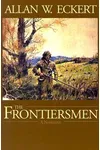
The safest and most popular recommendation is to read the series in publication order. Starting with The Frontiersmen allows you to experience the series the way Eckert originally wrote it, focusing on key historical figures like Simon Kenton and Tecumseh. Alternatively, reading in chronological order aligns the books directly with the linear progression of American history, spanning from the French and Indian War through the Black Hawk War.
The Winning of America Series: Publication vs. Chronological Order
Option 1: Publication Order (Recommended)
Reading in the order of release allows you to appreciate Eckert's evolution as a writer. The publication sequence is as follows:
- The Frontiersmen (1967)
- Wilderness Empire (1969)
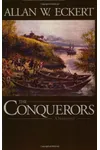
- The Conquerors (1971)
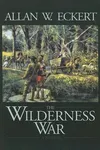
- The Wilderness War (1978)
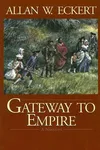
- Gateway to Empire (1984)
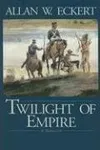
- Twilight of Empire (1988)
Option 2: Chronological Order
If you prefer a straight historical timeline of events, follow this sequence based on the eras covered:
- Wilderness Empire (covers approx. 1730–1760; focuses on the French and Indian War)
- The Conquerors (covers approx. 1759–1764; covers Pontiac's Conspiracy)
- The Wilderness War (covers approx. 1763–1779; focuses on the Iroquois during the American Revolution)
- Gateway to Empire (covers approx. 1769–1812; details the settlement of Chicago and the War of 1812)
- The Frontiersmen (covers approx. 1770–1813; focuses on the Ohio Valley and the life of Simon Kenton)
- Twilight of Empire (covers approx. 1801–1832; follows the Black Hawk War)
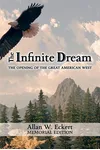
For those who complete the main hexalogy and want to continue, Eckert's posthumous book, The Infinite Dream: The Opening of the Great American West (2011), serves as a spiritual companion. It extends the narrative timeframe from 1834 to 1848, capturing the westward migration across the Mississippi River to the Pacific Ocean.
The Hawk's Hill Duology
If you are looking for a shorter, gentler, yet deeply emotional entry point, turn to the Hawk's Hill books. These novels showcase Eckert's immense talent as a naturalist and story weaver for younger audiences:
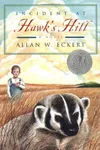
- Incident at Hawk's Hill (1971) — A Newbery Honor winner based on the true story of a young, quiet boy named Ben MacDonald who gets lost in the Canadian wilderness of Saskatchewan in 1870 and is adopted by a mother badger.
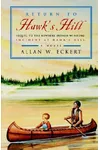
- Return to Hawk's Hill (1998) — A sequel picking up after the events of the first book, detailing Ben's continued connection to nature and the challenges his family faces.
The Mesmerian Annals
Eckert also briefly detoured into young adult fantasy, departing from his usual historical and naturalistic realism to write a portal-fantasy series set in the magical land of Mesmeria:
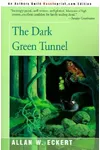
- The Dark Green Tunnel (1984)
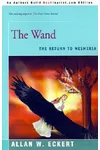
- The Wand (1985) (also known as The Wand: The Return to Mesmeria)
These books follow children who slip through a magical portal into a fantasy realm where they must help battle evil forces, displaying a very different, whimsical side of Eckert's imagination.
Notable Standalone Novels & Science Fiction
Beyond his series, Eckert wrote several highly regarded standalone novels spanning survival stories, historical biographies, and even speculative fiction:
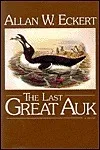
- The Last Great Auk (1963) — Eckert's debut novel. A poignant, fictionalized account of the final migration and ultimate extinction of the Great Auk, written from the perspective of the birds.
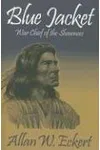
- Blue Jacket (1968) — A historical novel depicting the life of the Shawnee chief Blue Jacket, written for young adults.
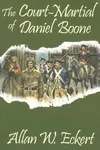
- The Court-Martial of Daniel Boone (1973) — A courtroom drama based on the actual historical charges of treason brought against Daniel Boone during the Revolutionary War.
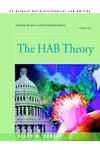
- The HAB Theory (1976) — A cult-classic apocalyptic science fiction novel. It centers on an elderly engineer's theory that the Earth periodically capsizes on its axis due to the weight of polar ice sheets, throwing humanity back into the stone age.
What to Know Before You Start
Eckert's works are written in a style he termed "narrative history" or "narrative biography." While they read like gripping novels with dialogue and interior thoughts, they are built on a foundation of intensive research. Eckert pulled from diaries, military logs, and historical archives to construct his scenes. Because of this, his works occupy a unique space between textbook history and historical fiction.
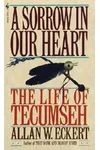
However, readers should be aware that his narrative style has drawn some controversy. Historians have pointed out that he occasionally treated legendary accounts as absolute fact, notably in Blue Jacket (promoting the myth that Blue Jacket was a white captive) and A Sorrow in Our Heart: The Life of Tecumseh (1992), where he invented dialogue to craft a more dramatic biography. It is best to read Eckert for his vivid storytelling and historical atmosphere while keeping in mind that some creative liberties were taken.