







Where to Start with Allen M. Steele
If you are new to Allen M. Steele's realistic, blue-collar brand of science fiction, the absolute best place to start is with the Coyote Series. Beginning with the novel Coyote (2002), this series follows a group of colonists escaping a dystopian Earth to establish a new home on a habitable moon. It is Steele’s most celebrated work, winning critical acclaim and offering a perfect entry point into his optimistic yet grounded style of hard science fiction.
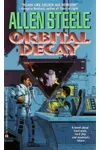
Alternatively, if you prefer near-future stories focused on human labor, construction, and corporate intrigue in Earth's orbit, start with his debut novel, Orbital Decay (1989), which kicks off the Near-Space Series.
The Coyote Universe Reading Order
The Coyote series is a sprawling epic that spans colonization, politics, alien encounters, and deep-space exploration. While the books can be listed sequentially, they are best understood as three distinct blocks: the core trilogy, the chronologically overlapping standalone spinoffs, and the duology that concludes the main storyline.
1. The Core Coyote Trilogy
This trilogy must be read in order. It details the initial flight from Earth, the settling of the moon Coyote, and the subsequent political revolution when new waves of colonists arrive from Earth.
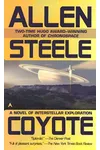
- Coyote (2002) - A fix-up novel detailing the initial journey of the starship Alabama and the colonization of Coyote.
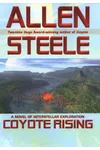
- Coyote Rising (2004) - Focuses on the revolution of the original colonists against a dictatorial governing authority.
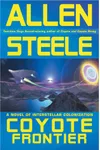
- Coyote Frontier (2005) - Concludes the initial trilogy by resolving the conflict between Earth and the colony.
2. The Coyote Spinoffs (Standalone Companions)
After finishing the trilogy, you can read the spinoff novels. These stories take place in the same universe and chronological era but focus on different characters, deep-space expeditions, or alien constructs:
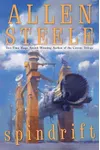
- Spindrift (2007) - Follows the crew of a science vessel investigating a mysterious alien artifact.
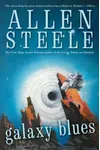
- Galaxy Blues (2008) - Follows a pilot who joins an alien expedition and discovers the complexities of interstellar relations.
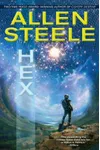
- Hex (2011) - Focuses on the discovery of a massive, artificial Dyson-like sphere and the joint human-alien project to explore it.
3. The Coyote Chronicles (The Final Duology)
These two books continue the main story arc of the Coyote colony, moving the narrative forward in time and focusing on the planet's destiny:
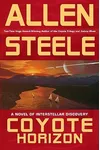
- Coyote Horizon (2009) - Explores the native alien ecosystem and the first contact negotiations.
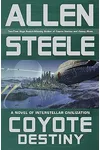
- Coyote Destiny (2010) - Ties together the threads of colonization and human-alien cooperation.
4. Coyote Short Stories and Where They Fit
If you want to read the complete Coyote saga with every piece of short fiction in its proper place, keep these two stories in mind:
- "The Days Between" (2001) - A novelette telling the story of Leslie Gillis, who wakes up early from stasis on the Alabama. This story is integrated into the first Coyote book, but can be read beforehand as a prequel.
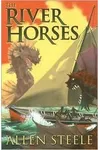
- "The River Horses" (2007) - A novella following explorers exiled into the uncharted wild. Chronologically, this fits perfectly between Coyote Rising and Coyote Frontier.
The Near-Space Series Reading Order
Steele's Near-Space series (sometimes referred to as the "Rude Astronauts" series) presents a gritty, realistic future history of humanity's expansion into the solar system. The novels are best read in their publication order, which also matches their internal chronology:
- Orbital Decay (1989) - Steele's debut novel about blue-collar workers building solar power satellites who discover a government conspiracy.
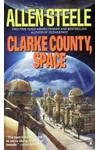
- Clarke County, Space (1990) - Centers on a massive space habitat declaring independence.
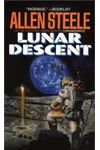
- Lunar Descent (1991) - Follows a labor strike at a mining facility on the Moon.
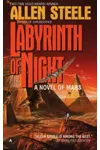
- Labyrinth of Night (1992) - Investigates a mysterious alien structure discovered on Mars.
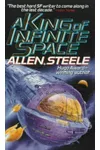
- A King of Infinite Space (1997) - Wraps up the core Near-Space novels with a story involving a solar-sail race and orbital crime.
To expand your Near-Space experience, look for these companion short stories and novellas:
- "The Weight" (1995) - A short story exploring the psychological effects of life in low gravity.
- "Sex and Violence in Zero-G" (1999) - A short story addressing the realities of human relationships in space.
Standalone Novels and the Captain Future Connection
Beyond his major shared universes, Steele has written several standalone sci-fi novels and a notable tribute to pulp sci-fi history:
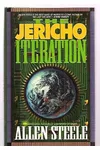
- The Jericho Iteration (1994) - An alternate history thriller set in an earthquake-ravaged St. Louis (spelled "The Jericho Interation" in some databases).
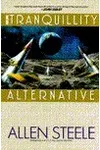
- The Tranquillity Alternative (1996) - An alternate history where the U.S. space program took a very different path post-Apollo.
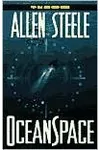
- OceanSpace (2000) - Focuses on deep-sea colonization and research.
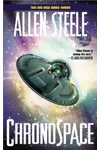
- Chronospace (2001) - A time-travel adventure centered on the Hindenburg disaster.
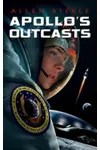
- Apollo's Outcasts (2012) - A young adult novel set in a lunar colony.
- V-S Day (2014) - An alternate history story depicting a secret space race during World War II.
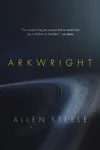
- Arkwright (2016) - A generational novel tracking a family's century-long quest to build a starship.
The Captain Future Legacy
Steele has a unique dual connection to the classic sci-fi hero Captain Future (originally created by Edmond Hamilton):
- "The Death of Captain Future" (1995) - A Hugo Award-winning metafictional novella about an obsessive pulp collector who roleplays as the hero. It does not take place in the actual Captain Future universe.
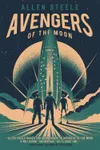
- Avengers of the Moon (2017) - An authorized, modern reboot of the Captain Future series. It retells the origin of Curt Newton (Captain Future) with updated science and modern sensibilities.
What to Know Before You Start
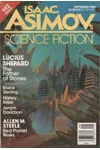
Steele’s writing is heavily influenced by Robert A. Heinlein’s "Future History" concept. His characters are not elite, flawless heroes; they are often everyday blue-collar workers, technicians, and colonists trying to survive. Much of his early work, including the first Coyote book, was originally published as standalone short stories and novellas in magazines like Asimov's Science Fiction before being revised and structured into "fix-up" novels. As a result, you might notice slight shifts in tone or style between chapters, but this only adds to the episodic, historical feel of his expansive universes.