
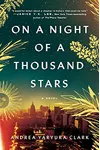
Where to Start with Andrea Yaryura Clark
Since Andrea Yaryura Clark is a contemporary voice with a highly focused bibliography, the starting point is straightforward: her critically acclaimed debut novel, On a Night of a Thousand Stars (2022). Published by Grand Central Publishing, this work is a standalone historical fiction novel that offers a profound entry point into the complex history of late-20th-century Argentina.
While the book is a single standalone title, it is built on a intricate dual-timeline narrative. Readers looking to fully appreciate the story should read it in its published order rather than attempting to isolate the historical eras. The narrative power of the book relies heavily on mystery and gradual discovery, where revelations in the later timeline illuminate the events of the past.
The Dual-Timeline Experience: 1973 vs. 1998
Understanding how the two primary timelines interact is key to navigating the novel's emotional and historical landscape:
- The 1970s Timeline (Santiago and Valentina): Set in Buenos Aires during the political turmoil leading up to the 1976 military coup. This timeline follows Santiago Larrea, a wealthy student, and Valentina Quintero, an activist. As political violence escalates, their lives are torn apart by state-sponsored terror, kidnapping, and forced disappearances.
- The 1998 Timeline (Paloma and Franco): Set in New York and Buenos Aires. Paloma Larrea, the daughter of a wealthy Argentine diplomat, is living a privileged life in New York until a chance encounter prompts her to question her father’s past. Her search leads her back to Buenos Aires, where she joins forces with Franco Bonetti, an activist and member of the real-life organization H.I.J.O.S., to uncover the truth about what happened to the victims of the dictatorship.
Chronological History vs. Narrative Order
Although the novel is designed to be read as a dual-narrative, understanding the chronological sequence of the history behind the book helps clarify the events. The historical backdrop is Argentina's "Dirty War" (1976–1983), during which the military dictatorship systematically kidnapped, tortured, and murdered an estimated 30,000 citizens, known as the desaparecidos (the disappeared).
In 1998, when the second half of the book takes place, the children of these victims had reached adulthood. The organization H.I.J.O.S. (Sons and Daughters for Identity and Justice Against Forgetting and Silence) began staging public demonstrations (called escraches) to expose the perpetrators of the regime who had avoided prosecution due to amnesty laws. Reading the book in its published format allows the reader to experience the historical trauma from the perspective of the next generation seeking justice.
The Inspiration: Real-Life Voices of the "Disappeared"
Andrea Yaryura Clark’s writing is heavily grounded in her personal history and research. Born in Argentina, she grew up during the turbulent 1970s before relocating to North America. She later returned to Buenos Aires in the mid-1990s, shortly after commandos and officials began publicly confessing to the horrors of the dictatorship.
During this period, Clark interviewed many children of the disappeared. These first-hand accounts of generational trauma, stolen identities, and the search for truth served as the direct inspiration for the characters of Paloma and Franco. It took Clark seven years of drafting, writing, and research to complete the manuscript for the novel, ensuring that the historical details and emotional struggles of the families were depicted with utmost accuracy and empathy.
What to Know Before You Start
Before diving into On a Night of a Thousand Stars, readers should be prepared for heavy themes. The book deals directly with human rights abuses, political imprisonment, and the psychological impact of state-sponsored terror. However, the tone is balanced by a strong focus on love, family loyalty, and the resilience of the human spirit.
Additionally, the novel has been optioned for a television series adaptation by Universal International Studios, making it an excellent time to read the source material before it transitions to the screen.
Read-Alikes: What to Read Next
If you have finished Andrea Yaryura Clark's debut and want to continue exploring historical fiction focusing on Latin American dictatorships, political trauma, and family secrets, these companion novels are highly recommended:
- Cantoras by Carolina De Robertis: A powerful novel that explores the lives of five women finding refuge and solidarity during the military dictatorship in neighboring Uruguay.
- Hades, Argentina by Daniel Loedel: Set in 1970s Buenos Aires, this haunting debut novel dives deep into the moral compromises and tragedies surrounding the disappeared.
- The Ministry of Special Cases by Nathan Englander: A compelling look at a Jewish family in Buenos Aires navigating the terror and bureaucratic absurdity of the Dirty War in search of their son.
- The Secret in Their Eyes by Eduardo Sacheri: A gripping historical thriller set in 1970s Argentina that explores the long-lasting impact of unresolved crimes and personal loss from the era.