












Where to Start with Anita Diamant
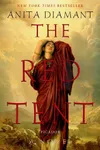
Because all of Anita Diamant's novels are standalone works, there is no single mandatory path to follow. However, most readers begin with her most famous book, The Red Tent (1997), which is a modern classic of biblical historical fiction. If you prefer contemporary or 20th-century historical fiction, The Boston Girl (2014) is another excellent starting point, known for its warm, conversational tone and memorable protagonist.
Chronological Reading Order of Anita Diamant's Novels
For readers who enjoy traveling through history in order, Diamant's fiction spans thousands of years. Reading them chronologically allows you to trace her thematic evolution from ancient biblical matriarchs to early 19th-century outcasts, mid-20th-century immigrants, and finally modern friendship. Here is how the novels line up chronologically:
- The Red Tent (1997) – Set in the ancient Near East during the biblical era of Genesis.
- The Last Days of Dogtown (2005) – Set in the early 19th century (around the 1800s to 1830s) in a dying settlement on Cape Ann, Massachusetts.
- The Boston Girl (2014) – Set in the early 20th century, starting in 1915, tracing the life of an immigrant Jewish girl in Boston.
- Day After Night (2009) – Set in 1945 immediately after World War II, at the Atlit detainee camp in British-mandated Palestine.
- Good Harbor (2001) – Set in the contemporary late 20th or early 21st century in Gloucester, Massachusetts.
Publication Order of Standalone Novels
If you want to experience the author's voice as it developed over time, reading in publication order is highly recommended. Diamant transitioned from a decades-long career as a journalist and non-fiction writer into a novelist in the late 1990s:
- The Red Tent (1997)
- Good Harbor (2001)
- The Last Days of Dogtown (2005)
- Day After Night (2009)
- The Boston Girl (2014)
Deep Dive Into the Novels
The Red Tent (1997)
This groundbreaking novel reimagines the brief biblical story of Dinah, daughter of Jacob and sister of Joseph, from Genesis. The book centers on the "red tent," a place where the women of Jacob's tribe gather during menstruation, childbirth, and illness. In this sanctuary, the women share secrets, traditions, and mutual support. Diamant gives a voice to a character who was historically silent, focusing deeply on themes of sisterhood, ancient domestic life, and the strength of female bonds.
Good Harbor (2001)
Shifting away from historical fiction, Diamant's second novel is a contemporary story set in Gloucester, Massachusetts. It focuses on the friendship between two women: Kathleen, a high school librarian facing a breast cancer diagnosis, and Joyce, a writer struggling with her marriage and the empty-nest syndrome. Bonding over their shared trials and walks along Good Harbor Beach, the two navigate the complexities of middle age, marriage, and female friendship.
The Last Days of Dogtown (2005)
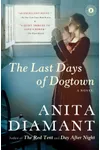
Set in the early 1800s, this novel takes place in Dogtown, a real-life historical settlement on Cape Ann, Massachusetts, that was slowly becoming a ghost town. The story revolves around the community's remaining residents—mostly widows, outcasts, and former slaves who survived on the margins of society. The narrative centers on Judy Rhines, a fiercely independent woman, and her relationships with her neighbors as they fight for dignity and survival in a harsh, changing landscape.
Day After Night (2009)
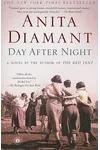
Based on the true story of the October 1945 rescue of Jewish prisoners from the British-run Atlit detainee camp in Palestine, this novel follows four young women who have survived the Holocaust. Leonie, Tedi, Shayndel, and Zorah find themselves behind barbed wire once again, waiting to see if they will be allowed to start a new life. Diamant explores their trauma, their healing process, and the deep friendships they forge while waiting for a daring rescue operation by the Palmach.
The Boston Girl (2014)
Told in a unique frame narrative, this novel is the story of Addie Baum, born in 1900 to Jewish immigrant parents. When her eighty-five-year-old self is asked by her granddaughter how she became the woman she is, Addie reflects on her life starting in 1915. She recounts her youth in the North End of Boston, her struggles to gain an education, her career in journalism, and the lifelong friendships she formed. The novel acts as a love letter to the early 20th-century working-class women of Boston.
Guide to Anita Diamant's Non-Fiction Works
Before achieving fame as a novelist, Anita Diamant was widely recognized for her non-fiction books, which aim to make Jewish practices, rituals, and traditions accessible, welcoming, and inclusive to modern readers, converts, and interfaith families. Her non-fiction works can be categorized as follows:
Jewish Lifecycle Guides
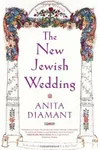
- The New Jewish Wedding (1986) / The Jewish Wedding Now (2017) – A comprehensive guide to planning a Jewish wedding, revised over the years to include same-sex ceremonies and modern interfaith considerations.
- The Jewish Baby Book (1988) / The New Jewish Baby Book (1993 / revised 2005) – Guides exploring naming customs, circumcision (bris), and covenant ceremonies for daughters (simchat bat).
- What to Name Your Jewish Baby (1989) and Bible Baby Names (1996) – Meaningful sourcebooks for parents looking for Hebrew and biblical names.
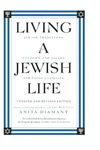
- Living a Jewish Life (1991, revised 2007) – Co-authored with Howard Cooper, this book provides a guide to celebrating holidays and creating a Jewish home.
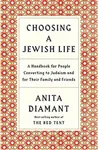
- Choosing a Jewish Life (1998, revised 2020) – A friendly, practical handbook for people converting to Judaism, as well as their families.
- Saying Kaddish (1998, revised 2019) – A guide to mourning, burial, and honoring the deceased in the Jewish tradition.
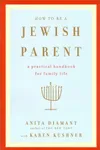
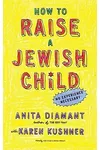
- How to Be a Jewish Parent (2000) and How to Raise a Jewish Child (2008) – Co-authored with Karen Kushner, these books help families navigate modern parenting with Jewish values.
Personal Essays & Menstrual Justice
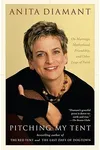
- Pitching My Tent: On Marriage, Motherhood, Friendship, and Other Leaps of Faith (2003) – A collection of personal essays and columns reflecting on her family life, friendship, aging, and faith.
- Period. End of Sentence. (2021) – Inspired by the Oscar-winning documentary of the same name, this book explores the global movement for menstrual justice, fighting the stigma surrounding menstruation, and ensuring access to period products worldwide.
A Note on "Instaread Summary Books"
Readers researching Anita Diamant online may come across several titles published in 2016 under the "Instaread Summary Books" banner, such as summaries of The Boston Girl, The Invention of Wings, or A Little Life. It is important to know that these are not written by Anita Diamant. Instead, they are short study guides and summaries produced by the third-party publisher Instaread. They should not be confused with Diamant's own catalog of novels and guides.
What to Know Before You Start
Anita Diamant's fiction is characterized by a strong feminist perspective, a deep respect for historical accuracy, and a focus on community and human connection. Whether writing about biblical times, 19th-century outcasts, or modern friendships, she consistently emphasizes the power of women supporting one another. Her prose is accessible and warm, making her books highly popular for book clubs. All of her fiction books can be read completely independently as standalones, so feel free to choose the time period that interests you the most.