



Where to Start Reading Annie Jacobsen
Because Annie Jacobsen writes investigative non-fiction, there is no single overarching narrative or fictional timeline to follow. You can pick up any of her books as a standalone. However, to get the absolute most out of her detailed reporting and style, we recommend starting with one of her two most acclaimed and accessible works depending on your interests:
- If you want high-stakes, terrifyingly realistic modern tension: Start with Nuclear War: A Scenario (2024). It is a minute-by-minute countdown of a hypothetical nuclear conflict that reads like a thriller but is entirely grounded in interviews and declassified facts.
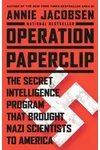
- If you want historically significant, character-driven military secrets: Start with Operation Paperclip: The Secret Intelligence Program That Brought Nazi Scientists to America (2014). It is widely considered her most balanced and ethically compelling historical investigation, detailing how post-WWII America smuggled Nazi scientists into the U.S. space and weapons programs.
Thematic Reading Orders
While reading chronologically by publication year works perfectly fine, grouping her books by theme allows you to follow the development of specific agencies, military capabilities, and secret programs over time. Here are three recommended thematic reading paths:
Path 1: The Secret Weapons and Intelligence Tech Trilogy
This pathway follows the rise of modern American military technology, from the post-WWII era to the modern day, detailing how government agencies pushed the boundaries of science, tech, and the human mind.
- Operation Paperclip (2014): The foundation of America's post-war scientific dominance, showing how the U.S. government recruited former Nazi scientists.
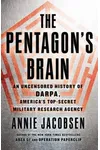
- The Pentagon's Brain (2015): A deep dive into the Defense Advanced Research Projects Agency (DARPA), showing how post-WWII research evolved into modern AI, drones, and advanced combat systems.
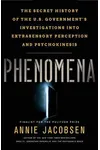
- Phenomena (2017): Focuses on the government's highly secretive research into extrasensory perception (ESP) and psychokinesis, investigating how cold-war paranoia pushed science into the paranormal.
Path 2: Shadow Warfare and Black Operations
For readers fascinated by covert operations, secret bases, and paramilitary forces, this list tracks how the United States has projected hidden power across the globe.
- Area 51 (2011): The book that launched Jacobsen's fame. It exposes the history of the Nevada Test Site, U-2 spy plane development, and government secrecy.
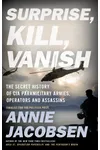
- Surprise, Kill, Vanish (2019): A sweeping history of the CIA's paramilitary division and its secret assassination operations, tracing covert tactics from World War II to the war on terror.
- First Platoon (2021): A focused look at modern biometrics and algorithmic warfare, showing how the military tracks and targets individuals in modern combat zones like Afghanistan.
Path 3: The Threat Scenarios
Jacobsen's newest branch of investigative writing moves away from pure history to construct chilling, fact-based projections of global catastrophes based on interviews with defense insiders.
- Nuclear War: A Scenario (2024): A terrifyingly detailed exploration of what happens in the 24 minutes following a nuclear launch.
- Biological War: A Scenario (Upcoming, 2026): An upcoming continuation of this style, investigating the horrific potential of biological agents and pathogens in modern warfare.
Publication Order of Annie Jacobsen's Books
If you prefer to see how Annie Jacobsen's reporting focus evolved over her career, you can read her books in the order they were published:
- Terror in the Skies: Why 9/11 Could Happen Again (2005): Jacobsen's first book, which stems from a controversial 2004 flight experience and investigates systemic gaps in domestic aviation security.
- Area 51: An Uncensored History of America's Top Secret Military Base (2011): The breakthrough bestseller exploring declassified CIA aerial projects, nuclear testing, and cold war secrets in Nevada.
- Operation Paperclip: The Secret Intelligence Program That Brought Nazi Scientists to America (2014): A dark, meticulously researched account of the ethical compromises made to win the Cold War.
- The Pentagon's Brain: An Uncensored History of DARPA, America's Top-Secret Military Research Agency (2015): A finalist for the Pulitzer Prize in History that reveals the origins of the internet, GPS, and autonomous weapons.
- Phenomena: The Secret History of the U.S. Government's Investigations into Extrasensory Perception and Psychokinesis (2017): An exploration of the military's actual efforts to weaponize telepathy and remote viewing.
- Surprise, Kill, Vanish: The Secret History of CIA Paramilitary Armies, Operators, and Assassins (2019): A chronicle of the agency's shadow warriors and the legality of targeted killing.
- First Platoon: A Story of Modern War in the Age of Identity Dominance (2021): An investigation into the military's use of biometric databases, DNA collection, and surveillance.
- Nuclear War: A Scenario (2024): An intense, real-time simulation of global thermonuclear war based on decades of defense protocols.
What to Know Before You Start
Annie Jacobsen's books are highly immersive, utilizing a narrative non-fiction style that reads more like a thriller than a dry academic history. However, readers should keep a few caveats in mind:
- Controversial Sources: Jacobsen relies heavily on first-person oral histories. This has occasionally led to controversy, most notably in the final chapter of Area 51, where a single unnamed source claimed the Roswell crash was a Soviet psychological operation involving genetically altered children. While her mainstream history is widely praised, her inclusion of fringe claims has drawn criticism from some historians.
- The Flight 327 Controversy: Her debut book, Terror in the Skies, was based on her own experience on a flight where she believed a group of men were running a test flight for a future terrorist attack. Official investigations later concluded the men were innocent Syrian musicians, making this her most debated and polarizing work. Most readers skip this debut and begin with Area 51.
- Heavy Themes: From Nazi war criminals avoiding justice to the horrific details of nuclear radiation, Jacobsen does not shy away from the dark and unsettling realities of geopolitics and war.