











Where to Begin Your Anthony Powell Journey
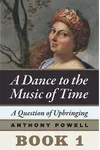
For most readers, the ultimate entry point into Anthony Powell’s literary world is the first volume of his twelve-volume masterpiece, A Dance to the Music of Time. Titled A Question of Upbringing (1951), this book sets the stage for the entire saga, introducing the narrator Nicholas Jenkins and his core circle during their school days. Reading the series in its original publication order is strongly recommended because the narrative functions as a cohesive, sequential roman-fleuve (river novel) where characters grow, age, drift apart, and re-emerge over a span of fifty years.
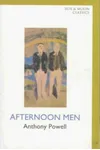
However, if committing to a twelve-novel sequence feels daunting, a fantastic alternative starting point is his debut standalone novel, Afternoon Men (1931). This short, satirical work provides a bite-sized taste of Powell's signature wit, dry dialogue, and keen social observation, focusing on the aimless bohemian party scene of 1920s London without any long-term reading commitments.
The Core Masterpiece: A Dance to the Music of Time
Inspired by Nicolas Poussin's famous painting of the same name, which depicts the seasons dancing in a circle, this sequence is structured into four distinct "Movements" (analogous to the four seasons). Each movement consists of three novels, marking a logical transition in the lives of the characters and the historical backdrop of 20th-century Britain. While modern publishers frequently bundle these into four omnibus volumes, the internal order remains the same:
First Movement: Spring
- A Question of Upbringing (1951) – Introduces Nicholas Jenkins, Charles Stringham, Peter Templer, and Kenneth Widmerpool at school and university during the early 1920s.
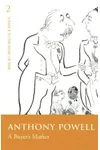
- A Buyer's Market (1952) – Follows the characters as they enter London society, navigating debutante balls and early career steps in the late 1920s.
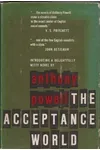
- The Acceptance World (1955) – Explores the characters navigating the financial and political uncertainties of the early 1930s Great Depression.
Second Movement: Summer
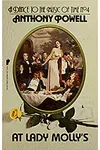
- At Lady Molly's (1957) – Steps into the mid-1930s social circles, focusing on engagements, gossip, and the eccentricities of high society.
- Casanova's Chinese Restaurant (1960) – Focuses on marriage, bohemian artist circles, and relationships set against the backdrop of the Spanish Civil War.
- The Kindly Ones (1962) – Explores the tension of the late 1930s as the threat of World War II looms, drawing parallels to the ancient Furies.
Third Movement: Autumn
- The Valley of Bones (1964) – Covers the outbreak of World War II, focusing on Nicholas’s initial military training and service.
- The Soldier's Art (1966) – Follows Nicholas deeper into military administration and the harsh realities of the Blitz in London.
- The Military Philosophers (1968) – Deals with the final years of the war, administrative intrigue, and the repatriation efforts as peace returns.
Fourth Movement: Winter
- Books Do Furnish a Room (1971) – Focuses on the postwar literary scene, publishing houses, and changing social orders in the late 1940s.
- Temporary Kings (1973) – Set in the 1950s, dealing with aging characters, international conferences, and the fading remnants of the old elite.
- Hearing Secret Harmonies (1975) – The final novel, set in the late 1960s and early 1970s, which features counterculture movements, cults, and the final fates of the remaining characters.
Clearing Up the "13th Book" Confusion
In many library catalogs and online book databases, you will find a 13th entry in the publication order list titled A Dance to the Music of Time (1975). This is not an individual novel. In 1975, alongside the release of the final volume Hearing Secret Harmonies, publisher compilations and boxed sets of the entire 12-volume sequence were released under the collective title. When building your reading checklist, treat Hearing Secret Harmonies as the true 12th and final book of the series.
The Standalone Novels: Pre-war Satire and Post-war Return
Powell wrote five comedic novels prior to World War II, which showcase a sharper, more satirical style before he adopted the more reflective, expansive tone of the Dance sequence. Decades later, he returned to standalone fiction with two final novels. They are best read in publication order:
- Afternoon Men (1931) – A cynical, dialogue-heavy satire of London's drifting bohemian crowd.
- Venusberg (1932) – Inspired by Powell’s diplomatic travels, following a journalist entangled in romance and politics in a Baltic nation.
- From a View to a Death (1933) – A dark comedy about the clash between an artist and the rural gentry in the English countryside.
- Agents and Patients (1936) – A farcical tale of a wealthy, naive young man exploited by modern art dealers and psychoanalysts.
- What's Become of Waring (1939) – A mystery-farce centered on the sudden disappearance of a bestselling travel writer.
- O, How the Wheel Becomes It! (1983) – A brief, satirical post-war novella mocking the vanity and petty rivalries of the literary establishment.
- The Fisher King (1986) – A stylized novel set on a cruise ship that uses Arthurian legend to explore the power dynamics between a crippled photographer and his companions.
Memoirs and Non-Fiction: The Companion Pieces
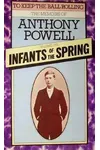
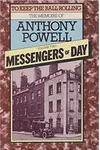
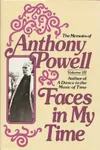
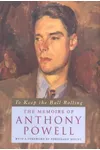
For readers who want to understand the real-life inspirations behind the characters and events of his fiction, Powell's non-fiction is highly rewarding. His four-volume memoir, collected under the title To Keep the Ball Rolling, offers an incredible look at 20th-century British literary history. The volumes are:
- Infants of the Spring (1976) – Covering his childhood, Eton, and Oxford years.
- Messengers of Day (1978) – Focusing on his entry into the London publishing world.
- Faces in My Time (1981) – Detailing his marriage, travel, and war service.
- The Strangers All Are Gone (1982) – Looking back at his later life and literary friendships.
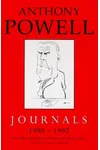
If you don't want to read all four, look for the single-volume abridged edition titled To Keep the Ball Rolling (1984). Additionally, his biography John Aubrey and His Friends (1948) is of great interest, as it was researched and written during the same period he was conceptualizing his 12-volume novel series.