



Where to Start Reading Arthur C. Brooks
If you are new to Arthur C. Brooks, the best entry point depends entirely on what you want to get out of his writing. Because his books are standalone non-fiction works, there is no strict narrative continuity to worry about. However, his bibliography has undergone a significant thematic shift over the decades.
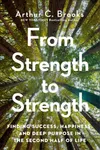
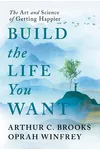
For most readers, the best starting point is From Strength to Strength: Finding Success, Happiness, and Deep Purpose in the Second Half of Life (2022). This book is perfect for anyone navigating transitions, facing professional decline, or seeking long-term satisfaction in the later stages of their career. If you are looking for a broader, science-backed manual on personal well-being, start with Build the Life You Want: The Art and Science of Getting Happier (2023), which Brooks co-authored with Oprah Winfrey.
If you are more interested in his work on social harmony, political dialogue, and bridge-building, his 2019 book Love Your Enemies is the ideal place to begin.
The Core Reading Paths
To help you navigate his works, we have organized them into three distinct thematic paths. Reading them in these groupings will give you a deeper, more cohesive understanding of his ideas.
Path 1: The Happiness and Well-Being Trilogy
This is Brooks's most recent and popular phase of writing. It represents his pivot from public policy and institutional leadership to studying the actual mechanics of human happiness at Harvard.
- From Strength to Strength: Finding Success, Happiness, and Deep Purpose in the Second Half of Life (2022) – Focuses on how to transition from the fast-paced "fluid intelligence" of early career success to the teaching and mentoring "crystallized intelligence" of later life.
- Build the Life You Want: The Art and Science of Getting Happier (2023) – Co-authored with Oprah Winfrey, this serves as a practical, self-improvement guide that teaches readers how to manage their emotions and build happiness through the four pillars of family, friendship, work, and faith.
- The Meaning of Your Life: Finding Purpose in an Age of Emptiness (2026) – Continues his exploration of well-being, helping readers discover a roadmap for finding a deep sense of purpose in the modern world.
Path 2: Social Unity and Public Dialogue
These books address the cultural and political climate in America. They combine Brooks's background in social science with practical advice on how individuals can overcome polarization and contempt.
- The Conservative Heart: How to Build a Fairer, Happier, and More Prosperous America (2015) – Explores how social philosophy and economic policies can be focused on helping the vulnerable and promoting human dignity.
- Love Your Enemies: How Decent People Can Save America from the Culture of Contempt (2019) – A handbook for communicating across political divides, arguing that we should reject contempt and choose to love those with whom we disagree.
Path 3: Free Enterprise, Economics, and Philanthropy
Before focusing fully on happiness research, Brooks led the American Enterprise Institute (AEI) and spent years examining charity, free markets, and public policy. These books are more academic and policy-oriented.
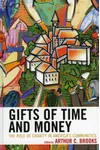
- Gifts of Time and Money: The Role of Charity in America's Communities (2005) – A research-focused collection examining the motivators of voluntary giving.
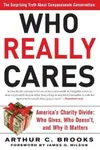
- Who Really Cares: The Surprising Truth About Compassionate Conservatism (2006) – An empirical look at charitable giving patterns in America, demonstrating the links between religious faith, family life, and individual charity.
- Social Entrepreneurship: A Modern Approach to Social Value Creation (2008) – A textbook-style resource integrating business and nonprofit management models.
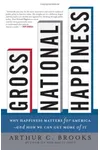
- Gross National Happiness: Why Happiness Matters for America—and How We Can Get More of It (2008) – An early exploration linking political ideology, values, and national well-being.
- The Virtue of Vice (2009) – A dive into cultural values and their impact on social policy.
- Wealth and Justice: The Morality of Democratic Capitalism (2010) – Co-authored with Peter Wehner, this book argues for the moral foundations of democratic capitalism and free markets.
- The Battle: How the Fight Between Free Enterprise and Big Government Will Shape America's Future (2010) – An analysis of the ideological debates surrounding the expansion of government programs.
- The Road to Freedom: How to Win the Fight for Free Enterprise (2012) – Offers an ethical defense of free enterprise, framing it as a moral imperative for human flourishing.
Publication Order of Non-Fiction Books
If you prefer to see how Arthur C. Brooks's philosophy evolved over time, you can read his books in order of publication:
- Gifts of Time and Money (2005)
- Who Really Cares (2006)
- Social Entrepreneurship (2008)
- Gross National Happiness (2008)
- The Virtue of Vice (2009)
- Wealth and Justice (2010)
- The Battle (2010)
- The Road to Freedom (2012)
- The Conservative Heart (2015)
- Love Your Enemies (2019)
- From Strength to Strength (2022)
- Build the Life You Want (2023)
- The Meaning of Your Life (2026)
Anthologies and Edited Collections
In addition to his main trade books, Brooks has contributed to and edited several specialized volumes:
- A Portrait of the Visual Arts: Meeting the Challenges of a New Era (2005)
- Poverty in America and What to Do About It (2014)
- HBR's 10 Must Reads on Nonprofits and the Social Sectors (2019)
- The Future of Capitalism (2020)
What to Know Before You Start
Arthur C. Brooks is not your typical self-help author. Before becoming a Harvard Business School professor, he was a professional classical French horn player who toured internationally, and later, the president of the American Enterprise Institute, a prominent think tank in Washington, D.C.
Because of this diverse background, his writing style is unique: it is conversational and accessible, yet deeply rooted in empirical social science, neuroscience, and classical philosophy. When reading his books on happiness, you will find that he views happiness not as a state of constant cheerfulness, but as a discipline comprised of enjoyment, satisfaction, and purpose.