

















Where to Start: The Essential Arthur Miller Reading Path
For readers approaching the massive catalog of Arthur Miller, jumping straight into his publication order can obscure the natural progression of his mastery. Instead of beginning with his earliest experimental work, we recommend starting with a curated four-play core sequence. This path takes you through his most accessible, historically significant, and commercially successful mid-century tragedies before branch-routing into his prose, non-fiction, and later experimental dramas.
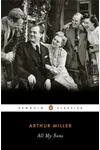
- All My Sons (1947): Start here. This was Miller's first major commercial success on Broadway. It is a tightly structured, realistic family drama that introduces his career-long preoccupation with the American Dream, moral guilt, and the conflicts between family duty and social responsibility.
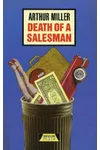
- Death of a Salesman (1949): Move directly to his absolute masterpiece. Winning the Pulitzer Prize for Drama, this play shifts from the classic realism of All My Sons to a fluid, memory-driven non-linear structure. It follows the tragic disillusionment of Willy Loman and remains the definitive critique of the American Dream.
- The Crucible (1953): Read this next for a shift in setting and tone. Set during the Salem witch trials of 1692, this play is highly famous as a direct political allegory for the anti-communist McCarthyism hysteria of the 1950s. It is an intense exploration of hysteria, mass manipulation, and personal conscience.
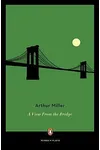
- A View from the Bridge (1955): Conclude the essential path with this lean, Greek-influenced tragedy. Set in the Italian-American docks of Brooklyn, it handles themes of jealousy, illegal immigration, and unvoiced desires with intense pacing and emotional weight.
Publication Order of Plays
If you prefer to follow Arthur Miller's creative development chronologically as a playwright, the order below traces the publication and staging history of his dramatic works. Note that An Enemy of the People is Miller's acclaimed adaptation of Henrik Ibsen's 1882 classic, which Miller modified to speak to the political climate of the Cold War era.
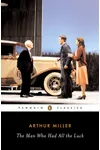
- The Man Who Had All the Luck (1940)
- All My Sons (1947)
- Death of a Salesman (1949)
- An Enemy of the People (1950 - Adaptation of Henrik Ibsen's 1882 play)
- The Crucible (1953)
- A Memory of Two Mondays (1955)
- A View from the Bridge (1955)
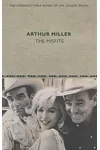
- The Misfits (1961 - Screenplay/Cinema Novel)
- After the Fall (1964)
- Incident at Vichy (1964)
- The Price (1968)
- The Creation of the World and Other Business (1972)
- The Archbishop's Ceiling (1977)
- Playing for Time (1981)
- The American Clock (1981)
- Some Kind of Love Story (1983)
- The Ride Down Mt. Morgan (1991)
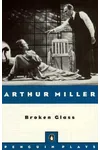
- Broken Glass (1994)
- The Last Yankee (1994)
- Mr. Peter's Connections (1998)
- Elegy for a Lady (1998)
- Resurrection Blues (2006 - Posthumous Publication)
- Everybody Wins (2007 - Screenplay, Posthumous Publication)
Understanding the "Dramascripts Books" Series
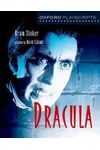
New readers reviewing libraries or retail listings often encounter a series called Dramascripts Books, which packages Arthur Miller's landmark plays like The Crucible and Death of a Salesman alongside school play adaptations of classics by other authors (such as Bram Stoker's Dracula, Mary Shelley's Frankenstein, and Terry Pratchett's Johnny and the Dead). This is not an interconnected universe or co-authored collection. Instead, it is an educational curriculum imprint designed for classrooms and student actors. For the optimal experience of Miller's unique voice, we recommend reading his plays in their original standalone editions or official collected editions rather than curriculum-abridged classroom versions.
Arthur Miller's Novels and Short Fiction
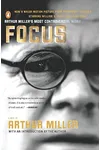
While celebrated primarily for the stage, Miller was a talented prose writer. Reading his novels and short stories provides a deeper look into his prose styling. His debut novel, Focus, is particularly notable as one of the first major American novels to confront domestic anti-Semitism during World War II.
- Focus (1945) - Standalone Novel
- I Don't Need You Any More (1951) - Short Story Collection
- The Misfits (1961) - Written as a unique "cinema novel" crossover alongside the film production starring Marilyn Monroe.
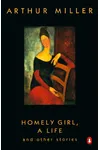
- Homely Girl, A Life: And Other Stories (1992) - Short Story Collection
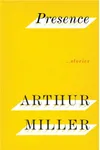
- Presence (2004) - Final Short Story Collection
- The Arthur Miller Collection (2022) - Definitive retrospective collection
Non-Fiction, Essays, and Collaborations
For readers who want to understand the intellectual framework behind his drama, Miller's non-fiction is highly recommended. These works cover his theater philosophy, travel logs (frequently written in collaboration with his wife, photographer Inge Morath), and his personal history.
- In Russia (1969 - Travelogue with Inge Morath)
- In the Country (1977 - Travelogue with Inge Morath)
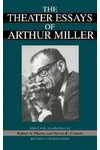
- The Theater Essays of Arthur Miller (1978 - Critical essays detailing his philosophy of tragedy)
- Chinese Encounters (1979 - Travelogue with Inge Morath)
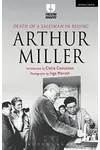
- Salesman in Beijing (1984 - Memoir documenting his experience directing a Chinese production of his masterpiece)
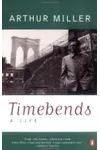
- Timebends: A Life (1987 - Official Autobiography)
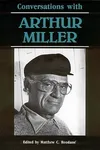
- Conversations with Arthur Miller (1987 - Collection of interviews)
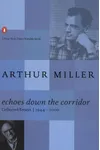
- Echoes Down the Corridor (2001 - Essay collection spanning 1944–2000)
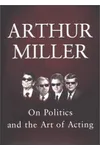
- On Politics and the Art of Acting (2001 - Extended essay on political theatricality)
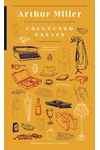
- Collected Essays (2016 - Posthumous non-fiction compilation)
What to Know Before You Start
Arthur Miller’s work is deeply tied to the social and political atmosphere of 20th-century America. Understanding the historical backdrops of his writing—such as the psychological toll of the Great Depression on the American family, the post-war industrial boom of the late 1940s, and the political paranoia of the Cold War Red Scare—will dramatically elevate your appreciation of the scripts. Because plays are meant to be heard and seen, new readers are highly encouraged to pair their reading with filmed versions or live stage performances to capture the rhythm of his dialogue and the visual tension of his staging design.