
How to Navigate Arthur Phillips’s Standalone Novels
Arthur Phillips does not write recurring series or chronological sagas. Instead, his bibliography consists of intricately structured, standalone novels that shift dramatically in genre, tone, and setting. Because there is no overarching narrative continuity, you can read his books in any order you choose. However, because his style is highly experimental—often featuring unreliable narrators, epistolary documents, and metafictional puzzles—picking the right entry point depends on what kind of literary adventure you are seeking.
Recommended Starting Points
Depending on your personal reading preferences, here are the best gateways into Arthur Phillips’s work:
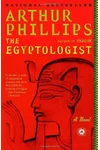
- For Lovers of Wit and Mystery: Start with The Egyptologist (2004). This epistolary novel is his most famous and accessible entry point, blending dark humor, historical intrigue, and a complex puzzle about identity and historical fraud.
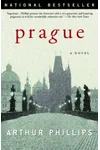
- For Lovers of Character Studies: Start with his debut, Prague (2002). This novel offers a rich, semi-autobiographical depiction of expatriate life in 1990s post-communist Europe, focusing on nostalgia and youth.
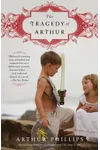
- For Lovers of Metafiction: Start with The Tragedy of Arthur (2011). If you appreciate literary experiments like Vladimir Nabokov’s Pale Fire, you will enjoy this blend of a faux-memoir and a fully realized, "lost" Shakespearean play written by Phillips himself.
Arthur Phillips Books in Publication Order
Reading Arthur Phillips in publication order allows you to track his growth as a stylist as he moves from traditional narrative formats to complex, multi-layered literary experiments and historical thrillers.
1. Prague (2002)
Set in Budapest between 1990 and 1992, Phillips's award-winning debut follows five young American expats seeking fortune, romance, and artistic meaning in a newly opened Eastern Europe. The central irony of the book is that while they reside in Budapest, they obsessively believe that the "real" historical action is happening in Prague, leaving them perpetually nostalgic for a place they aren't actually in.
2. The Egyptologist (2004)
An epistolary puzzle set in the 1920s, the novel is told through the journals and letters of Ralph Trilipush, a Harvard-educated Egyptologist searching for the tomb of a fictional, scandalous pharaoh named Atum-hadu. His narrative is contrasted with the letters of Harold Ferrell, a sharp Australian detective who believes Trilipush is actually a con man named Paul Caldwell. The reader is left to piece together the truth behind their conflicting accounts.
3. Angelica (2007)
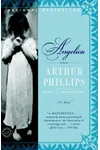
A psychological Victorian ghost story set in 1880s London. The Barton family's household becomes a battleground of psychological dread after the birth of their daughter, Angelica. The novel is divided into four distinct parts, each recounting the events from a different perspective: the mother Constance, her scientist husband Joseph, a spiritual medium, and finally Angelica as an adult. It leaves the reader to question whether the home is haunted by a genuine spirit or by the psychological terrors of Victorian repression.
4. The Song Is You (2009)
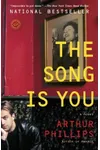
Julian Donahue, a Brooklyn commercial director grieving the tragic loss of his son and the subsequent collapse of his marriage, becomes infatuated with Cait O’Dwyer, a rising Irish indie-rock singer. He embarks on a modern, digital-age "courtly love" affair from afar, attempting to influence her artistic career through anonymous, cryptic suggestions without ever meeting her face-to-face.
5. The Tragedy of Arthur (2011)
This metafictional novel features a narrator named "Arthur Phillips" who details his life with his twin sister and his father, a charming con man who leaves behind a "lost" William Shakespeare play. The second half of the book presents the complete five-act play, The Tragedy of Arthur, which Phillips wrote himself in highly convincing Elizabethan blank verse.
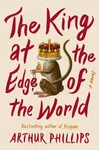
6. The King at the Edge of the World (2020)
A historical espionage thriller set in 1601. As Queen Elizabeth I lies dying, Mahmoud Ezzedine, a Muslim physician from the Ottoman Empire stranded in England, is recruited by Elizabethan spymasters. He is sent on a dangerous mission to Scotland to determine whether the future King James VI is secretly a Catholic or a Protestant.
Upcoming Work
- Monster Movies (Expected August 2027): Phillips's seventh novel is scheduled for publication in late 2027.
What to Know Before You Start
Arthur Phillips’s novels are characterized by key thematic elements that make them stand out from standard commercial fiction:
- Unreliable Narrators: Almost all of Phillips's novels are told by characters who are self-deceiving, outright liars, or whose perspectives are clouded by grief, obsession, or mental illness. Reading his books requires an active role in separating fact from fiction.
- Structural Experimentation: Phillips rarely tells a straightforward story. He frequently uses letters, diaries, faux-documents, and multi-perspective framing devices to challenge the reader's understanding of narrative truth.
- Adaptations and Screenwriting: The novel Angelica was adapted into a 2015 psychological horror film written and directed by Mitchell Lichtenstein, starring Jena Malone. Phillips has also transitioned into television, serving as a writer and co-executive producer on AMC's Silicon Valley drama The Audacity (premiered April 2026), alongside writing credits for Damages and Tokyo Vice.