















Where to Start: The Recommended Reading Path
For the vast majority of readers, the best way to experience Arthur Ransome's books is by following the publication order of his famous Swallows and Amazons series. Starting with the titular first book introduces the Walker children (the Swallows) and the Blackett sisters (the Amazons) as they establish their summer camps and explore the lake. Reading in publication order allows you to watch the characters grow older, witness their sailing skills improve, and naturally meet new characters like Dick and Dorothea Callum (the Ds) who join the crew in later novels.
The Core Swallows and Amazons Series in Publication Order
Here is the list of the twelve completed books in the series, plus the unfinished posthumous story, in the order they were published:
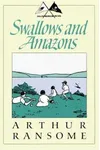
- Swallows and Amazons (1930) – The classic introduction where the Walker and Blackett children battle for control of Wildcat Island.
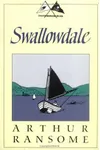
- Swallowdale (1931) – A return to the Lake District featuring a shipwreck, camp life in a hidden valley, and an ascent of Kanchenjunga.
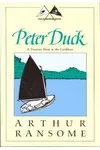
- Peter Duck (1932) – An exotic, treasure-hunting voyage to the Caribbean with the old sailor Peter Duck. (See the Meta-fiction section below for context).
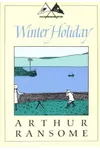
- Winter Holiday (1933) – The first winter book, introducing Dick and Dorothea Callum as they join the group for an arctic-style expedition on the frozen lake.
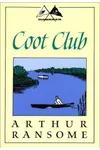
- Coot Club (1934) – Set on the Norfolk Broads, introducing Tom Dudgeon and the Coots, focusing on bird preservation and sailing on the rivers.
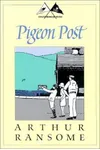
- Pigeon Post (1936) – The Swallows, Amazons, and Ds prospect for gold in the hills during a hot summer, winning the inaugural Carnegie Medal.
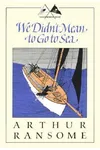
- We Didn't Mean to Go to Sea (1937) – A suspenseful, more mature adventure where the Swallows are accidentally drifted out into the North Sea during a storm.
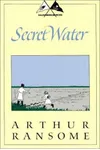
- Secret Water (1939) – The children map the tidal salt marshes of Essex in a mock-tribal exploration game.
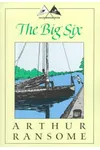
- The Big Six (1940) – A detective story back in the Norfolk Broads, where the Coot Club children solve a series of boat-tampering mysteries.
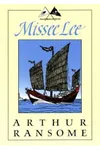
- Missee Lee (1941) – The children cruise to the China Seas, run aground, and are captured by a female pirate leader. (Another meta-fictional story).
- The Picts and the Martyrs or Not Welcome at All (1943) – The Blacketts and the Callums must hide their holiday activities from a strict, disapproving great-aunt.
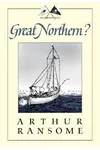
- Great Northern? (1947) – A Scottish adventure where the children protect a nesting pair of rare Great Northern Divers from an unscrupulous egg collector.
- Coots in the North (1988) – The unfinished manuscript of the 13th book, published posthumously alongside other short stories.
Publication Order vs. Chronological Order & Meta-fiction
While publication order is the easiest path, there is a fascinating debate among Ransome fans regarding the series' timeline. The internal chronological timeline runs from the summer of 1929 or 1930 to the summer of 1933 or 1934. However, the biggest wrinkle involves Peter Duck and Missee Lee.
These two books are widely recognized as meta-fiction—they are not 'real' adventures in the timeline of the children's lives. Instead, they are stories created and written by the children themselves. In Swallowdale, the children explicitly mention making up a story about a treasure hunt with an old sailor named Peter Duck. Thus, Peter Duck is a story-within-a-story. Similarly, Missee Lee is a wild pirate adventure that fits as a fictionalized yarn. In contrast, the other ten books are realistic stories depicting plausible outdoor holidays. If you want to follow the 'realistic' timeline of the children's lives, you can skip these two books or read them separately as imaginary spin-offs.
Geographical Subseries: Where the Adventures Take Place
Another popular way to group the books is by their setting. Ransome took great pride in mapping his stories to real places. The books fall into three distinct geographical groups:
The Lake District (Cumbria)
The heart of the series, based on a combination of Windermere and Coniston Water. These books focus on sailing, camping, and climbing: Swallows and Amazons, Swallowdale, Winter Holiday, Pigeon Post, and The Picts and the Martyrs.
The Norfolk Broads
These books feature the Callum children (the Ds) and the Coot Club. They swap open-lake sailing for river cruising, motorboats, and local wildlife conservation: Coot Club and The Big Six. The unfinished Coots in the North also starts here.
The Essex Coast and North Sea
More challenging maritime settings involving real pilotage, tides, and deep-water sailing: We Didn't Mean to Go to Sea (sailing from Harwich to Flushing in the Netherlands) and Secret Water (set in the Hamford Water salt marshes).
Beyond the Swallows and Amazons: Standalones and Folklore
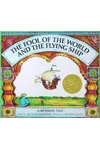
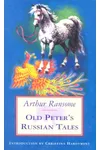
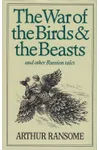
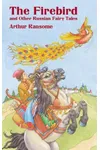
Before Arthur Ransome became a children's novelist, he lived a colorful life as a journalist in Russia. This led to his famous collection of Russian folklore, Old Peter's Russian Tales (1916). He also translated and published several Russian folk stories, including The Fool of the World and the Flying Ship (published posthumously in 1968) and Little Daughter of the Snow (originally from his 1916 tales, republished as a standalone picture book in 2005).
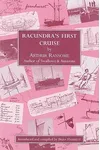
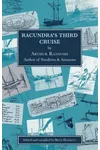
Additionally, Ransome wrote one gothic horror/romance novel for adults, The Elixir of Life. While some digital databases list the publication year as 2021 (due to modern reprints by the Arthur Ransome Trust), it was actually first published in 1915. He was also an avid fisherman, writing the beloved angling collection Rod and Line (1980) and documenting his real Baltic voyages in Racundra's First Cruise (1923) and the posthumously compiled Racundra's Third Cruise (2002).
What to Know Before You Start
Ransome's books are highly detailed, featuring diagrams, maps, and precise explanations of sailing maneuvers, knot-tying, and outdoor survival. Modern readers may find the nautical jargon a bit dense at first, but Ransome's clear writing style ensures that you do not need to be an expert sailor to enjoy the adventures. The stories also reflect a period when children enjoyed remarkable freedom and self-reliance, exploring lakes and rivers completely unsupervised by adults—a charming escapism that remains timeless.