
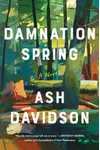
The Recommended Reading Order for Ash Davidson
As a rising star in contemporary American literature, Ash Davidson has quickly made a name for herself with her deeply moving, atmospheric storytelling. Because she has focused on crafting a single, monumental debut novel, finding where to start is exceptionally simple.
Currently, the recommended reading path is to start directly with her debut masterpiece:
- Damnation Spring (2021)
While she has also written several short stories published in prestigious literary journals, her debut novel is the definitive entry point into her writing. It serves as a complete, standalone experience that fully showcases her lyrical style, meticulous historical research, and empathetic character development.
Understanding Damnation Spring
Set in 1977 in a fictional logging town in coastal Northern California, Damnation Spring is a rich, slow-burning family drama and a tense environmental thriller. The story is told through the alternating perspectives of three members of the Gundersen family:
- Rich Gundersen: A second-generation logger who secretly spends the family savings to buy a parcel of land covered in ancient, prized redwoods, hoping to secure his family's financial future.
- Colleen Gundersen: Rich's wife, a local midwife who begins to notice a devastating spike in miscarriages, stillbirths, and birth defects among the town's women.
- Chub Gundersen: Their young, observant son, who acts as the innocent heart of the family, exploring the creeks and forests that are slowly being poisoned.
The novel explores the painful clash between the logging community's economic survival and the severe health issues caused by the aerial spraying of herbicides (such as 2,4,5-T, a component of Agent Orange). Rather than painting the conflict in simple terms of good versus evil, Davidson treats both the loggers and the environmental activists with deep empathy and nuance, showing how hard-working families are caught in the middle of corporate negligence and systemic struggles.
Real-Life Influences and What to Know Before You Start
To fully appreciate Davidson's work, it helps to understand the deep personal roots and extensive research that shaped the narrative:
- Childhood Roots: Davidson was born in Arcata, California, and raised in Klamath, a small town surrounded by the redwood forests. Growing up, her family and neighbors regularly worried about herbicide contamination in their drinking water, which laid the foundation for the book's central conflict.
- Historical Accuracy: The author spent nearly a decade researching the history of the timber industry and environmental activism in the 1970s. She drew significant inspiration from Carol Van Strum’s landmark book A Bitter Fog, which documented the real-life struggle of rural Oregon communities against chemical spraying.
- Lyrical Prose: Davidson developed her refined style at the prestigious Iowa Writers' Workshop, blending the rugged vocabulary of logging operations with highly poetic, sensory descriptions of the misty, damp California coast.
Short Stories and Literary Journals
Before publishing her novel, Davidson honed her voice by writing shorter pieces of fiction. If you want to explore her writing beyond her debut book, you can track down her short stories in the archives of literary journals such as the Copper Nickel and the Nashville Review. These early works highlight the same focus on working-class communities, domestic relationships, and a powerful sense of place that defines her longer writing.
Where to Go Next: Companion and Similar Reads
If you have finished Damnation Spring and are looking for similar novels that capture the same atmosphere, environmental themes, or family dynamics, we recommend adding the following books to your reading list:
- The Overstory by Richard Powers: An epic, Pulitzer Prize-winning novel that centers on humans' relationship with trees, featuring a section set during the logging protests of the Pacific Northwest.
- Prodigal Summer by Barbara Kingsolver: A beautifully written story that explores ecological connections, community, and human relationships in rural America.
- A Bitter Fog: Herbicides and Human Rights by Carol Van Strum: The essential non-fiction work that served as a historical blueprint for Davidson's depiction of chemical contamination in the Pacific Northwest.