


Where to Start: The Recommended Reading Path
Ayn Rand’s work is unique in that her fiction and her philosophy, Objectivism, are completely integrated. While there is no official reading order mandated by the Ayn Rand Institute, the general consensus among readers, educators, and fans is to start with her fiction before moving on to her dense non-fiction. This allows readers to see her moral concepts in action through vivid characters before studying the underlying theory.
The Progression of Fiction
For most readers, the best route is to build up from her shortest and most accessible stories to her massive final epic. The recommended path looks like this:
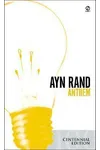
- Anthem (1938): A short, highly accessible dystopian novella. It serves as an excellent introduction to her views on the individual versus the collective without the overwhelming length or complex storylines of her major works.
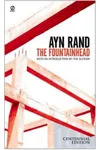
- The Fountainhead (1943): Rand’s breakout novel. Focusing on the brilliant architect Howard Roark, this book is the perfect transition into her long-form fiction. It details her moral ideal of independence and the creator’s struggle against conformist society in a style that reads like a fast-paced drama.
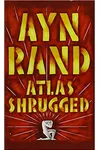
- Atlas Shrugged (1957): Her magnum opus and final novel. This is a massive, complex philosophical thriller. It is highly recommended to read this after The Fountainhead because it represents the fully integrated, mature version of her entire philosophy, Objectivism, complete with long philosophical speeches.
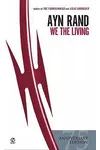
- We the Living (1936): Though it was her first published novel, it is often best read after her major works. Set in Soviet Russia, it is a highly charged, semi-autobiographical, and tragic story of individuals trying to survive under a collectivist regime. Its somber tone makes it a heavy entry point for beginners.
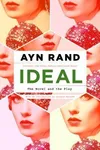
- Ideal (2015): A posthumously published novel written in 1934. It follows a famous actress who tests the integrity of six fans. Read this last to appreciate how Rand was already developing her signature themes early in her career.
The Non-Fiction Transition
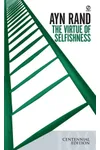
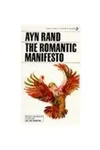
Once you have finished her fiction, you can easily transition into her essays and lectures. Starting with The Virtue of Selfishness (1964) is highly recommended, as it outlines her core ethical system. From there, readers typically choose collections based on personal interest, such as The Romantic Manifesto (1969) for her views on art and literature, or Capitalism: The Unknown Ideal (1946) for her economic philosophy.
Ayn Rand’s Works by Publication Order
For readers who want to watch Rand’s writing style, literary themes, and philosophical system evolve in real-time, following the chronological publication order is the most logical path. Her bibliography can be organized into standalone novels, plays, short story collections, and non-fiction essays.
Standalone Novels
Rand’s novels were published decades apart, reflecting the immense time she dedicated to structuring and writing her philosophical narratives. Note that Ideal was written early in her career (1934) but was not published until 2015.
- We the Living (1936)
- Anthem (1938)
- The Fountainhead (1943)
- Atlas Shrugged (1957)
- Ideal (2015 - Posthumously published novel and play)
Plays and Drama
Rand started her writing career in Hollywood and had a deep passion for the theater. Her most famous theatrical work is a courtroom drama known for its interactive setup.
- The Night of January 16th (1936) - A courtroom drama where the jury is selected from the audience, leading to two potential endings based on their verdict of guilty or not guilty.
Short Story Collections
Rand published very few short stories during her lifetime, preferring the depth of novels. However, her early drafts and stories were compiled after her death.
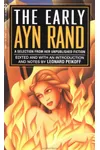
- The Early Ayn Rand: A Selection from Her Unpublished Fiction (1984) - Edited by Leonard Peikoff, this posthumous collection features early stories, plays, and deleted scenes from the 1920s and 1930s.
Non-Fiction and Philosophical Collections
In her later years, Rand stopped writing fiction entirely and focused on editing her periodicals and writing philosophical essays. These works define the formal tenets of Objectivism.
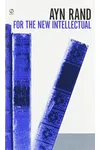
- For the New Intellectual (1961) - A transition book featuring key philosophical passages from her novels along with an introductory essay.
- The Virtue of Selfishness (1964) - A collection of essays defining the rational ethics of Objectivism.
- The Romantic Manifesto (1969) - Rand’s philosophy of art and literature (esthetism).
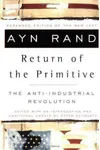
- The Return of the Primitive (1971) - Essays criticizing modern cultural and political trends.
The Ayn Rand Library
Following her death, several volumes of her lectures, letters, journals, and structured lexicons were edited and published to keep her philosophy accessible.
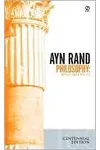
- Philosophy: Who Needs It (1982) - Her final collection of essays, published shortly after her death.
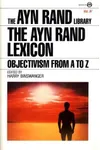
- The Ayn Rand Lexicon: Objectivism from A to Z (1986) - A reference guide compiling her definitions of key terms.
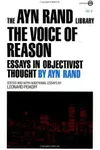
- The Voice of Reason: Essays in Objectivist Thought (1989) - An anthology of her later essays and columns.
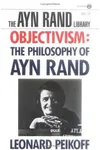
- Objectivism: The Philosophy of Ayn Rand (1991) - The first comprehensive, systematic presentation of Objectivism, written by her designated heir, Leonard Peikoff.
Anthologies and Megapacks
Rand’s essays and early works also appear in various historical anthologies and sci-fi compilations.
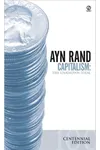
- Capitalism: The Unknown Ideal (1946) - A collection focused on the moral defense of laissez-faire capitalism.
- 50 Classic Novellas (2011) - Featuring her novella Anthem alongside other classic writers.
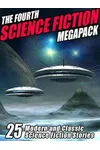
- The Fourth Science Fiction Megapack (2012) - A digital anthology that includes Anthem due to its classic sci-fi/dystopian themes.
What to Know Before You Start
Before diving into Ayn Rand’s universe, there are a few important contexts to keep in mind. First, none of her novels share a continuity or characters; they are completely standalone stories. You do not need to worry about missing plot connections between The Fountainhead and Atlas Shrugged, as they are set in different realities.
Second, her writing style is deliberately romantic and heroic. Her characters represent idealized concepts rather than realistic, everyday people. This makes her work highly stylized, filled with intense dramatic conflicts and long monologues. Knowing this beforehand prevents readers from being caught off guard by the non-naturalistic dialogue, particularly in Atlas Shrugged.
Lastly, pay attention to the revisions. We the Living was heavily revised by Rand for its 1959 reissue to correct stylistic issues and align it closer to her developed philosophical vocabulary. Most modern prints feature this revised version rather than the original 1936 text.