
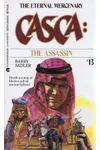
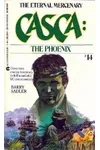
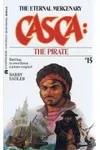
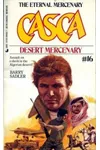
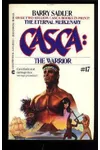
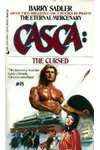
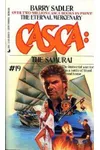
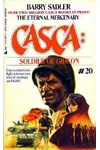

How to Read Barry Sadler’s Books
Barry Sadler is best remembered as a real-life soldier, singer of the hit song The Ballad of the Green Berets, and the creator of the long-running Casca military-fantasy series. When diving into his catalog, you are faced with a massive 59-book epic about an immortal warrior, alongside several standalone war novels and thriller projects. For the best experience, readers typically choose between two main pathways: publication order and chronological historical order.
The Recommended Starting Point
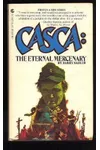
We strongly recommend starting your journey with the book that launched the legend: Casca: The Eternal Mercenary (1979). Even if you plan to read the rest of the series in chronological historical order, the first published novel is essential because it establishes the core premise of the series. Here, we witness the crucifixion of Jesus Christ, where the Roman soldier Casca Rufio Longinus drives his spear into Christ's side. Cursed to remain a soldier on the battlefield, wandering the Earth until the Second Coming, Casca's tragic, high-octane destiny is set in motion. Starting here ensures you understand the rules of his immortality, his healing factor, and the psychological burden of his endless life.
Publication Order vs. Chronological Order
The Casca series is famous for jumping back and forth across history. One book might find Casca fighting in World War II, while the next displays his exploits during the Roman Empire or the Crusades. Consequently, fans are divided on the ideal reading sequence.
Option 1: Publication Order (The Classic Experience)
Reading in order of publication allows you to experience the series exactly as it grew. You will read the initial 22 novels penned during Barry Sadler's lifetime (and immediately following his 1989 death, ending with The Mongol in 1990), before moving into the continuation novels authorized by his estate. The benefit of this order is watching Sadler's pulp-fiction style develop, followed by the stylistic shifts brought on by estate-approved continuation authors such as Paul Dengelegi, Tony Roberts, and John L. Thompson.
Option 2: Chronological Timeline Order (The Historical Progression)
If you prefer to follow Casca's life linearly from the ancient world to the modern era, you should read the books chronologically. While the entire series spans 59 books, the early sequence of Casca’s chronological timeline begins as follows:
- Casca 1: The Eternal Mercenary (Covers 30 A.D. to 226 A.D. - Casca's curse, his service in Rome, and early travels)
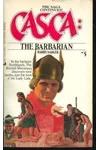
- Casca 5: The Barbarian (Covers 226 A.D. to 252 A.D. - Casca lives among Germanic tribes and fights Rome)
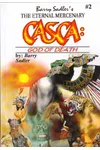
- Casca 2: God of Death (Covers 252 A.D. to 300 A.D. - Casca is initiated as a warrior-god in Teotihuacan, Mexico)
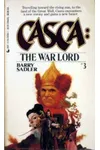
- Casca 3: The War Lord (Covers 300 A.D. to 309 A.D. - Casca serves as a military commander in Imperial China)
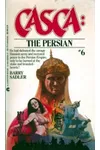
- Casca 6: The Persian (Covers 309 A.D. to 379 A.D. - Casca struggles against the Sasanian Empire)
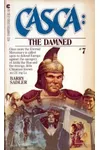
- Casca 7: The Damned (Covers 451 A.D. to 453 A.D. - Casca encounters Attila the Hun during the collapse of the Roman Empire)
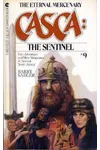
- Casca 9: The Sentinel (Covers 485 A.D. to 527 A.D. - Casca guards the empire at the Byzantine border)
By reading chronologically, you can trace Casca’s evolution from a cynical Roman legionnaire to a battle-hardened medieval knight, a Renaissance mercenary, an American colonial rebel, a Civil War combatant, and eventually a modern-day special forces operator.
The Standalone Novels and Non-Fiction
Beyond the legendary Casca series, Barry Sadler wrote several standalone novels that drew heavily on his personal experiences as a combat medic in the Vietnam War, as well as his short-lived career in the music industry.
The Vietnam War Novels
Sadler’s two Vietnam-focused novels are highly regarded for their raw, realistic depiction of modern combat. Unlike the pulp-fantasy elements of Casca, these books are grounded in military realism:
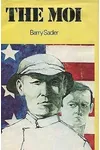
- The Moi: A Novel of the Vietnam War (1977): Sadler's debut novel. It tells the intense story of a captured American Special Forces soldier trying to survive torture and psychological warfare in a Viet Cong prison camp.
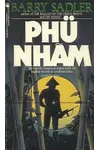
- Phu Nham (1984): A gritty novel focusing on the deadly cat-and-mouse games played by an American sniper operating in the dense jungles of Southeast Asia.
Other Action Thrillers
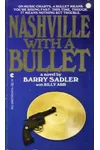
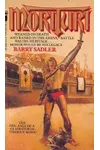
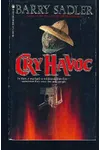
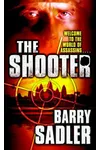
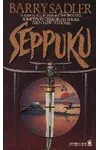
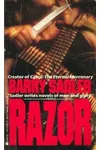
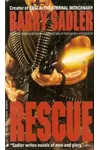
Sadler also wrote several action-adventure thrillers that follow mercenaries, hitmen, and survivalists. These include Morituri (1982), Cry Havoc (1983), The Shooter (1987), Seppuku (1988), Razor (1988), and the posthumously published Rescue (1991). He also co-authored Nashville with a Bullet (1981) with Billy Arr, which combined a murder mystery with satirical elements reflecting his time in the country music industry. Sadler also published a single non-fiction guide in 1978 detailing the inner workings of the Nashville music scene.
What to Know Before You Start
Before diving into Barry Sadler's work, it helps to understand a few unique details about his legacy, authorship, and the ongoing development of the Casca franchise:
The Author Transition
Barry Sadler was the sole creator and primary writer of the first 22 Casca novels, concluding with The Mongol, which was published shortly after his death. Following his passing, the series lay dormant for nearly a decade until his estate licensed other writers to continue Casca's adventures. Paul Dengelegi wrote two books (The Liberator and The Defiant), followed by British author Tony Roberts, who has written the majority of the modern entries since 2006, expanding the series with historical detail. John L. Thompson joined as a continuation writer in 2026.
The Ghostwriting Debate
Because the first 22 novels were released rapidly during the late 1970s and 1980s, some fans have debated whether Sadler utilized ghostwriters to keep up with the grueling publication schedule. While some stylistic differences exist between certain original books, biographer Marc Leepson’s research—including interviews with Sadler’s editors and literary agents—concluded that Sadler wrote the core manuscripts himself, occasionally relying on editorial support to polish his prose.
Historical Cameos
A fun aspect of the Casca series is the historical cameos. Over his 2,000-year lifespan, Casca crosses paths with prominent historical figures, including Attila the Hun, Genghis Khan, Moctezuma, George Washington, and Adolf Hitler. The historical accuracy increases in the continuation novels, particularly those written by Tony Roberts, who does extensive research to place Casca within real battles and campaigns.