
Where to Start Reading Bart D. Ehrman
With a career spanning over four decades and more than forty books, Bart D. Ehrman is one of the most prominent modern scholars of early Christianity. Because his publications range from highly accessible bestsellers to dense academic textbooks and specialized monographs, choosing where to start can be challenging. For the general reader, we recommend starting with his unofficial "New Testament Reliability Trilogy", which introduces the core themes of his public scholarship.
The Core Popular Trilogy
If you want to understand how the New Testament was written, copied, altered, and compiled, start with these three books in order:
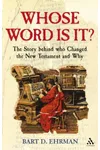
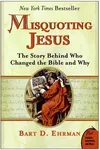
- Misquoting Jesus: The Story Behind Who Changed the Bible and Why (2005) – This is Ehrman’s breakout trade bestseller. It introduces the science of textual criticism, explaining how ancient scribes accidentally and intentionally altered New Testament manuscripts over the centuries. (Note: Published as Whose Word Is It? in the United Kingdom).
- Jesus, Interrupted: Revealing the Hidden Contradictions in the Bible & Why We Don't Know About Them (2009) – A natural follow-up that details the historical-critical method of biblical analysis, demonstrating contradictory narratives and varying theological perspectives between different books of the Bible.
- Forged: Writing in the Name of God (2011) – An eye-opening look at pseudepigrapha, exploring how many books of the New Testament were not written by their traditionally attributed apostolic authors, but were instead written by later authors using their names.
Thematic Reading Paths
Rather than reading strictly by publication year, most readers benefit from following specific thematic tracks based on their personal interests. Dr. Ehrman’s major popular works fit neatly into two primary subject paths.
Track 1: The Historical Jesus
This path focuses on how modern secular historians reconstruct the life, teachings, and death of Jesus of Nazareth, separating the Jesus of history from the Christ of faith:
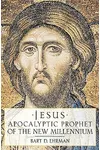
- Jesus: Apocalyptic Prophet of the New Millennium (1999) – The cornerstone of Ehrman's historical Jesus research, arguing that Jesus was a first-century apocalyptic prophet who expected an imminent cosmic destruction and renewal.
- Did Jesus Exist? The Historical Argument for Jesus of Nazareth (2012) – Written as a response to "mythicist" arguments, this book outlines the robust historical evidence that Jesus was a real historical figure.
- Jesus Before the Gospels: How the Earliest Christians Remembered, Changed, and Invented Their Stories of the Savior (2016) – An investigation into oral history and memory science, analyzing how oral traditions about Jesus evolved during the decades before the Gospels were written.
Track 2: The History and Evolution of early Christian Doctrines
This path tracks how a small, localized movement of Jewish disciples transformed into a massive, orthodox Roman religion with specific doctrines regarding the divinity of Jesus and the afterlife:
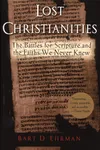
- Lost Christianities: The Battles for Scripture and the Faiths We Never Knew (2002) – Explores the vast diversity of early Christian sects (such as Gnostics, Ebionites, and Marcionites) and how one specific faction eventually won the debate to define what became "orthodox" Christianity.
- How Jesus Became God: The Exaltation of a Jewish Preacher from Galilee (2014) – Traces the historical development of Christology, detailing how early Christians transitioned from viewing Jesus as a human messiah to a co-eternal divine figure.
- The Triumph of Christianity: How a Forbidden Religion Swept the World (2017) – An analysis of how a persecuted minority religion managed to convert the Roman Empire within a few centuries.
- Heaven and Hell: A History of the Afterlife (2020) – Examines how modern Christian ideas of eternal reward and punishment evolved from ancient Greek, Hebrew, and Mesopotamian concepts, rather than being original teachings of Jesus.
- Armageddon: What the Bible Really Says about the End (2023) – Explores the historical context of the Book of Revelation and how its theological message has been widely misinterpreted by modern apocalyptic movements.
Scholarly Monographs vs. General Trade Books
It is crucial for readers to understand the difference between Ehrman's popular "trade" paperbacks and his academic writings. Purchasing his scholarly monographs expecting a light read may result in frustration, as they are filled with untranslated Greek, complex textual variants, and dense academic terminology.
College-Level Textbooks
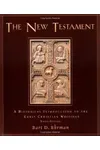
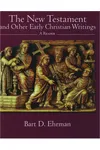
- The New Testament: A Historical Introduction to the Early Christian Writings (1996) – His primary college textbook, now in its eighth edition, which offers a structured, academic curriculum.
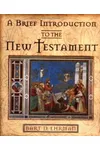
- A Brief Introduction to the New Testament (2004) – A streamlined, shorter edition of his main textbook tailored for shorter courses.
- The Bible: A Historical and Literary Introduction (2013) – A broader textbook that introduces both the Old and New Testaments.
Academic Monographs
These books are meant for scholars, graduate students, and researchers in the field of biblical studies:
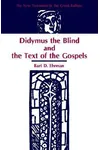
- Didymus the Blind & the Text of the Gospels (1986) – Ehrman's first published book, derived from his doctoral dissertation at Princeton.
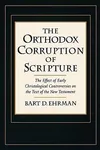
- The Orthodox Corruption of Scripture: The Effect of Early Christological Controversies on the Text of the New Testament (1993) – A highly influential monograph showing how theological debates caused scribes to alter early biblical texts.
- Forgery and Counter-forgery: The Use of Literary Deceit in Early Christian Polemics (2012) – A dense academic precursor to the popular trade book Forged.
Companion Readers and Debates
To supplement his narrative books, Ehrman has published primary source collections and participates in formal academic debates:
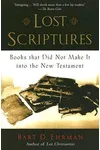
- Lost Scriptures: Books That Did Not Make It Into the New Testament (2003) – A companion anthology to Lost Christianities containing translations of early non-canonical texts.
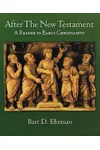
- After the New Testament: A Reader in Early Christianity (1998) – A sourcebook containing writings from the Apostolic Fathers and other early Christian writers.
- When Did Jesus Become God?: A Christological Debate (2022) – A co-authored debate book showcasing opposing scholarly views on early Christology.
What to Know Before You Start
Dr. Ehrman writes from a strictly secular, historical-critical perspective. Having started his academic journey as a fundamentalist Christian at Moody Bible Institute and Wheaton College, he eventually transitioned to agnosticism during his doctoral studies under Bruce Metzger at Princeton Theological Seminary. His works treat the Bible as a fascinating, complex, and thoroughly human product of history rather than a divinely inspired, inerrant blueprint. Keep this focus on historical evidence, rather than theology, in mind when picking up his books.