
How to Start Reading Ben Blum
For readers looking to dive into the work of Ben Blum, the entry point is straightforward but incredibly rewarding. Because Blum is an investigative journalist and narrative nonfiction writer rather than a prolific novelist, he does not have a sprawling fictional universe with complex timelines. Instead, his work is comprised of high-impact, standalone investigative narratives. The recommended reading path is to start with his debut book and then proceed to his major investigative journalism.
Here is the recommended reading order for Ben Blum's main works:
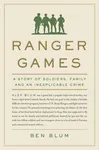
- Ranger Games: A Story of Soldiers, Family, and an Inexplicable Crime (2017) – Start here. This is Blum's debut book-length narrative, offering a deep dive into military psychology, loyalty, and a bizarre family mystery.
- The Lifespan of a Lie (2018) – Read this next. This long-form investigative article serves as a thematic companion, exposing the flaws and manipulations behind the famous Stanford Prison Experiment.
Deconstructing "Ranger Games" (2017)
Published by Doubleday in 2017, Ranger Games: A Story of Soldiers, Family, and an Inexplicable Crime is the cornerstone of Blum's bibliography. The book centers on a real-life family crisis: in 2006, Blum's nineteen-year-old cousin, Alex Blum, a newly minted and highly disciplined U.S. Army Ranger, participated in an armed bank robbery in Denver, Colorado. The heist made no logical sense, leading Ben Blum on a multi-year quest to understand how a promising young soldier could be led so far astray.
Rather than a typical true-crime story focused solely on the details of the heist, Ranger Games is a psychological investigation. Blum explores the intense indoctrination of the Army Rangers, the toxic influence of the group's charismatic squad leader, and the defense mechanisms of a family desperate to protect one of their own. Praise for the book was widespread, with renowned author Jon Krakauer describing it as "unlike anything else I have ever read" and praising its engrossing exploration of moral ambiguity.
The Next Step: "The Lifespan of a Lie" (2018)
After finishing Ranger Games, readers should move to Blum's landmark investigative essay, The Lifespan of a Lie, published in 2018 on Medium's GEN platform. This piece went viral and reignited international debate over the validity of the 1971 Stanford Prison Experiment conducted by Philip Zimbardo.
The connection between these two works is deeper than it appears. It was Blum's research into the psychology of obedience, authority, and situational influence for Ranger Games that led him to re-examine Zimbardo's famous study. In The Lifespan of a Lie, Blum presents compelling evidence—including audio recordings and interviews with participants—suggesting that the experiment was not a natural psychological occurrence but rather a staged demonstration where guards were actively coached on how to behave. This article is essential reading for anyone interested in how scientific myths are constructed and maintained.
What to Know Before You Start
Before diving into Blum's work, it helps to understand his unique background. Blum holds a Ph.D. in computer science from the University of California, Berkeley, and an MFA in fiction from New York University. This rare combination of credentials heavily influences his writing style.
Readers will notice a distinct scientific precision in how Blum gathers evidence and structures his narratives. He approaches psychological theories with the skepticism of a researcher, yet he presents his findings with the narrative pacing and emotional resonance of a seasoned fiction writer. His books and articles do not provide easy answers; instead, they challenge readers to question accepted authorities, whether they are military commanders or elite university researchers.
Practical Reader Advice
Are these works standalone? Yes, both Ranger Games and The Lifespan of a Lie can be read completely independently of one another. However, reading them in order of publication allows you to see the evolution of Blum's thoughts on the psychology of authority. There are no spin-offs, co-authored books, or complex reading order disagreements to worry about, making Ben Blum one of the most accessible authors for fans of narrative true-crime and psychological investigation.