
Where to Start with Betty Smith
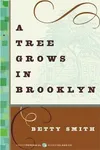
For almost every reader, the journey into Betty Smith’s literary world must begin with her masterpiece, A Tree Grows in Brooklyn (1943). Not only is it her most famous work, but it also serves as the blueprint for her entire career. The book establishes the central themes that define her writing: the struggle of working-class immigrant families, the coming-of-age of resilient young women, and the vivid, gritty reality of early 20th-century urban life. Starting here gives you the perfect introduction to Smith's clear, sincere voice and her unique ability to find hope and beauty in the midst of tenement poverty.
Because all of Betty Smith’s novels are completely standalone works that do not share characters or direct storylines, you have absolute freedom in how you proceed after her debut. However, the most rewarding path for most readers is to follow the original publication order. Reading her books in the sequence they were written allows you to witness her evolution as a storyteller, observing how she refines her semi-autobiographical experiences into distinct, structurally diverse narratives.
Publication Order of Betty Smith's Books
Betty Smith’s primary body of work consists of four major novels published during her lifetime, along with a posthumously compiled collection of short stories. Note that while bibliographies and database catalogs occasionally show minor variations in original release dates due to reprintings or copyright registration schedules, the recognized publication sequence is as follows:
- A Tree Grows in Brooklyn (1943): Introduces Francie Nolan as she grows up in the slums of Williamsburg, Brooklyn, navigating poverty, family hardships, and her own artistic ambitions.
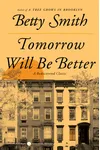
- Tomorrow Will Be Better (1948): Set in 1920s Brooklyn, this novel follows Margy Shannon, a young woman seeking a better life, a steady job, and a happy marriage away from her parents' bleak home. (Note: Some historical sources list copyright preparations beginning in 1947, but the official book publication was in 1948.)
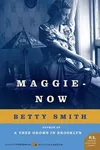
- Maggie-Now (1958): Tells the life story of Maggie-Now Moore, a selfless woman caring for her chaotic Irish-immigrant family and coping with a husband who repeatedly wanders away. (Note: Though our local database lists this as 1950, historical publishing records confirm its public release occurred in 1958.)
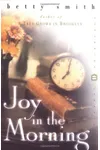
- Joy in the Morning (1963): Smith's final completed novel, focusing on the struggles and triumphs of Annie McGairy and Carl Brown during their first years of marriage in a Midwestern university town.
- Wednesdays and Other Stories (2013): A posthumous collection containing rare short stories, including the title piece "Wednesdays" along with "The Undivided," "Hannah, the Maiden," and "The Beginning of Eternity."
Chronological Setting Order
If you prefer to read historical fiction in the chronological order of its settings, Betty Smith’s novels can be arranged to trace the evolution of working-class life from the turn of the 20th century through the late 1920s. Organizing the books this way provides a fascinating look at the changing social landscapes of America, particularly the shift from tenement-era immigrant struggles to the modernizing pressures of the late twenties. Here is the chronological sequence based on the eras in which the stories are set:
- Maggie-Now: This story begins the earliest, starting around the late 1890s and the turn of the century with the immigration of Patsy Dennis Moore from Ireland to Brooklyn, and continues through the subsequent decades of Maggie-Now's childhood and adulthood.
- A Tree Grows in Brooklyn: The narrative primarily covers the 1900s and 1910s, capturing the pre-war tenement atmosphere and concluding around the end of World War I in 1918.
- Tomorrow Will Be Better: Set firmly in the post-war era of the 1920s, showing a changing Brooklyn where young women entering the workforce face new social expectations and economic challenges.
- Joy in the Morning: The story takes place in 1927, moving the setting away from Brooklyn to a Midwestern university town (inspired by Ann Arbor, Michigan), where the characters navigate the social and financial realities of the late 1920s just before the Great Depression.
Thematic Connections and Autobiographical Elements
Although Betty Smith’s novels feature different protagonists and separate storylines, they are deeply connected by their themes and their reflection of Smith’s own life. Every novel she wrote drew heavily on her personal history. Born Elisabeth Lillian Wehner to German-American immigrants in Brooklyn, she experienced firsthand the tenement poverty, family struggles, and alcoholism that she depicted in the households of Francie Nolan and Margy Shannon. Like her characters, Smith was forced to leave school after the eighth grade to work odd jobs before eventually moving to Michigan with her first husband.
Her final novel, Joy in the Morning, is especially autobiographical, reflecting her years at the University of Michigan where she audited writing classes as a young married woman without a high school diploma. Because of these strong personal ties, reading her novels in sequence feels like exploring different phases of Smith's own life and memories. The recurring themes of female resilience, the pursuit of education, and the quiet dignity of working-class communities bind these standalone stories into a cohesive, spiritually connected library of early 20th-century American life.
What to Know Before You Start: Plays and Adaptations
Before achieving literary fame with her debut novel in her late forties, Betty Smith was a dedicated dramatist. She wrote over 70 one-act plays, studied at the Yale School of Drama, and won the prestigious Avery Hopwood Award in 1931. This extensive playwriting background is key to understanding her novels; it is the source of her sharp, naturalistic dialogue and her character-driven scene structures. Readers will immediately notice that her books rely heavily on conversation to reveal character motivations and advance the plot.
Smith's storytelling also translated remarkably well to the screen. A Tree Grows in Brooklyn was adapted into a highly acclaimed 1945 film directed by Elia Kazan, which earned Academy Awards for James Dunn and Peggy Ann Garner. It was also adapted into a successful 1951 Broadway musical. Later, Joy in the Morning was adapted into a 1965 feature film starring Richard Chamberlain and Yvette Mimieux. Exploring these adaptations after reading the books provides a wonderful way to see how Smith's vivid characters and settings have been interpreted by other artists over the decades.
Practical Reading Checklist & standalone guidance
As you prepare to dive in, keep these quick tips in mind:
- Total Standalones: You do not need to worry about cliffhangers or missing plot points. Each book has a definitive conclusion.
- No Spin-offs or Co-authored Novels: Unlike many modern authors, Betty Smith did not write co-authored books, spin-off series, or tie-in novellas. Her fictional universe is contained entirely within her four standalone novels and her short story collection.
- Audiobook Tip: If you enjoy audiobooks, look for the 2013 release of Wednesdays and Other Stories, which features archival recordings of Betty Smith reading her own stories.