

Where to Start Reading Billy O’Callaghan
Because Billy O'Callaghan's novels and short story collections are all standalone works set in distinct timelines, there is no single, strictly required reading order. However, depending on your preferred genre and reading taste, there are three highly recommended starting points:
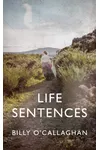
- For Historical Family Sagas: Start with Life Sentences (2021). Spanning more than a century, this semi-autobiographical novel traces three generations of a Cork family from the devastations of the Great Famine to the 1980s. It offers a deeply moving introduction to his writing style, character development, and focus on Irish heritage.
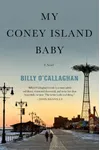
- For Intimate Contemporary Drama: Start with My Coney Island Baby (2019). This short, poignant novel focuses on a mid-life love affair between two people who meet once a month in a crumbling Brooklyn hotel. It is a masterpiece of quiet, emotional tension.
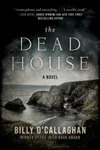
- For Eerie, Atmospheric Ghost Stories: Start with The Dead House (2017). This is a slow-burn supernatural thriller set in an isolated, Famine-era cottage on the west coast of Ireland. It blends psychological trauma with folk horror.
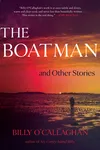
- For Short Fiction: Start with The Boatman and Other Stories (2020). This collection showcases twelve of his finest stories, exploring themes of grief, resilience, and the endurance of love across various countries and eras.
Billy O’Callaghan Novels in Publication Order
While each novel stands completely on its own, reading them in order of publication allows you to witness the evolution of O’Callaghan’s prose style and thematic complexity. Here is the chronological list of his standalone novels:
- The Dead House (2017) – A supernatural story where an artist, recovering from trauma, buys a remote cottage in West Cork only to awaken a dark spirit from the Famine era during a casual weekend gathering with friends.
- My Coney Island Baby (2019) – A piercing look at love, regret, and the passage of time, following Michael and Caitlin as they navigate their long-standing secret affair against the cold backdrop of Coney Island in winter.
- Life Sentences (2021) – A multi-generational saga set in O’Callaghan's ancestral home of Douglas, Cork, detailing the survival of Nancy Martin, her son Jer (a traumatized veteran of World War I), and her granddaughter Nellie.
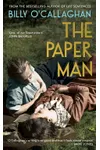
- The Paper Man (2023) – A dual-timeline novel blending a 1980s Cork mystery with pre-war Vienna in the 1930s. It tracks the real-life legend of Austrian footballer Matthias Sindelar and his tragic romance with a Jewish refugee named Rebekah.
Billy O’Callaghan Short Fiction in Publication Order
O’Callaghan began his literary career in short fiction. Reading his collections in order illustrates his mastery of the format. Over his career, he has published the following collections and standalone novellas:
- Tales of Old Douglas (2001) – O’Callaghan's debut collection, published by Chapel Steps Press. These stories establish his deep connection to his hometown village of Douglas in Cork.
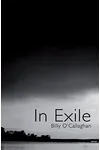
- In Exile (2008) – A collection focusing on characters dealing with isolation, displacement, and the quiet struggles of everyday survival.
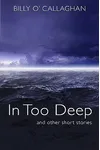
- In Too Deep (2009) – A follow-up collection that continues to explore the vulnerability of human relationships and emotional thresholds.
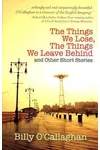
- The Things We Lose, The Things We Leave Behind (2013) – A breakthrough collection whose title story won the Bord Gáis Energy Irish Book Award for Short Story of the Year. The collection deals with themes of loss, memory, and moving on.
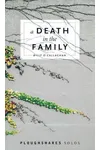
- A Death in the Family (2017) – A standalone novella published as part of the Ploughshares Solo series, focusing on a family dealing with sudden grief and the immediate aftermath of a death.
- The Boatman and Other Stories (2020) – A globally acclaimed collection containing twelve stories set in Ireland, Paris, Spain, and beyond, examining the endurance of love and human resilience.
Chronological Context and Reading Caveats
Because there is no narrative continuity between the books, you do not need to worry about spoilers or reading out of order. However, readers should keep a few chronological and historical contexts in mind:
- The Weight of History: Many of O’Callaghan's works span multiple decades or eras. For instance, Life Sentences features sections in the 1880s, 1920, and 1980s. Similarly, The Paper Man shifts between pre-war Vienna in the 1930s and Cork in the 1980s. Understanding these historical settings—such as the Great Famine, the aftermath of World War I, and the Anschluss in Austria—helps appreciate the depth of the characters' struggles.
- Setting Continuity: While the characters do not overlap, many stories are deeply rooted in Cork, Ireland, particularly the village of Douglas. Reading the books back-to-back will give you a rich, cumulative sense of the geography, culture, and social history of the region.
- Tone Shifts: The Dead House is a distinct departure in tone from his other novels, leaning heavily into supernatural horror. Readers who enjoy his historical and realistic fiction should note that this debut novel is much more of a classic ghost story.
What to Know Before You Start
Before diving into Billy O'Callaghan’s library, here are a few things to keep in mind to enhance your experience:
First, O’Callaghan’s style is slow, lyrical, and deeply atmospheric. He is a writer who prioritizes emotional depth, character reflection, and setting over fast-paced action. If you enjoy the works of William Trevor, John McGahern, or Colm Tóibín, you will feel right at home with his prose.
Second, his work is heavily inspired by his own family history. Life Sentences, in particular, is based on the real-world experiences of his ancestors who lived in Douglas, Cork. This personal connection lends his historical fiction an intense sense of truth and emotional authenticity.
Finally, there are no spin-offs, co-authored novels, or complex multimedia tie-ins to navigate. His bibliography is straightforward, making it easy for new readers to jump in at any point and explore his works at their own pace.