




Where to Start Reading Billy-Ray Belcourt
For readers new to Billy-Ray Belcourt's work, the absolute best place to start is his debut poetry collection, This Wound Is a World (2017). Not only did this collection win the prestigious Griffin Poetry Prize, making Belcourt the youngest-ever winner in its history, but it also establishes the core themes of decolonial love, queer indigeneity, grief, and resistance that thread through all of his subsequent work. Reading this first gives you the foundation of his poetic language before he translates it into essays and novels.
If you prefer prose over poetry, start with his memoir-in-essays, A History of My Brief Body (2020). It serves as a beautiful transition point, bridging the raw lyricism of his early poetry with the narrative complexity of his later fiction.
Billy-Ray Belcourt Books in Publication Order
Billy-Ray Belcourt’s work spans multiple genres, including poetry, essays, novels, and short stories. Because his style is highly experimental and self-reflective, reading his works in publication order allows you to experience his artistic evolution as he shifts across different literary forms.
The Poetry Collections
- This Wound Is a World (2017) – A landmark debut that explores queer Indigenous life, colonial trauma, and the possibilities of joy and healing.
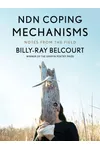
- NDN Coping Mechanisms: Notes from the Field (2019) – A genre-bending collection that utilizes verse, photography, prose poetry, and redacted texts to examine systemic violence and resilience.
- The Idea of an Entire Life (2025) – Belcourt’s third poetry collection, which uses sonnets, fragments, and lyric verse to interrogate history, time, and the quest for a queer Indigenous utopia.
The Non-Fiction and Essays
- A History of My Brief Body (2020) – A deeply personal memoir structured as a series of essays exploring childhood, queer desire, education, and the colonial legacy in Canada.
The Standalone Novel and Stories
- A Minor Chorus (2022) – Belcourt's debut novel. It follows an unnamed queer Cree doctoral student who leaves academia to return home to Northern Alberta, exploring community storytelling through a series of vignettes.
- Coexistence (2024) – A collection of short stories focusing on Cree characters navigating modern relationships, love, domesticity, and the nuances of kinship.
Anthologies and Collaborative Works
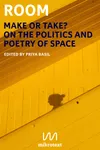
- Room. Make or Take? On the politics and poetry of space (2021) – A collaborative digital residency project curated by Priya Basil, featuring contributions from Belcourt alongside other international writers.
Chronological Order vs. Publication Order
Because Belcourt's books do not follow a single narrative continuity or feature recurring characters in a shared fictional universe, there is no chronological reading order. Instead, the publication order serves as the ideal path. Belcourt's writing is highly intertextual; his novel A Minor Chorus actively dialogues with the academic theory and personal history detailed in A History of My Brief Body. Reading his works chronologically by publication helps you understand how his intellectual and creative interests evolve over time.
What to Know Before You Start
Belcourt's writing is unapologetically intellectual yet intensely physical. He frequently weaves critical theory—such as gender studies, decolonial theory, and queer theory—directly into his poetry and prose. Here are a few tips to enhance your reading experience:
- Embrace Formlessness: Belcourt does not write traditional plot-driven narratives. His novel, A Minor Chorus, acts as autofiction and a collection of communal voices rather than a standard story with a clear beginning, middle, and end.
- The Concept of Indigiqueer: A central theme in Belcourt's works is the intersection of Indigenous identity and queer identity. He writes about the unique challenges and joy of navigating these spaces, providing visibility for experiences that are often marginalized.
- Decolonial Resistance: His works confront the ongoing effects of colonialism in Canada. Rather than focusing solely on trauma, however, Belcourt emphasizes resistance, survival, and the creation of alternative, hopeful futures.