

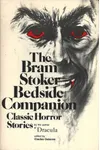



Where to Start: The Count’s Core Canon
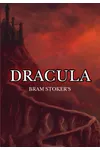
If you want to dive into the dark, atmospheric world of Bram Stoker, there is only one logical starting point: his 1897 masterpiece, Dracula. Written as an epistolary novel composed of diary entries, letters, telegrams, and newspaper clippings, it remains one of the most chilling and influential horror novels ever written. Its slow-burn dread and vivid Victorian anxieties still outshine modern adaptations.
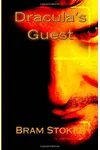
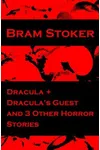
However, your first reading decision involves Dracula’s Guest. First published posthumously in 1914 by Stoker's widow, Florence Stoker, this short story is widely believed to be the excised first chapter of the original Dracula manuscript, removed prior to publication to trim the novel's length. It follows an unnamed English traveler (strongly implied to be Jonathan Harker) who wanders into a Munich forest on Walpurgis Night and encounters a supernatural snowstorm, a wolf, and a sleeping vampire. While it introduces minor continuity discrepancies if read back-to-back with the novel, we recommend reading Dracula's Guest first as an atmospheric prologue, or saving it as a treat for immediately after you finish the main book.
The Extended Dracula Universe: Prequels, Sequels, and Alternate Cuts
The legend of the Count does not end with Stoker's death. For readers who want to experience the full scope of the narrative, there is a fascinating web of sequels, prequels, and alternate versions to navigate:
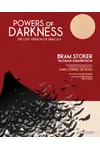
- Powers of Darkness (Makt Myrkranna): First serialized in Iceland in 1900–1901 by Valdimar Ásmundsson, this text was long dismissed as a simple Icelandic translation of Dracula. However, when researcher Hans Corneel de Roos re-translated it into English in 2017, the literary world realized it was a completely reimagined story. Based on an early draft or a Swedish serialization (Mörkrets makter), this version features a vastly expanded castle sequence, faster-paced action, more overt eroticism, and a political conspiracy plot where Dracula leads an international cabal to overthrow Western democracy. It is highly recommended as a parallel read after you finish the original.
- Dracul (2018): Co-authored by Bram's great-grandnephew Dacre Stoker and horror writer J.D. Barker, this is the official prequel. Set in 1868, it stars a young Bram Stoker himself as he encounters the supernatural, serving as an origin story for both the legendary writer and the vampire.
- Dracula the Un-Dead (2009): Co-authored by Dacre Stoker and Ian Holt, this is the officially sanctioned sequel set in 1912, exactly 25 years after the events of the original novel. It follows the surviving members of the original party—along with Jonathan and Mina's son, Quincey Harker—as they find themselves hunted once again. (Note: This is distinct from Freda Warrington's unauthorized 1997 novel, Dracula the Undead).
Bram Stoker’s Other Gothic Horrors
While Dracula continues to cast a massive shadow, Stoker penned several other works that are highly rewarding for fans of Edwardian dread and folklore:
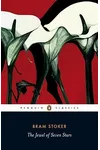
- The Jewel of Seven Stars (1903): A pioneering work of mummy horror and ancient Egyptian curses. It follows an archaeologist's attempts to resurrect the ancient Queen Tera. Note that two versions of this book exist: the original 1903 edition has a notoriously bleak and tragic ending, while the 1912 reissue was censored and revised to end on a happier note. Seek out the 1903 version if you want Stoker's original, darker vision.
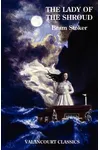
- The Lady of the Shroud (1909): Often incorrectly cataloged as a short story collection in historical databases, this is actually a full-length epistolary novel. Set in a fictional Balkan region, it tells the story of a man who inherits a castle and falls in love with a mysterious woman who visits him at night wrapped in a burial shroud, leading him to believe she is a vampire.
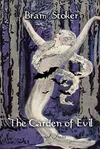
- The Lair of the White Worm (1911): Stoker's final novel, which was republished in the 1960s under the alternate title The Garden of Evil. It is a bizarre, dreamlike tale of a prehistoric giant serpent-woman dwelling beneath the English countryside.
Complete Publication Order of Standalone Novels
If you want to read all of Stoker's full-length fiction in the exact order it was presented to the public, follow this path:
- The Primrose Path (1875)
- The Dualitists (1887)
- The Snake's Pass (1890)
- The Shoulder of Shasta (1895)
- The Watter's Mou' (1895)
- Dracula (1897)
- Miss Betty (1898)
- The Mystery of the Sea (1902)
- The Jewel of Seven Stars (1903)
- The Man / The Gates of Life (1905)
- Lady Athlyne (1908)
- The Lady of the Shroud (1909)
- The Lair of the White Worm (1911)
What to Know Before You Start
Bram Stoker was not exclusively a horror writer; he also wrote melodramatic Victorian romances, adventure novels, and children's fairy tales. If you dive straight into his chronological publication order, you will encounter non-horror works like The Snake's Pass and the romance Miss Betty long before you hit his gothic masterpieces. For the best experience, we recommend starting with Dracula, then moving to his major gothic trilogy (The Jewel of Seven Stars, The Lady of the Shroud, and The Lair of the White Worm), before exploring his rarer standalone novels, short story collections (like Under the Sunset and Dracula's Guest), and non-fiction essays.