
How to Read Brando Skyhorse: Recommended Starting Points
Brando Skyhorse’s bibliography spans fiction, memoir, and anthology editing. Because his works are standalone, there is no strict narrative continuity or chronological order you must follow. However, his books share deep thematic links—specifically revolving around identity, assimilation, family deception, and the experience of marginalized communities in America. Depending on your reading preferences, there are two ideal entry points into his catalog.
Option 1: The Fiction Route (Start with The Madonnas of Echo Park)
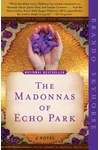
If you prefer fiction, your best starting point is Skyhorse’s debut novel, The Madonnas of Echo Park (2010). This book won the 2011 PEN/Hemingway Award and the Sue Kaufman Prize for First Fiction. Structurally, it is a novel-in-stories, consisting of eight interlinked chapters from the perspectives of different Mexican-American residents in Los Angeles. It provides an immediate introduction to Skyhorse’s signature style: lyrical yet gritty prose, multiple viewpoints, and a deep exploration of cultural visibility. Starting here allows you to experience the literary voice that first established his reputation.
Option 2: The Autobiographical Route (Start with Take This Man)
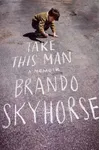
If you prefer non-fiction or want to understand the real-life events that inspired Skyhorse’s themes, start with his memoir, Take This Man (2014). This memoir chronicles his chaotic childhood in Echo Park, where his mother fabricated a Native American identity for them to escape their Mexican-American heritage. Read as a preface, the memoir adds immense depth to his novels. Understanding his childhood makes the themes of passing, ethnic reinvention, and parental deception in his fiction resonate even more deeply.
Brando Skyhorse Books in Order of Publication
For readers who want to follow the author’s creative evolution, reading in publication order is highly recommended. This sequence shows how Skyhorse transitioned from personal and localized community narratives in Echo Park to broader, speculative social critiques of American politics.
- The Madonnas of Echo Park (2010) – Standalone Novel / Interlinked Stories
- Take This Man: A Memoir (2014) – Memoir / Non-Fiction
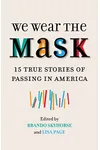
- We Wear the Mask: 15 True Stories of Passing in America (2017) – Co-edited Anthology
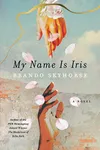
- My Name Is Iris (2023) – Standalone Novel / Speculative Fiction
Deep Dive: The Standalone Novels
The Madonnas of Echo Park (2010)
Set in the shifting, gentrifying Echo Park neighborhood of Los Angeles, this debut novel explores the lives of day laborers, maids, bus drivers, and former gang members. The narratives are bound together by a tragic central incident: the 1983 drive-by shooting of a three-year-old girl, dubbed the "Baby Madonna" by the media, while a group of local girls was reenacting a Madonna music video outside a market. Rather than building toward a typical mystery resolution, the stories ricochet like a stray bullet, tracing the long-term impact of the tragedy on the community. Key themes include historical displacement, cultural erasure, and the struggle to be seen in a city that often overlooks its working-class immigrant population.
My Name Is Iris (2023)
This novel moves away from the historical realism of Echo Park into near-future speculative fiction and social satire. The story follows Iris Prince (born Inés), a second-generation Mexican-American mother navigating single parenthood. In this near-future America, the government and tech companies introduce "the Band"—a mandatory wearable device used for identification, tracking, and daily transactions. When the rules change and the Band is restricted to individuals who can prove their parents were born in the U.S., Iris is categorized as being of "unverifiable origin" due to her parents’ undocumented status. This tech-driven class division is paired with a surreal element: a mysterious, growing wall in Iris’s front yard that only she and her daughter can see. The book serves as a sharp allegory for modern immigration policies, nationalism, and technological surveillance.
Deep Dive: Non-Fiction and Memoirs
Take This Man: A Memoir (2014)
This memoir recounts Skyhorse’s turbulent childhood in the 1970s and 80s. After his biological Mexican father abandoned the family, his mother, Maria, reinvented their lives, rebranding herself as "Running Deer" and claiming they were Native American. She convinced young Brando that his father was an imprisoned Native American activist. Growing up in a household with a rotating cast of five stepfathers and an eccentric grandmother, Skyhorse had to navigate constant instability. The memoir details his search for his true heritage and his eventual journey to find his biological father in adulthood. It is often compared to memoirs like The Glass Castle for its balance of dark, dysfunctional family dynamics with humor and emotional warmth.
Deep Dive: Edited Anthologies
We Wear the Mask: 15 True Stories of Passing in America (2017)
Co-edited with Lisa Page, this anthology features fifteen essays exploring the phenomenon of "passing" in America—whether by choice, omission, or social imposition. The title is taken from Paul Laurence Dunbar's famous poem. Contributors write about hiding their race, class, sexuality, or gender identity to navigate society safely or access opportunities. Skyhorse contributes an essay reflecting on his mother’s Native American deception, while other writers discuss passing as transgender, hiding biracial family history, or navigating Muslim identity during travel. It serves as a non-fiction companion piece to the themes of identity negotiation present in all of Skyhorse's work.
What to Know Before You Start
Before diving into Brando Skyhorse’s books, it is helpful to keep a few key concepts in mind:
- L.A. as a Character: His early works, particularly The Madonnas of Echo Park and Take This Man, are deeply rooted in the history of Los Angeles. They address real-world events like the displacement of Mexican-American families from Chavez Ravine to build Dodger Stadium.
- The Politics of "Passing": A unifying thread across his entire catalog is the concept of passing. Whether it is his mother claiming Native American identity in his memoir, the essays in his anthology, or Iris trying to pass as a secure middle-class citizen in My Name Is Iris, Skyhorse continuously examines the costs and consequences of hiding one's origin.
- Tone Shift: While his first three books are highly grounded in realism, his latest novel, My Name Is Iris, introduces speculative, dystopian, and allegorical elements (like the invisible growing wall). Readers should expect a shift in genre while maintaining the same core thematic focus.