
How to Read Bret Hart’s Books: The Recommended Reading Path
If you want to dive into the legendary life and career of Bret "The Hitman" Hart, you do not have a massive catalog of fiction series to navigate, but you do have one of the most celebrated autobiographical accounts in sports entertainment history. To get the most complete, raw, and unfiltered look at his career, here is the recommended reading path:
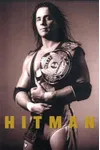
- Step 1: Start with the definitive memoir. Begin with Hitman: My Real Life in the Cartoon World of Wrestling (2007). This is the core text of Bret Hart's literary legacy. It is a massive, incredibly detailed autobiography that covers everything from his childhood to his post-wrestling life.
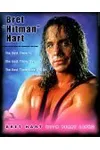
- Step 2: Follow up with the pictorial history. Look for Bret "Hitman" Hart: The Best There Was, the Best There Is, the Best There Will Ever Be (2000). Co-authored with Perry Lefko, this works as a visual companion to his memoir, filled with classic photos, personal commentary, and early career retrospectives.
- Step 3: Explore the Calgary Sun Columns. For those who want to see Bret's immediate, unfiltered thoughts as events were unfolding in the late 1990s and early 2000s, searching out archives of his weekly Calgary Sun newspaper columns provides excellent historical context.
The Core Non-Fiction Works in Detail
To understand the depth of Bret Hart's writing, it helps to examine how his two published books differ in tone, structure, and intent. While both are autobiographical, they serve very different purposes for the reader.
Bret "Hitman" Hart: The Best There Was, the Best There Is, the Best There Will Ever Be (2000)
Published by Stoddart Publishing in 2000, this was Bret Hart's first official book-length release. Co-written with sports journalist Perry Lefko, the book is designed primarily as an illustrated retrospective. It is packed with rare photographs capturing Bret's journey from his amateur wrestling days in Calgary to the height of his international fame in the World Wrestling Federation (WWF) and his transition to World Championship Wrestling (WCW).
Because it was published shortly after the tragic passing of his brother Owen Hart in 1999 and Bret's own career-ending concussion, the book carries a poignant, reflective tone. While the text is relatively light compared to his later memoir, the photo captions and personal anecdotes offer a warm, visual history of the Hart family dynasty and Stampede Wrestling.
Hitman: My Real Life in the Cartoon World of Wrestling (2007)
If you only read one book about professional wrestling, this should be it. Published in 2007 by Random House Canada (and Grand Central Publishing in the United States), Hitman is widely regarded by fans and critics as one of the greatest, most honest sports autobiographies ever written.
What makes this book unique is its origin. Throughout his decades on the road, Bret carried a tape recorder, dictating detailed audio diaries after matches, hotel stays, and backstage meetings. This allowed him to reconstruct dates, conversations, matches, and backstage politics with an astonishing level of accuracy and detail. The book does not pull punches—Bret writes candidly about his marital struggles, the rampant drug use in the locker rooms, his complex relationship with Vince McMahon, the heartbreaking loss of his brother Owen, and his personal battle with a stroke in 2002. It is a gritty, emotional, and long read that offers an unprecedented peek behind the curtain of the wrestling business during its most chaotic eras.
Understanding the Calgary Sun Columns
During the late 1990s and early 2000s, Bret Hart was a regular columnist for the Calgary Sun newspaper. Rather than using a ghostwriter, Bret wrote these columns himself, using the platform to speak directly to his fans. These columns are highly valued by wrestling historians because they show his real-time reactions to major industry shifts and personal milestones.
Key topics covered in his columns include his public letters and thoughts leading up to and immediately following the 1997 Montreal Screwjob, his raw grief and ongoing legal battles following the death of Owen Hart in 1999, responses to other wrestling figures who published memoirs around the same time (including Hulk Hogan and Ric Flair), and his advocacy for safer working conditions for professional wrestlers. While these columns have never been officially compiled into a single book, they are widely archived online across various wrestling history websites and fan forums.
What to Know Before You Start Reading
To fully appreciate Bret Hart's writings, it helps to understand the unique cultural and historical backdrop of Calgary's wrestling scene and the era Bret wrestled in. Keep these key contexts in mind:
The Hart Family Dungeon: Bret was trained by his father, Stu Hart, in the basement of the Hart Mansion in Calgary, Alberta. Known as "The Dungeon," this training ground was infamous for its brutal, punishing workouts. Understanding this explains Bret's lifelong commitment to technical execution and realism in the ring.
The Excellence of Execution: Unlike many stars of the 1980s and 1990s who relied on oversized physiques or wild gimmicks, Bret built his reputation on flawless athletic execution and safety. He took pride in the fact that he never seriously injured an opponent in the ring, a point he emphasizes repeatedly in his writings.
The Montreal Screwjob: In November 1997, at the Survivor Series event in Montreal, Vince McMahon and Shawn Michaels conspired to secretly strip Bret of the WWF Championship before his planned departure to WCW. This real-life betrayal shattered Bret's trust in the business and serves as the emotional climax of his 2007 book.