
Where to Begin with Brian Froud
Brian Froud is not a traditional novelist; he is a visionary artist and world-builder whose illustrations have shaped the modern fantasy landscape. From co-creating the landmark book Faeries to serving as the conceptual designer for Jim Henson's masterpieces The Dark Crystal and Labyrinth, Froud's work is defined by its organic, slightly mischievous, and folkloric style. Because his bibliography spans illustrated guides, collaborative novels, graphic novels, and art books, figuring out where to start can feel like navigating a goblin maze. Here is how to approach his enchanting realms.
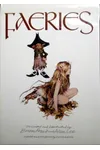
For most readers, the absolute best starting point is his seminal 1978 book, Faeries (co-created with Alan Lee). It serves as the foundation for everything that followed, setting the tone for his signature visual style and exploration of Celtic and English folklore. If you are specifically drawn to his cinematic collaborations, starting with The World of The Dark Crystal or his goblin field guides is your best path.
Brian Froud's Faerielands Books
In the mid-1990s, Froud embarked on a unique collaborative project called the Faerielands series. Rather than illustrating an existing story, Froud created a collection of paintings and sketches first, then invited celebrated fantasy authors to construct standalone novels inspired by those images. Because these books are independent stories set in different corners of Froud's visual universe, they can be read in any order, though publication order is standard.
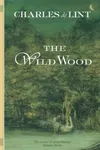
- The Wild Wood by Charles de Lint (1994) – A deep dive into the spirits of the Canadian wilderness, blending urban fantasy with traditional folklore.
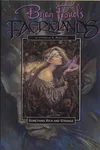
- Something Rich and Strange by Patricia A. McKillip (1994) – A dreamlike tale exploring the boundary between our world and the watery depths of the fae.
While the project also inspired novels by Terri Windling (The Wood Wife) and Midori Snyder (Hannah's Garden), the two listed above represent the core collaborations directly tied to the initial Faerielands releases.
The Dark Crystal Books and Comic Mythos
Froud’s conceptual designs defined the look of Jim Henson's 1982 cult classic film, The Dark Crystal. Over the decades, he has returned to the world of Thra to expand its mythology. To experience the full narrative arc of the Gelflings and Skeksis through Froud's eyes, use this recommended order:
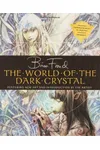
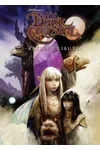
- The World of The Dark Crystal (1982) – The essential companion and concept art book, explaining the lore, flora, fauna, and cultures of Thra.
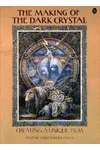
- The Making of the Dark Crystal (1983) – An archival look at how Froud's designs were brought to life by Jim Henson's Creature Shop.
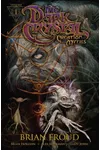
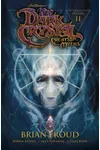
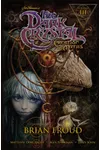
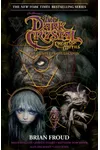
- Jim Henson's The Dark Crystal: Creation Myths (Volumes 1–3, published 2011–2015) – A prequel graphic novel series for which Froud provided conceptual designs, cover art, and lore oversight. These were later compiled into The Complete 40th Anniversary Collection (2023).
- The Dark Crystal (2014) – A deluxe reissue of the original movie novelization by A.C.H. Smith, featuring exclusive, previously unpublished concept illustrations by Froud.
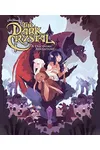
- Jim Henson's The Dark Crystal: A Discovery Adventure (2018) and Jim Henson's The Dark Crystal Artist Tribute (2018) – Fun, visual companion pieces celebrating the legacy of the film.
Lady Cottington's Pressed Fairy Series
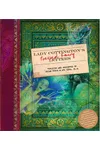
Collaborating with Monty Python alumnus Terry Jones, Froud created the hilarious, faux-Victorian literary hoax of Lady Angelica Cottington. The books are presented as the scrapbooks, diaries, and letters of a woman who spent her life catching and "pressing" fairies into pages like flowers. It is a brilliant blend of Froud's whimsical art and Jones's dry, dark humor. While the original 1994 book Lady Cottington's Pressed Fairy Book set the stage, the series continues through these key records:
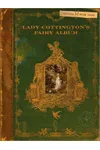
- Lady Cottington's Fairy Album (2002) – A continuation of Angelica's eccentric research and fairy-catching exploits.
- Lady Cottington's Pressed Fairy Letters (2005) – A collection of mock correspondence revealing the wider reactions to Angelica's controversial botanical hobby.
Field Guides, Goblins, and Oracle Decks
Beyond his narrative series, Froud has published numerous "field guides" that document different magical creatures. These function as standalone coffee table books and companion pieces, but they are best read after establishing a familiarity with Faeries. We recommend grouping them by creature type:
The Goblin Lore
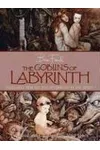
- The Goblins of Labyrinth (1986) – A character study of the creatures from the iconic movie, written with Terry Jones.
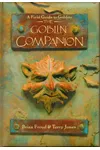
- The Goblin Companion: A Field Guide to Goblins (1996) – A condensed, pocket-sized expansion of goblin behavior and taxonomy.
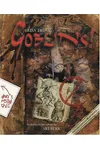
- Goblins! A Survival Guide and Fiasco in Four Parts (2004) – A humorous guide detailing how to deal with pesky, mischievous household pests.
The Faerie and Troll Guides
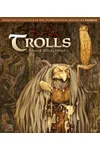
- Trolls (1996) – A darker, earthy exploration of the massive creatures inhabiting stone and roots.
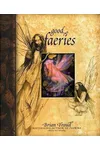
- Good Faeries Bad Faeries (1998) – The spiritual successor to Faeries, splitting the fae realm into helpful sprites and malicious tricksters.
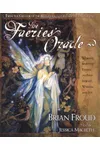
- The Faeries' Oracle (2000) and The Heart of Faerie Oracle (2010) – Oracle card decks created with Jessica Macbeth, featuring Froud's art for divination and meditation.
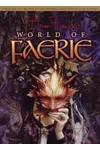
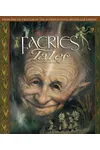
- Brian Froud's World of Faerie (2007) and Brian Froud's Faeries' Tales (2014) – Rich retrospective collections that showcase his evolution as a fantasy artist and mythmaker.
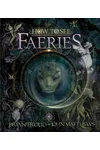
- How to See Faeries (2011) – Co-authored with John Matthews, this book provides practical (and poetical) advice on how to open your inner eye to the hidden folk.