


















Where to Start Reading Bruce Catton
For readers looking to experience Bruce Catton's legendary narrative history, the best starting point is the Army of the Potomac Trilogy. This series represents his finest work, focusing closely on the experiences of the ordinary Union soldiers in the eastern theater. Reading these books in their proper sequence allows you to trace the army's formation, its struggles under various commanders, and its ultimate triumph.
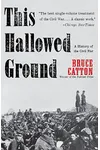
If you prefer a single-volume epic rather than a multi-book trilogy, the absolute best starting point is This Hallowed Ground (1956). It serves as a brilliant, fast-paced overview of the entire Civil War from the Union perspective, showcasing Catton's signature literary flair and emotional depth in a single volume.
1. The Army of the Potomac Trilogy (Recommended Order)
This trilogy is Catton's crown jewel. While some databases list these books out of order or show incorrect publication years, the correct chronological and publication order is as follows:
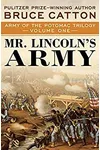
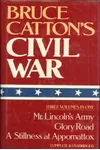
- Mr. Lincoln's Army (1951) – Focuses on the early days of the army under General George B. McClellan, culminating in the Battle of Antietam.
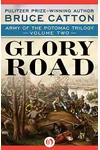
- Glory Road (1952) – Covers the critical mid-war period, including the disastrous defeats at Fredericksburg and Chancellorsville, and the turning point at Gettysburg.
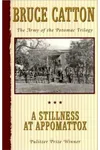
- A Stillness at Appomattox (1953) – The Pulitzer Prize and National Book Award-winning final volume that chronicles the grueling Overland Campaign, the Siege of Petersburg, and General Lee's final surrender.
2. The Centennial History of the Civil War Trilogy
Published in the 1960s to commemorate the war's 100th anniversary, this trilogy shifts focus from a single army to a grand, national canvas. It dives deeply into the political, social, and economic factors driving both the Union and the Confederacy. You should read them in chronological order:
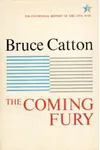
- The Coming Fury (1961) – Traces the political breakdown of the 1850s, the election of Abraham Lincoln, and the opening shots at Fort Sumter.
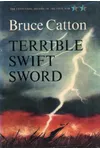
- Terrible Swift Sword (1962) – Covers the escalation of the conflict into a total war throughout 1861 and 1862, highlighting the rise of generals like Ulysses S. Grant.
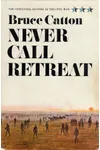
- Never Call Retreat (1965) – Details the final years of the war, from the victories at Vicksburg and Gettysburg through to the collapse of the Confederacy and reconstruction.
3. The Ulysses S. Grant Biography Series
This acclaimed biographical trilogy has a unique history. Legendary historian Lloyd Lewis wrote the first volume, Captain Sam Grant, but passed away before its publication. Lewis's widow and publisher asked Catton to complete the project using Lewis's extensive research files. Catton successfully maintained the narrative tone across the next two volumes:
- Captain Sam Grant (1950) – Written by Lloyd Lewis. Covers Grant's early life, West Point years, the Mexican-American War, and his civilian struggles before the outbreak of the Civil War.
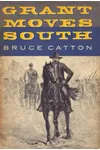
- Grant Moves South (1960) – Written by Bruce Catton. Follows Grant's return to the army and his early Western campaigns, culminating in the Vicksburg campaign.
- Grant Takes Command (1969) – Written by Bruce Catton. Covers the final phase of the war as Grant is promoted to General-in-Chief, coordinating the Union armies to victory.
Warning: Clearing Up Database Conflations
If you search for Bruce Catton's bibliography on automated database sites, you will often find dozens of books listed under his name that he did not actually write. There are two major reasons for this metadata confusion:
- The Great Lakes Books Series: Wayne State University Press publishes a regional heritage series called the "Great Lakes Books Series." Catton only wrote his childhood memoir, Waiting for the Morning Train (1972), in this collection. However, databases frequently attribute other books in this publisher series—such as books about Detroit sports, Michigan lighthouses, or shipping history—erroneously to Catton.
- States and the Nation Bicentennial Series: For the 1976 U.S. Bicentennial, W. W. Norton commissioned a 51-volume history of every U.S. state. Catton wrote the volume for his home state, Michigan: A Bicentennial History (1976). Because this was part of a unified publisher series, databases regularly misattribute volumes for other states (like South Carolina, Nevada, or Texas) to Catton.
Always verify the author on these regional titles, as Catton did not write books on Detroit baseball or southwestern history.
Other Notable Works and YA Fiction
Beyond his major trilogies, Catton published several standalone histories and a few unique projects:
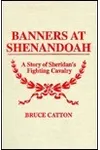
- Banners at Shenandoah (1955) – Catton's only work of historical fiction. Written for young adults, it follows a Michigan teenager enlisting in General Philip Sheridan's Union cavalry.
- Two Roads to Sumter (1963) – Co-authored with his son, William B. Catton, this book contrasts the lives and ideologies of Abraham Lincoln and Jefferson Davis.
- Gettysburg: The Final Fury (1974) – A brief, highly illustrated, and accessible look at the battle, perfect for casual readers.
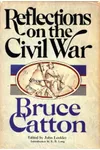
- Reflections on the Civil War (1981) – A posthumous collection of essays, speeches, and lectures edited by John Leekley that provides excellent insight into Catton's historical philosophy.