



Where to Start Reading Bruce Chatwin
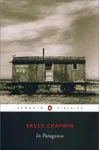
If you are new to the work of Bruce Chatwin, your entry point should reader-friendly and unquestionably be his 1977 debut, In Patagonia. This ground-breaking travelogue is not just Chatwin's most famous book; it is a landmark text that redefined the boundaries of modern travel writing. By mixing brief, poetic vignettes of real historical figures, local characters, myths, and his own embellished encounters, Chatwin created a narrative that reads like a dream-like quest rather than a standard travel itinerary.
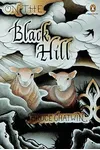
For readers who prefer fiction over travelogues, the best starting point is On the Black Hill (1982). Unlike his nomadic travel narratives, this novel is an intimate, localized study of identical twin brothers living on a remote farm on the border between Wales and England. It showcases Chatwin's capacity for deep empathy and traditional storytelling, proving he could capture the spirit of a single place just as effectively as the wanderlust of the open road.
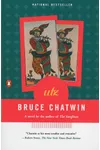
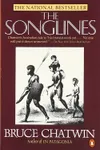
If you wish to explore his most philosophically ambitious work, progress directly from In Patagonia to The Songlines (1987). Blending travelogue, memoir, philosophy, and commonplace notebook reflections, this book investigates the Aboriginal Australian songlines and explores Chatwin's lifelong obsession with human restlessness and nomadic philosophy. It remains his most complex and boundary-pushing narrative experiment.
Bruce Chatwin Bibliography: The Recommended Reading Path
Because Bruce Chatwin’s books are all standalone works that do not share characters or direct narrative continuity, there is no strict order you must follow. However, reading his primary works in publication order provides the most satisfying experience, as it allows you to trace his stylistic evolution from direct travel journalism to experimental structures, and finally to his distilled late novels. Here is the recommended pathway:
- In Patagonia (1977): The perfect introduction to his spare, evocative prose style and his thematic obsession with nomadism.
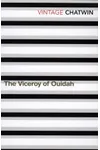
- The Viceroy of Ouidah (1980): A lush, fictionalized historical biography of a Brazilian slave trader in Dahomey, showing his transition from travel writer to novelist.
- On the Black Hill (1982): A tender, focused look at Welsh farming life, offering a stylistic counterweight to his global wanderings.
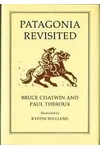
- Patagonia Revisited (1985): A collaborative, conversational volume with Paul Theroux that acts as a delightful companion to his debut.
- The Songlines (1987): His theoretical and philosophical masterpiece combining travel writing with thoughts on the nature of human restlessness.
- Utz (1988): A short, elegant novel about an eccentric art collector in Prague during the Cold War, which was shortlisted for the Booker Prize.
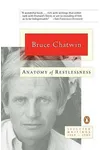
- Posthumous Collections (1989–2010): Volumes such as What Am I Doing Here? (1989) and Anatomy of Restlessness (1996) contain valuable essays, journalism, and early stories that fill in the gaps of his career.
Understanding the 'Vintage Voyages' and Multi-Author Imprints
When looking up Bruce Chatwin's works, you may encounter lists referencing the 'Vintage Voyages' series. It is important for readers to note that this is not a series written by Chatwin. Instead, Vintage Voyages is a curated travel literature reprint series published by Vintage Books to celebrate classic travel narratives. While Chatwin's masterpiece In Patagonia is featured prominently in this collection, the other books in the series are written by different authors:
- Travels with My Aunt (1969) was written by Graham Greene.
- Shadow of the Silk Road (2007) was written by Colin Thubron.
- A Concise Chinese-English Dictionary for Lovers (2007) was written by Xiaolu Guo.
- Blood River (2007) was written by Tim Butcher.
If you are looking to read Bruce Chatwin's own writing, you should focus on his core travelogues, novels, and posthumous essay collections rather than attempting to read the entire multi-author Vintage Voyages list as a contiguous series.
The Patagonia Duology: 'In Patagonia' and 'Patagonia Revisited'
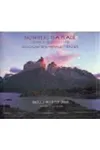
Chatwin's fascination with the southern tip of South America resulted in two key books, which are best read in sequence. The first is In Patagonia (1977), his solo debut tracking his journey through Argentina and Chile. The second is Patagonia Revisited (1985), which he co-authored with his friend and fellow travel writer, Paul Theroux. This shorter collaborative volume grew out of a joint presentation they gave to the Royal Geographical Society in London. Note that in the United States and some later editions, this collaboration was published under the title Nowhere Is a Place: Travels in Patagonia. Reading both volumes gives a complete picture of Chatwin's relationship with the region, combining his personal myth-making with Theroux's analytical reflections and beautiful photography.
What to Know Before You Start: Fact vs. Fiction
Before diving into Chatwin’s books, it is crucial to understand his attitude toward truth. Chatwin famously rejected conventional genre definitions, preferring to call his books 'stories' or 'searches' rather than novels or travelogues. He frequently embellished details, combined real-life figures into composite characters, and blended folklore with historical fact. While this aesthetic choice led to controversy—with some Patagonian locals disputing his accounts—it was central to his philosophy. For Chatwin, the emotional and narrative truth of a story was far more important than rigid journalistic accuracy. Approaching his travelogues with the understanding that they are partly fictionalized will help you appreciate his unique literary craft.
Complete List of Bruce Chatwin’s Primary Works
The Novels
- The Viceroy of Ouidah (1980): Set in Dahomey (modern Benin), this novel presents a historical panorama of the slave trade.
- On the Black Hill (1982): A highly detailed, domestic portrait of Welsh twins Lewis and Benjamin Jones.
- Utz (1988): A concise, deeply philosophical novel exploring the nature of collecting, obsession, and survival in communist Prague.
The Travelogues and Philosophical Non-Fiction
- In Patagonia (1977): The definitive travel classic detailing his quest for a piece of prehistoric giant sloth skin.
- Patagonia Revisited (1985): A collaborative reflection on Patagonian literature co-written with Paul Theroux (also known as Nowhere Is a Place).
- The Songlines (1987): Part travelogue, part anthology of thoughts on human nomadism, set in the Australian Outback.
Posthumous Collections and Letters
- What Am I Doing Here? (1989): A rich anthology of essays, travel pieces, profiles, and stories selected shortly before Chatwin’s death, including his account of a political coup in Dahomey.
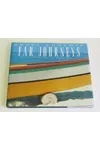
- Far Journeys: Photographs and Notebooks (1993): A visual record of Chatwin’s travels paired with text from his private journals.
- Anatomy of Restlessness: Uncollected Writings (1996): A collection spanning 1969 to 1989, including early short stories, articles, and his 1973 talk 'The Morality of Things'.
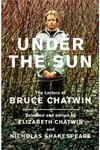
- Under the Sun: The Letters of Bruce Chatwin (2010): A posthumous compilation of personal letters that offers an intimate look at his relationships, travels, and creative processes.